
I launched my first record imprint from a laptop on an IKEA desk with less than $1,000 in seed money. Learning how to start an independent record label at home does not require venture capital or industry connections anymore. It requires disciplined accounting, ruthless contract clarity, and an automated royalty pipeline.
Modern digital gatekeepers have crumbled. Independent labels now capture market share because they move quickly, test niche audiences, and treat artists as collaborative partners rather than debt liabilities.
Setting Up the Legal and Financial Machine
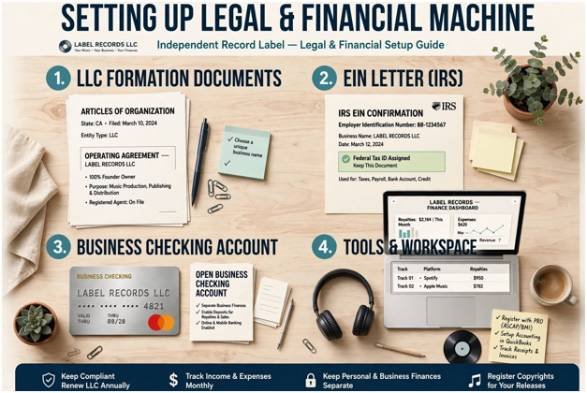
A bedroom label remains an expensive hobby until you form a legal barrier between your personal checking account and your master recordings.
Business Entity and Tax Isolation
File articles of organization for a Limited Liability Company (LLC) through your Secretary of State or reference registration workflows at the SBA.gov. An LLC shields your personal home, car, and savings from infringement liabilities or contract disputes.
Once your LLC receives its Employer Identification Number (EIN) from the IRS, open a dedicated business checking account. Route every dollar of streaming income, tape sale revenue, and software expense through this single hub. Mixing personal groceries with mastering invoices destroys your liability shield and complicates annual tax returns.
Royalties Collection Architecture
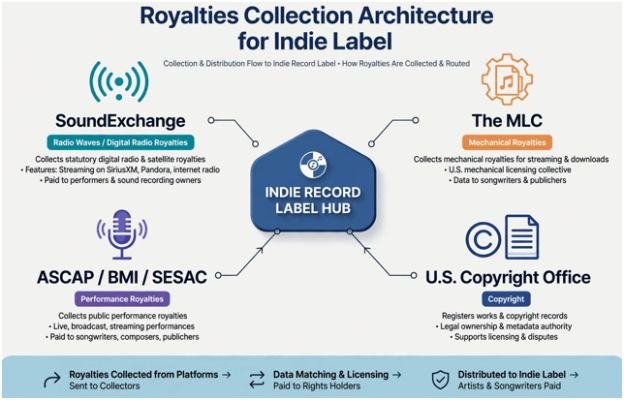
Distribution aggregators deliver your music to streaming platforms, but they leave significant master-side royalties uncollected. You must register your entity across direct industry collection agencies to claim every micro-penny owed.
| Organization | Registration Type | Revenue Stream Collected |
| SoundExchange | Master Rights Owner | Non-interactive digital performance royalties (Pandora, SiriusXM, webcasts) |
| The MLC | Mechanical Administrator | Digital audio mechanical royalties from interactive streaming services |
| ASCAP / BMI / SESAC | Publishing Entity | Public performance royalties for underlying compositions |
| US Copyright Office | Form SR (Sound Recording) | Statutory legal copyright protection for master recordings |
Affiliate your label with SoundExchange as both a sound recording copyright owner and a designated payee. Have your songwriters register their works directly through TheMLC.com to capture statutory mechanicals.
Distribution Infrastructure and Account Tiers
Do not sign up for a single-artist distributor plan. Home-based labels need administrative dashboards capable of managing multiple artist profiles, distinct ISRC allocations, and automated split payments.
Selecting Multi-Artist Pipelines
Pick distributors that support enterprise label routing. DistroKid’s “Ultimate” plan, TuneCore for Labels, and CD Baby Pro offer multi-artist tiers with automated payment splitting. Automated split features save hours of tedious manual accounting each month by paying your artists their percentages directly at the distributor level.
| Distribution Partner | Best Feature for Home Labels | Starting Multi-Artist Cost | Cut on Royalties |
| DistroKid (Ultimate) | Automated split-pay to artist accounts | ~$89.99/year | 0% |
| TuneCore (Breakthrough/Pro) | Robust global reporting and mechanical support | ~$49.99/year | 0% on streaming |
| CD Baby | Legacy physical distribution sync + sync licensing | Fee per release ($9.99+) | 9% digital sales cut |
Structuring Bulletproof 50/50 Indie Contracts
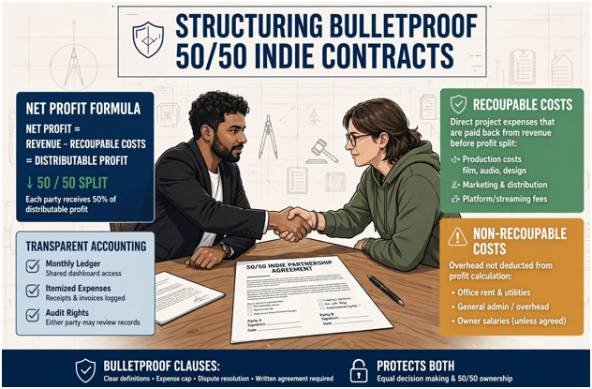
Early DIY labels often rely on handshakes. Handshakes lead to severed friendships and frozen catalog rights. You need written, signed agreements before spending money on third-party mixing or mastering.
Weighing independent music contract pros and cons early clarifies whether an exclusive license or a pure catalog acquisition suits your risk profile.
Defining Net Profits and Allowable Deductions
The industry gold standard for modern boutique imprints is the 50/50 Net Profit Agreement. Under this framework, the artist retains their underlying copyright, granting your label an exclusive exploitation license for a fixed duration (typically 3 to 5 years).
Net profit is gross receipts minus approved, itemized direct out-of-pocket costs:
$$\text{Net Profit} = \text{Gross Receipts} – \text{Approved Direct Costs}$$
Do not deduct general label overhead, home Wi-Fi bills, or equipment upgrades from an artist’s royalty statements.
| Cost Category | Recoupable from Net Receipts? | Non-Recoupable Label Expense? |
| Mastering & Audio Restoration | Yes | No |
| Direct Digital Ad Spend (Meta/TikTok) | Yes (Capped in contract) | No |
| Vinyl / Tape Manufacturing | Yes | No |
| Cover Art Graphic Design | Yes | No |
| Label Hardware / DAW Plugins | No | Yes (Label overhead) |
| Standard Business Legal Filings | No | Yes (Label overhead) |
Establish a clear reversion clause. If the project fully recoups its initial investment within the contract term, ownership and distribution access return to the artist at the end of the license window.
The 8-Week Release Operations Plan
Dropping music the day after receiving a final master guarantees obscurity. Algorithmic streaming ecosystems require lead time to index metadata and populate pitch queues. Once your roster grows and you join the ranks of independent music labels accepting demo submissions, running a standardized operational schedule keeps multiple artists organized.
Week -8: Receive uncompressed 24-bit/48kHz masters, hi-res square cover art, and metadata splits.
Week -6: Deliver files to distributor; verify ISRC and UPC code generation.
Week -4: Pitch track through Spotify for Artists and Amazon Music for Artists dashboards.
Week -3: Secure localized press coverage, niche blog features, and playlist curator outreach.
Week -2: Deliver short-form video creative assets (vertical visualizers, teasers, reels).
Week -1: Launch pre-save campaigns and send direct-to-fan email newsletters.
Week 0: Release Day: Trigger social ad spend, update DSP profile banners, ship physical pre-orders.
Week +2: Audit initial streaming figures, pay direct recoupment deductions, assess playlist traction.
Register the final sound recording with the Copyright.gov database using Form SR to lock in statutory damage protections against unauthorized sampling or sync infringement.
Stop Overthinking the Artwork: Go Press Play
Perfectionism kills more record labels than bad contracts. You do not need a four-room facility in Nashville or an analog tape machine to matter. You need three standout releases, spotless legal hygiene, transparent accounting statements, and total dedication to your artists’ creative visions. Set up your LLC, lock in your distribution pipeline, and launch your first catalog number this month.
Frequently Asked Questions
1. How much does it cost to start an independent record label from home?
Most home operators launch legally for $500 to $1,500, covering state LLC formation fees, a multi-artist distribution subscription, and initial mastering costs.
2. Do I need a lawyer to draft indie label recording contracts?
While using vetted contract templates works for early releases, having an entertainment attorney review your master agreement prevents costly future disputes.
3. Can I run a record label from home without owning the master recordings?
Yes, modern indie labels routinely operate on exclusive licensing deals where artists retain ownership while the label handles commercial exploitation for an agreed timeframe.
4. How do bedroom labels make money from streaming?
Labels collect net streaming payouts directly from their digital distributor and retain an agreed split (typically 50%) after recouping direct release expenses.
Leave a Reply