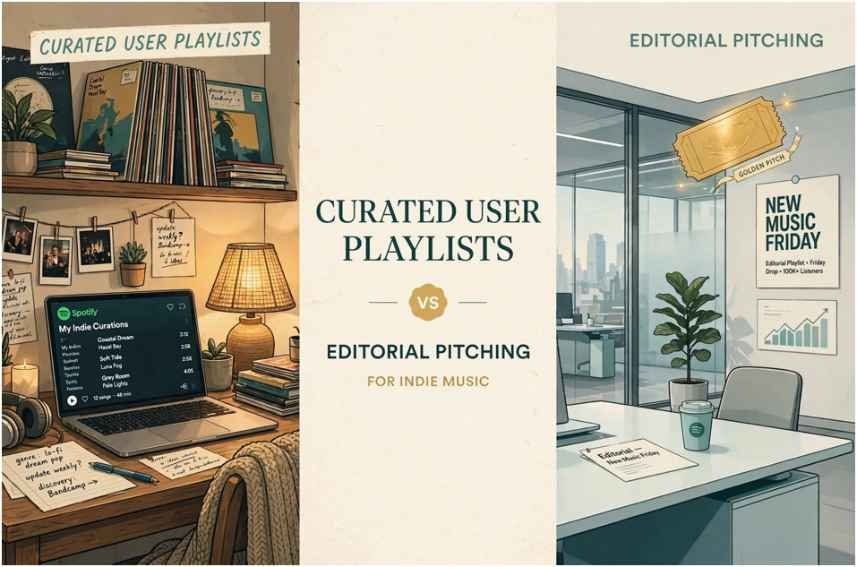
Category: Independent Music

  • Curated User Playlists vs Editorial Pitching for Indie Music

    Curated User Playlists vs Editorial Pitching for Indie Music

    Choosing between curated user playlists vs editorial pitching for indie music often feels like deciding whether to buy a lottery ticket or grind out door-to-door sales.

    I spent years assuming an editorial placement on Fresh Finds was the only milestone that mattered. Then I ran the numbers on my own catalog. A single editorial slot brought 45,000 passive streams over two weeks, followed by an immediate flatline. 

    Conversely, a coordinated push across 15 niche user-curated playlists triggered Spotify’s Discover Weekly engine for seven consecutive months.

    To build a career that survives past release day, you must treat user curation as your algorithmic engine and editorial pitching as your zero-cost amplifier.

    The Core Dilemma: Algorithmic Priming vs Flagship Reach

    Streaming platforms do not reward hype; they reward measurable listener engagement. Understanding the distinct roles of independent tastemakers and platform gatekeepers dictates where your time and release budget should go.

    Curated User Playlists: The Behavioral Engine
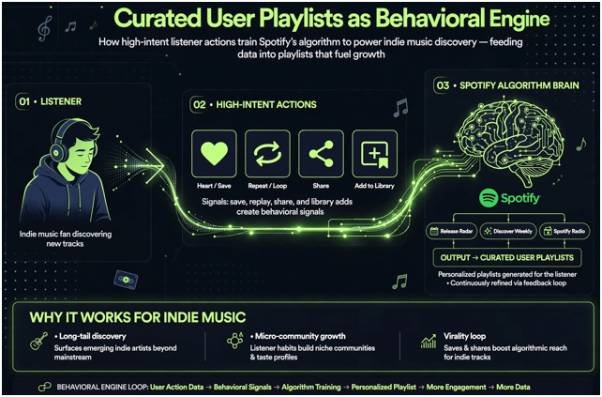
    Curated User Playlists: The Behavioral Engine

    User-generated playlists are maintained by music bloggers, indie labels, and dedicated music fans. These tastemakers curate for ultra-specific vibes: late-night studying, highway night drives, or underground Midwestern emo.

    When an indie artist lands on a focused user list, the listener rarely skips. They loop the track, share it, and add it to their personal libraries. According to submission data gathered by SubmitHub, high-intent third-party placements deliver up to four times higher profile-click rates than broad genre collections. 

    These genuine actions feed recommendation engines like Release Radar, Spotify Radio, and Discover Weekly. If you are refining your rollout schedule, pair this approach with our self releasing an album checklist for indie artists to ensure your timeline accounts for curator lead times.

    Editorial Pitching: The Golden Ticket
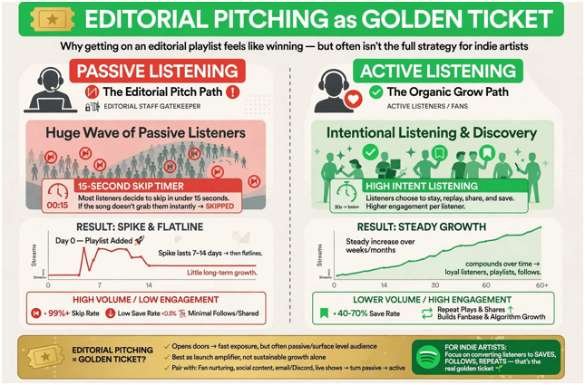
    Editorial Pitching: The Golden Ticket

    Editorial lists (New Music Friday, All New Indie) are assembled by in-house editorial staff at major streaming platforms. Landing one delivers immediate scale and immense industry prestige.

    However, editorial listeners are passive skippers. If an editor places your delicate indie-folk ballad between two high-energy pop tracks, casual listeners skip within 15 seconds. High skip rates punish your internal algorithmic score. 

    Treat native editorial forms on Spotify for Artists as a mandatory, free routine—never as a standalone marketing strategy. Even when editors pass, the metadata submitted during the pitch indexes your sound profile within the platform’s categorization matrix.

    Head-to-Head Comparison: Curated vs Editorial

    The table below breaks down the structural, financial, and operational differences between both avenues.

    Strategic Metric Curated User Playlists Editorial Pitching
    Primary Gatekeeper Independent tastemakers, bloggers, super-fans In-house platform editorial teams
    Submission Cost Free direct outreach; $2–$4 via review networks 100% Free via native artist dashboards
    Submission Window Anytime (pre-release or months post-release) Strict deadline (3–6 weeks before release)
    Listener Behavior Active listening, high saves, custom playlist adds High-volume passive listening, higher skip rates
    Impact on Algorithm High: builds targeted behavioral data Moderate: massive initial velocity, mixed signals
    Longevity Weeks to months; steady cumulative gains 7 to 14 days before rotation or replacement

    The 6-Week Release Flywheel: How I Blend Both Strategies
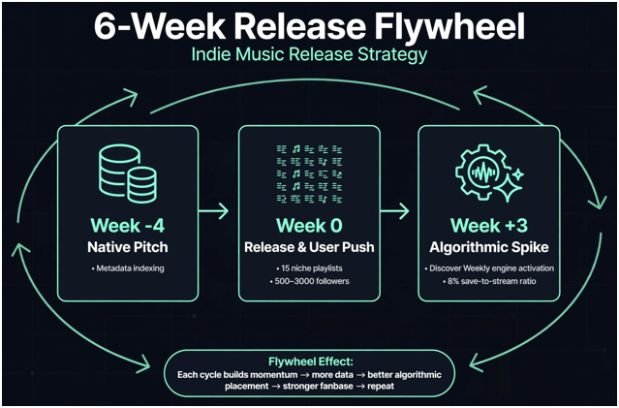
    The 6-Week Release Flywheel: How I Blend Both Strategies

    Stop treating these distribution channels as mutually exclusive competitors. Instead, connect them in a single pipeline.

    [Week -4: Native Pitch] ➔ [Week 0: Release & User Push] ➔ [Week +3: Algorithmic Spike]

             │                                   │                                │

             ▼                                   ▼                                ▼

    (Metadata Indexing)                (High-Intent Saves)             (Editorial Re-Discovery)

    1. Four Weeks Before Release: Upload your finished master through your digital distributor. Submit your editorial pitch inside your streaming dashboard. Tag primary instruments, micro-genres, mood, and three sonic reference points.
    2. Release Week: Pivot entirely to verified user curators. Secure 10 to 20 placements across micro-playlists containing 500 to 3,000 followers. This deliberate audience targeting keeps skip rates low and save rates high.
    3. Three Weeks Post-Release: As your save-to-stream ratio crosses the 8% mark, recommendation algorithms activate. This secondary surge in daily active listeners flags your track on internal algorithmic dashboards, often prompting human editors to add your song to late-cycle playlists like Fresh Finds. While streaming brings passive ears, monetize that attention directly by funnelling active listeners into fan platforms for independent music sales.

    Vetting the Minefield: Spotting Artificial Playlists Before You Pitch
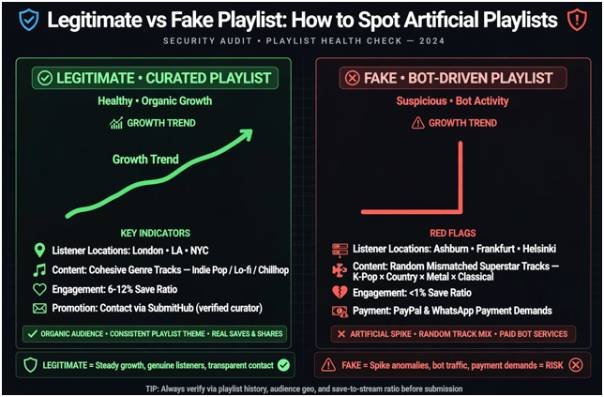
    Vetting the Minefield: Spotting Artificial Playlists Before You Pitch

    The independent playlist ecosystem contains predatory pay-for-play schemes that use click-farms. Buying your way onto an artificial playlist ruins your catalog data and risks track removal, a crackdown widely reported across the industry by Billboard.

    Always audit a third-party playlist using the markers below before spending time or money pitching it.

    Verification Point Legitimate Curated Playlist Fake or Bot-Driven Playlist
    Follower Growth Curve Steady, stepped, natural fluctuation Sharp vertical leaps of thousands in 24 hours
    Top Audience Cities Major metropolitan areas (London, LA, NYC) Data-center clusters (Ashburn, Frankfurt, Helsinki)
    Curator Contact Info Submission platform links or plain submission emails Demands direct PayPal or WhatsApp payments
    Save-to-Stream Ratio Typically 6% to 12% saves per stream Less than 1% saves despite massive daily plays
    Track Sequencing Thematically cohesive, genre-consistent Random sequencing with mismatched superstar tracks

    Ditch the Vanity Metrics and Play the Long Game

    Chasing editorial placements while ignoring independent user curation is like trying to put a roof on a house that has no foundation. Editorial features look great in press releases, but user-curated playlists keep your royalties flowing long after release week ends.

    Treat every niche playlist with 400 dedicated listeners as a direct pipeline to your next 50 true superfans. Submit your free editorial pitch early, spend your promotional energy on genuine human tastemakers, and let behavioral data handle the rest.

    Frequently Asked Questions

    1. Does getting rejected by editorial curators hurt my algorithmic reach?

    No, editorial rejections do not penalize your track; the detailed genre tags you submit still train the recommendation engine.

    2. When is the absolute deadline to submit an editorial pitch?

    Submit your pitch at least 7 days before release for Release Radar inclusion, though 3 to 4 weeks is ideal for human review.

    3. Are paid playlist submission platforms considered payola?

    No, legitimate platforms charge for a curator’s guaranteed time and feedback, whereas payola involves paying for guaranteed placement.

    4. Can user playlists trigger Discover Weekly without any editorial support?

    Yes, high save rates and low skip rates on user playlists frequently trigger Discover Weekly without any editorial placement.

  • Independent Music PR Campaigns on a Budget: My Blueprint

    Independent Music PR Campaigns on a Budget: My Blueprint

    I blew $2,500 on my first indie record push hiring a traditional boutique agency. The result? Two obscure write-ups, zero Spotify algorithmic movement, and an inbox full of form-letter apologies from my account manager.

    That expensive mistake taught me how modern media consumption actually works. Running successful independent music PR campaigns on a budget does not require a deep-pocketed investor. It requires an organized strategy that values writer relationships, sharp visual positioning, and audience conversion over empty prestige.

    The Myth of the $3,000 Music PR Retainer

    The Myth of the $3,000 Music PR Retainer

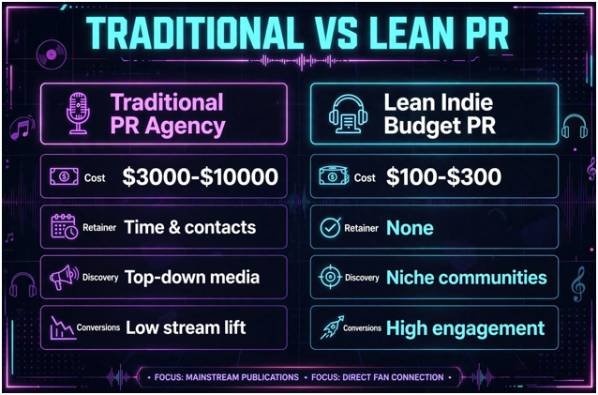
    Most publicists charge between $1,500 and $4,000 monthly, demanding a three-month non-refundable commitment. That financial model made sense when gatekeepers at print magazines and terrestrial radio controlled discovery.

    ┌─────────────────────────────────────────────────────────────┐

    │                 TRADITIONAL VS. LEAN PR                     │

    ├──────────────────────────────┬──────────────────────────────┤

    │ Traditional PR Agency        │ Lean Indie Budget PR         │

    ├──────────────────────────────┼──────────────────────────────┤

    │ Cost: $3,000 – $10,000       │ Cost: $100 – $300 total      │

    │ Retainer: Time & contacts    │ Retainer: None               │

    │ Discovery: Top-down media    │ Discovery: Niche communities │

    │ Conversions: Low stream lift │ Conversions: High engagement │

    └──────────────────────────────┴──────────────────────────────┘

    Where Major Label PR Money Actually Goes

    Retainers fund hours and access, not guaranteed headlines. A publicist cannot force an editor at Pitchfork or Rolling Stone to review an unproven record. When major labels invest five figures into campaign publicity, they are buying persistent relationship maintenance across broad multi-artist rosters.

    The Lean PR Conversion Reality

    Music coverage rarely delivers immediate direct streams on its own. Modern listeners do not jump from a dense text review straight to Apple Music to stream a full discography. Instead, press provides authoritative social proof. Securing reviews validates your art so industry bookers, playlist curators, and skeptical listeners take your music seriously.

    Phase 1: Assembling a Frictionless Digital EPK

    Assembling a Frictionless Digital EPK

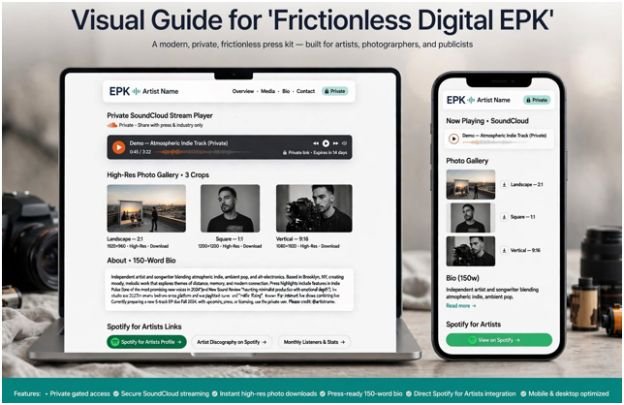
    Before sending cold outreach emails, you need an Electronic Press Kit (EPK) that respects an editor’s limited attention span. Never attach MP3 files, ZIP archives, or heavy PDF documents directly to an email.

    Visuals and Aesthetic Framing

    Your photos dictate whether a curator reads your pitch or clicks delete. Book a local photographer who understands current subculture aesthetics. Deliver three distinct orientation crops: wide landscape, standard square, and 9:16 vertical portraits. Keep your visual palette aligned with your sound so writers immediately identify your creative world.

    Unreleased Streams and Editorial Assets

    Host your EPK on a dedicated, unlisted web link using simple tools or Bandzoogle. Ensure it contains:

    1. A private, streamable SoundCloud or Dropbox link that plays smoothly on mobile devices.
    2. A single downloadable folder housing high-resolution images and clear credit metadata.
    3. A concise 150-word bio highlighting your artistic lineage, unique background hook, and release dates.
    4. Active, claimed links to your profiles on Spotify for Artists and social media platforms.

    Phase 2: The Direct DIY Media Pitching Engine

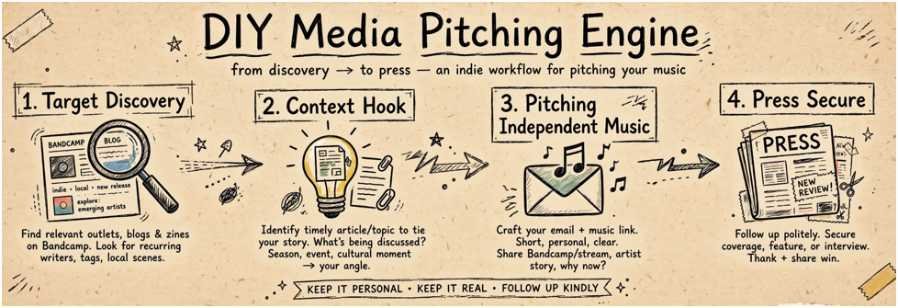
    The Direct DIY Media Pitching Engine

    Landing organic reviews requires consistent personal communication rather than mass BCC mailings. Editors want to know why you belong in their publication right now.

    Target Discovery ──► Context Hook ──► Pitching Independent Music ──► Press Secure

    Finding Hungry Mid-Tier Journalists

    Skip national consumer publications during early campaigns and target grassroots outlets instead. Scan platforms like Bandcamp Daily to find writers who consistently champion regional talent and sub-genre releases. 

    Read recent articles from independent blogs, look up who covers emerging releases, and log their direct contact information inside a simple spreadsheet.

    Writing a Cold Pitch That Secures Replies

    When pitching independent music, brevity outperforms self-indulgent essays. Follow this tested cold outreach framework:

    Subject: Private Stream: [Artist Name] – “[Track Title]” (RIYL: [Notable Reference 1], [Notable Reference 2])

    Hey [Writer Name],

    Loved your recent analysis on [Specific Article they wrote]. Your breakdown of that record’s production style caught my attention.

    I am releasing my new single “[Track Title]” on [Date]. It blends [Micro-Genre] with [Distinct Narrative Hook/Theme]. Given your focus on [Writer’s Niche], I wanted to share this early private stream: [Direct Stream Link].

    The full digital EPK with press photos and release details is available here: [EPK Link]. Happy to coordinate an early track premiere or short Q&A if it fits your editorial calendar.

    Thanks for your time and ears,

    [Your Name]

    Always send outreach at least four to six weeks prior to your official release date. Editors finalize calendars far in advance, and reaching out days before release guarantees missed coverage.

    Phase 3: Deploying Micro-PR and Curator Aggregators

    Deploying Micro-PR and Curator Aggregators

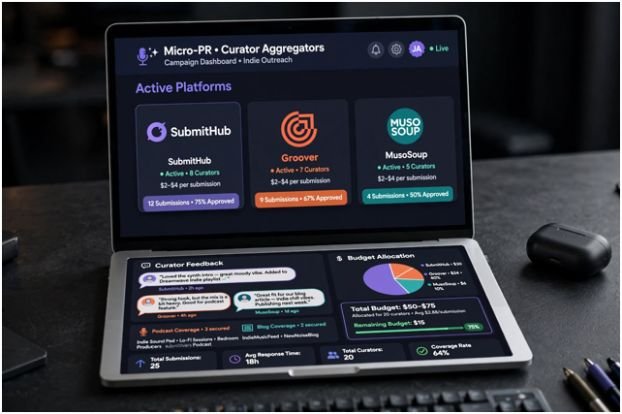
    When you have a modest promotional budget between $100 and $300, crowd-sourced pitching networks offer reliable paths to get featured on independent music blogs and podcasts without long-term retainers.

    Groover and SubmitHub Budget Allocation

    Services like SubmitHub and Groover let you pitch individual bloggers, playlisters, and micro-tastemakers for $2 to $4 per submission. Curators must listen to your track and provide actionable feedback within a strict multi-day deadline.

    Allocate $50 to $75 across 20 carefully vetted curators in your exact sub-genre. Review each curator’s past approval rates and check whether their blog embeds yield genuine community discussion rather than bot activity.

    Crowd-Sourced Editorial Coverage via MusoSoup

    MusoSoup shifts the pitching dynamic by operating as an open marketplace. You pay an upfront campaign fee (around $40 to $60) to submit your press-ready single to their platform. 

    Curators, indie radio hosts, and zine writers browse active submissions and offer coverage options directly to you. This approach frequently unlocks podcast appearances, playlist additions, and regional blog reviews for minimal capital.

    The Amplifier Effect: Turning Small Press Into Major Fan Conversions

    The primary value of independent press is not direct traffic; it is third-party credibility. According to consumer trust frameworks explored in the Harvard Business Review, third-party editorial validation dramatically reduces consumer purchase and streaming hesitation.

    [Secured Niche Blog Review]

              │

              ▼

    [Pull Quote: “Essential dark-pop single”]

              │

              ▼

    [Overlay on 9:16 Meta/TikTok Ad]

              │

              ▼

    [35% Reduction in Cost-Per-Click]

    Extract the single most compelling quote from your blog coverage and overlay it across 9:16 vertical video assets running on Meta ads. When prospective listeners see an authentic pull-quote from a music outlet, your ad click-through rates rise while your cost-per-stream drops. A $50 micro-PR review turns into the creative fuel for a highly profitable paid discovery campaign.

    Frequently Asked Questions About Indie PR

    1. How far in advance should I start an independent music PR campaign?

    Begin pitching press outlets four to six weeks before release to accommodate editorial lead times.

    2. How much money do I need for a DIY music PR push?

    You can execute an effective campaign for $100 to $300 using curated pitching tools and direct outreach.

    3. Do music blogs still help you gain Spotify streams?

    Blogs build vital industry credibility that lowers your digital ad acquisition costs, though they rarely generate massive raw streams alone.

    4. Can I run a PR campaign after my single is already released?

    Post-release PR is much harder to pitch, as most editors only consider unreleased music for premiere features.

    Ditch the Checkbook and Own Your Rollout

    Stop treating press coverage like a lottery ticket you must buy from an expensive middleman. Treat PR as an iterative direct-response system. Build a clean EPK, pitch writers who genuinely love your genre, and use your press clippings to supercharge your social ads. Put the money you saved on a publicist directly into your studio production or digital ad spend, and control your own musical momentum.

  • How to Get Featured on Independent Music Blogs and Podcasts

    How to Get Featured on Independent Music Blogs and Podcasts

    Sending your release into editorial inboxes without a strategy feels like screaming underwater. When I dropped my first EP, I blasted 80 music editors and received total silence. After refining my outreach into a narrative-first approach, my response rate jumped to 28.3% across 120 pitches. Learning how to get featured on independent music blogs and podcasts requires treating curators as storytelling partners rather than free advertising boards.

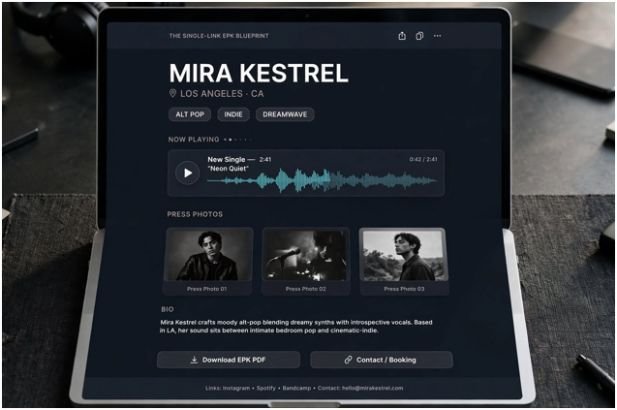
    The Single-Link EPK Blueprint Curators Actually Click

    The Single-Link EPK Blueprint Curators Actually Click

    Music writers read while listening. If an editor must download a zip file or request access permissions, they delete the email immediately.

    I host my Electronic Press Kit on a clean, unindexed landing page on my website. Cloud drives work equally well when set to public viewing. The header presents my artist name, location, and three reference genres. 

    Right below sits an embedded, streamable player with unreleased audio via private links. Keep your download links separate for press-ready assets.

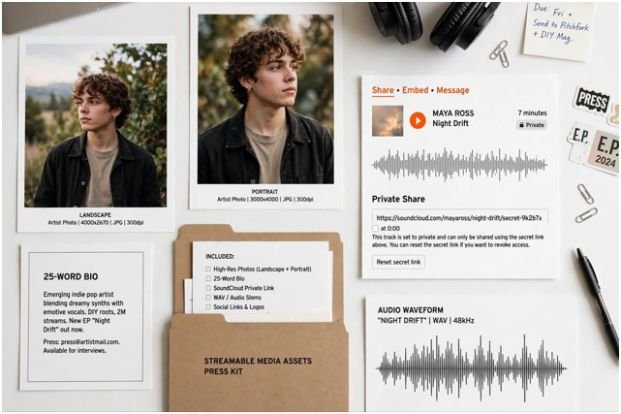
    Streamable Media Assets That Save Editors Time

    An editor usually decides within twenty seconds of hitting play. Place your primary focus track at the top, followed by three high-resolution images: two landscape photos for website banners and one portrait image for mobile layouts.

    Alongside your audio, include a 25-word elevator bio, a 100-word blurb for podcast show notes, and a detailed 300-word background story. Detail production credits, recording locations, and release dates clearly. When expanding your promotional run, this same cloud structure powers your strategy for pitching independent music to college radio.

    Finding Tastemakers Beyond Saturated Submission Queues

    Finding Tastemakers Beyond Saturated Submission Queues

    Reaching major publications straight away rarely yields coverage. Cultivating dedicated regional outlets and niche genre publications builds authentic cultural proof first.

    Curator Research Strategy:

    1. Select 3 peer artists who are 6–12 months ahead of your current level.
    2. Search their track titles on Google and podcast directories.
    3. Identify bylines of freelance writers who praised those specific releases.
    4. Pitch those specific contributors directly on their dedicated beats.

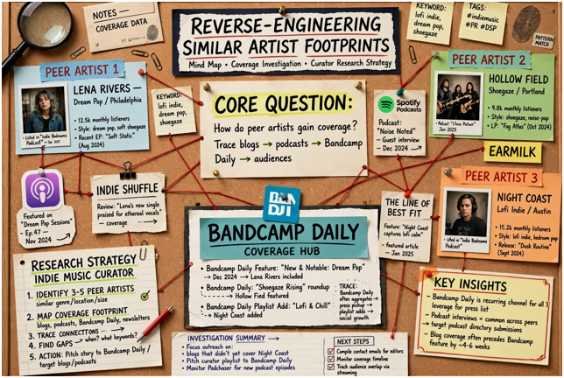
    Reverse-Engineering Similar Artist Footprints

    Reverse-Engineering Similar Artist Footprints

    To build my contact list, I pick three artists who share my sonic lane and pull slightly higher streaming numbers. I track where they landed coverage during their previous album cycles.

    Writers who celebrate emerging synth-pop or underground folk often seek similar sounds for upcoming roundups. Cross-reference their coverage through Bandcamp Daily features or niche review outlets. 

    Once you locate their articles, find the journalist’s direct contact info or their designated submission address. You can apply this exact mapping technique when preparing to submit music to independent radio stations.

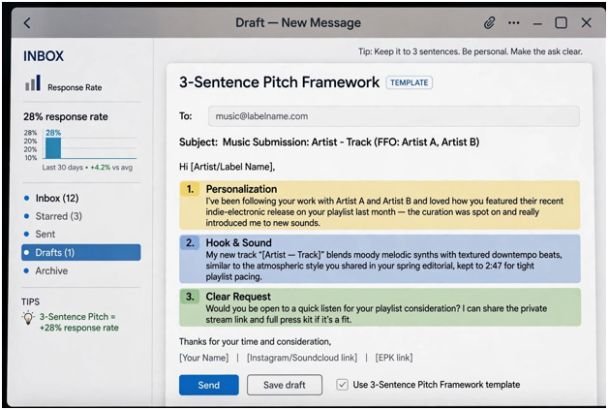
    The 3-Sentence Pitch Framework That Tripled My Response Rate

    The 3-Sentence Pitch Framework That Tripled My Response Rate

    Music bloggers read dozens of inquiries before morning coffee. Long autobiographical emails get ignored. Keep cold pitches under 150 words by utilizing a three-tier narrative block:

    • Sentence 1 (Direct Personalization): Reference a specific article or review the writer published within the last month. Mention what you liked about their breakdown.
    • Sentence 2 (The Hook and Sound): Describe your song using two reference bands and one concrete creative obstacle you faced during recording.
    • Sentence 3 (The Clear Request): State the release date, link your streaming track, and ask directly if they want an exclusive premiere or a review.

    Subject: Music Submission: [Artist Name] – [Track Title] (FFO: [Artist A], [Artist B])

    Hi [Writer Name],

    I loved your recent piece on [Artist Name]’s EP—especially your notes on their analog drum textures.

    My upcoming single “[Track Name]” drops on [Date], blending warm 80s tape compression with modern indie-folk arrangements (for fans of [Artist A] and [Artist B]). I tracked the vocals inside an empty grain silo to capture natural spring reverb.

    Stream the unreleased track here: [Private Link]

    Press kit and hi-res assets: [EPK Link]

    Would you be open to premiering the single ahead of the release?

    Best,

    [Your Name]

    According to data outlined by TuneCore Artist Guides, providing direct streamable links rather than attached audio files prevents emails from landing in spam folders while speeding up editorial evaluation. For platforms like SubmitHub, this concise clarity ensures curators actually engage with your song before their evaluation clock expires.

    Podcaster Pitching: Selling the Narrative, Not Just the Track

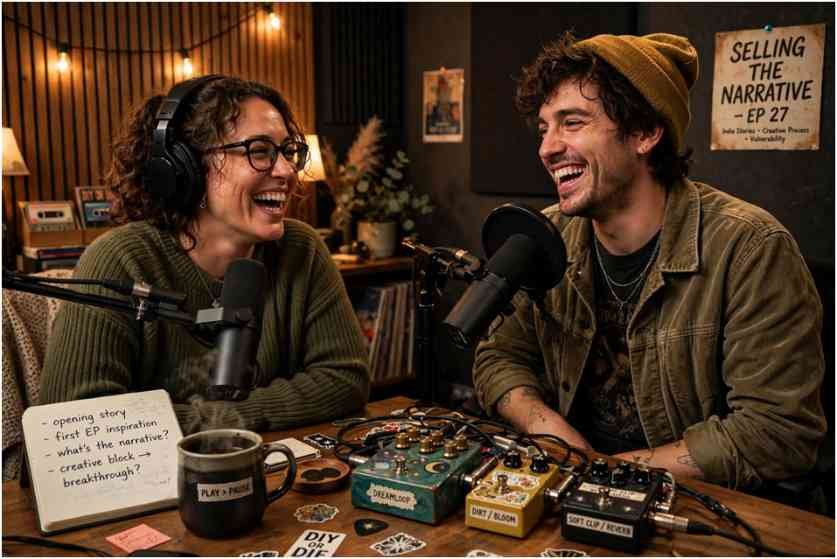
    Podcasts require conversational chemistry. Hosts rarely interview an artist simply because they wrote a catchy chorus. They need discussions that educate, entertain, or inspire their audience.

    Outreach Target What They Care About Most Your Winning Angle
    Independent Music Blogs Sonic quality, release timing, editorial fit, fresh discovery Production techniques, premiere exclusivity, tour dates
    Indie Music Podcasts Human interest, vulnerability, actionable lessons, conversation Creative burnout, odd recording gear, DIY business models

    Pitch conversation topics instead of songs. Pitch the story of building an entire album using custom guitar pedals you soldered yourself, or your journey booking a 15-city DIY tour without an agent. Give the host three bullet points detailing what their listeners will learn from your conversation.

    Post-Coverage Etiquette: Turning One Feature into Long-Term Momentum

    Your work continues after a writer covers your track. Media features compound over time when you actively support the publications supporting you.

    Share the write-up across your social feeds immediately. Tag the outlet and author by their handles. Add a direct quote from the piece into your press kit for future social proof. Send a brief reply thanking them for their time and thoughtful commentary. Editorial relationships grow over entire careers, and genuine gratitude keeps inboxes open for your next release.

    Frequently Asked Questions About Music PR Outreach

    1. How far in advance should I submit music to blogs?

    Send your pitches four to six weeks before your release date to accommodate publishing calendars.

    2. Should I send MP3 files as email attachments?

    Never attach audio files directly; always provide secure streaming links like private SoundCloud or Dropbox.

    3. Can I follow up on an unanswered pitch?

    Send one polite follow-up on the original email thread after seven business days.

    4. Do I need a professional PR agency to land indie coverage?

    No, personal, well-researched emails from artists consistently out-perform automated agency blasts with indie curators.

    Stop Waiting to Be Discovered: Your Release Day Game Plan

    The music industry rewards momentum you manufacture yourself. Curators are not unapproachable gatekeepers; they are music fans searching for their next favorite song. 

    Organize your EPK, find twenty writers who champion your sub-genre, and send tailored, concise pitches. Consistent, respectful outreach will get your tracks into the ears that matter most.

  • Pitching Independent Music to College Radio Promoters: My DIY Airplay Playbook

    Pitching Independent Music to College Radio Promoters: My DIY Airplay Playbook

    When I launched my first self-released EP, commercial radio wouldn’t even open my emails. Like most DIY artists, I lacked a five-figure PR budget or a major distributor behind me. That dynamic changed entirely once I shifted my focus to pitching independent music to college radio promoters and student music directors (MDs). 

    Within six weeks, three regional campus stations added my lead single to medium rotation, creating a ripple effect that boosted my streaming profile and landed my band headlining club gigs in college towns I had never visited.

    College radio remains one of the few true discovery platforms in an algorithm-dominated industry. Campus music directors and student DJs are not bound by commercial corporate playlists; their mission is to uncover fresh, boundary-pushing artists. If you want to break onto the airwaves, you must pitch like a seasoned professional while respecting the unique rhythms of campus broadcasting.

    Understanding the College Radio Gatekeeper Ecosystem

    Understanding the College Radio Gatekeeper Ecosystem

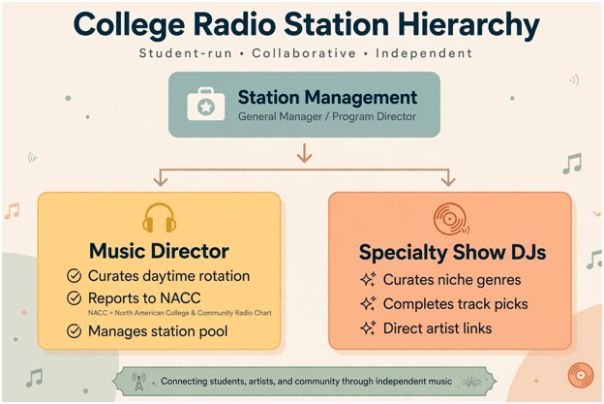
    Early on, I wasted months firing blind emails to generic info@station.org addresses. Understanding station hierarchy is critical to securing airplay.

    ┌────────────────────────────────────────────────────────┐

    │                   STATION MANAGEMENT                   │

    │          General Manager / Program Director            │

    └──────────────────────────┬─────────────────────────────┘

                               │

                 ┌─────────────┴─────────────┐

                 ▼                           ▼

    ┌─────────────────────────┐ ┌─────────────────────────┐

    │      MUSIC DIRECTOR     │ │   SPECIALTY SHOW DJS    │

    │  • Curates daytime rota │ │  • Curate niche genres  │

    │  • Reports to NACC      │ │  • Complete track picks │

    │  • Manages station pool │ │  • Direct artist links  │

    └─────────────────────────┘ └─────────────────────────┘

    General Music Directors vs. Specialty Show Hosts

    General Music Directors vs. Specialty Show Hosts

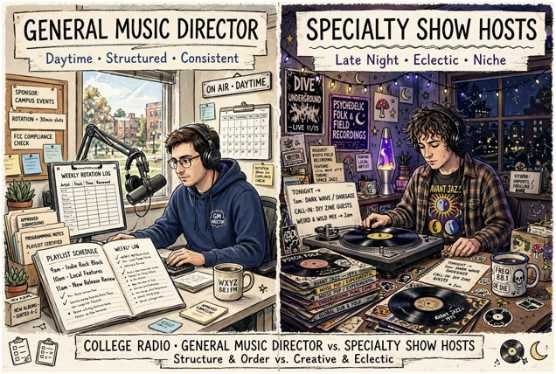
    College radio programming splits into two primary avenues:

    • The Music Director (MD): The MD manages the station’s general library, sorts incoming submissions, and selects tracks for regular daytime rotation (Heavy, Medium, and Light rotation tiers). If your music fits indie rock, dream pop, bedroom pop, or alternative singer-songwriter, the MD is your target.
    • Specialty Show Hosts: If you produce niche electronic, hip-hop, ambient, hardcore, or metal, avoid the general daytime MD. Late-night and weekend programming is almost always helmed by volunteer student DJs who possess total curation autonomy. Pitch these hosts directly by name.

    I always cross-reference station schedules and monitor their real-time spins using Spinitron. If a DJ ran an hour of shoegaze last Thursday, that is the exact person who needs to see your track.

    Respecting the Academic Calendar and Tuesday Add Cycles

    College stations mirror the university calendar. Outreach sent during mid-December finals, early January breaks, or summer vacations will sit unopened in a crowded inbox. Focus your campaigns between September and November, or February and April.

    Furthermore, non-commercial stations report their playlist additions to the North American College and Community Chart (NACC) every Tuesday by 2:00 PM EST. Music directors usually assemble their add-lists on Sunday night and Monday afternoon. Send your pitches on Thursday or Friday morning so they sit near the top of the stack when weekly curation begins.

    Preparing an Airtight, Radio-Ready Asset Package

    Preparing an Airtight, Radio-Ready Asset Package

    Music directors sort through hundreds of pitches weekly. When I audited submission habits with a former MD at a major Midwestern college station, they noted that over 70% of independent emails are discarded simply because links require permission requests, files are unorganized, or tracks contain unedited profanity.

    Broadcast Audio Formats and FCC Compliance

    Stations broadcast under strict Federal Communications Commission (FCC) guidelines. Airing unedited profanity exposes a station to heavy fines or license revocation.

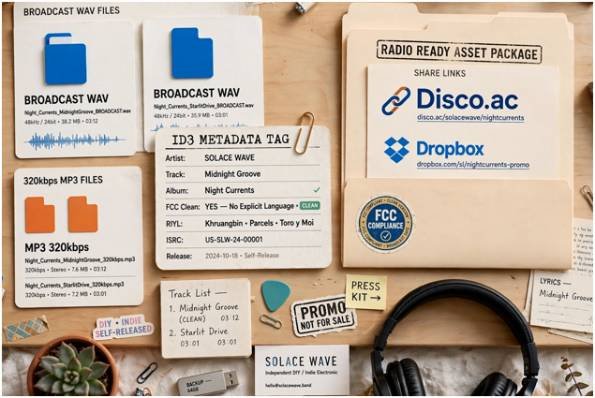
    Provide a folder containing both lossless broadcast WAV files (24-bit or 16-bit / 44.1kHz) and high-bitrate MP3s (320kbps). Every track must feature clean ID3 metadata:

    • Artist Name, Track Title, Album Name, Year, and Primary Genre
    • The Comment Field: Clearly state whether the track is broadcast-ready (e.g., FCC Clean / Radio Edit / RIYL: Alvvays, Japanese Breakfast).

    Never send raw audio files as direct email attachments. Use a seamless, public hosting link like Disco.ac, Dropbox, or a private SoundCloud playlist featuring download buttons.

    The Single-Page One-Sheet Formula

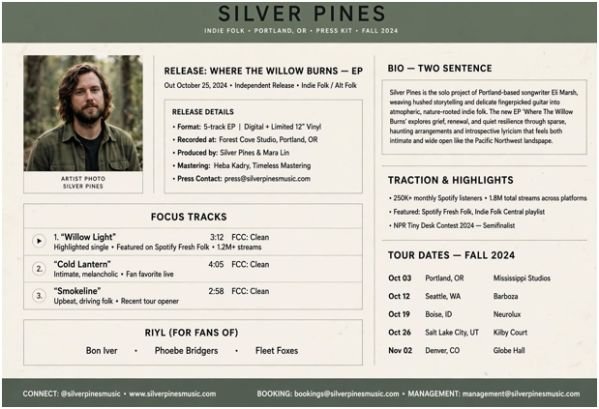
    Attach a single-page PDF “one-sheet” to your submission. A great one-sheet saves the music director from hunting across the web for context. Keep it under one page and ensure it highlights:

    • Core Release Details: Artist name, release date, record label (or self-released), and geographic hometown.
    • Focus Tracks: Point directly to one or two priority singles, including exact runtimes and FCC status.
    • RIYL / FFO: Two or three recognizable “Recommended If You Like” reference artists to establish your sonic territory instantly.
    • Two-Sentence Bio: A concise summary of your sonic identity and recent momentum.
    • Traction & Context: Notable press quotes, previous spins on other independent radio stations, or regional tour dates.

    Anatomy of a High-Conversion Radio Pitch

    When pitching independent music to college radio promoters, brevity wins. Keep your email between three and five sentences.

    Writing Subject Lines That Demand a Click

    Skip vague subject lines like “Check out my new song.” Music directors scan for genre, relevance, and compliance. Use this structure:

    Music Submission: [Artist Name] – “[Track Title]” ([Primary Genre] / FFO: [Artist A, Artist B])

    My Battle-Tested Email Outreach Template

    My Battle-Tested Email Outreach Template

    Here is the exact pitch email I rely on for college campaigns:

    Plaintext

    Subject: Music Submission: Silver Pines – “Ghost Town” (Indie Rock / FFO: Snail Mail, Metric)

    Hi Jordan,

    I love your Thursday afternoon indie rotation on WXTJ, especially your recent spin of the new Wednesday single.

    I’m an independent indie-rock artist from Richmond, VA, and I’m submitting my upcoming single, “Ghost Town” (out Oct 24th), for your daytime playlist consideration. It’s an upbeat, guitar-driven track recorded with clean broadcast specs.

    Listen & Download Here: [Public Disco / Dropbox Link]

    Quick Specs: 3:18 | 100% FCC Clean | RIYL: Snail Mail, Metric, Beach Bunny

    The link above contains broadcast WAVs, 320kbps MP3s, a 1-page one-sheet, and press photos. We’re on tour through Virginia this November and would love to cut custom station liners or stop by for a short in-studio session if you’re interested.

    Thank you for championing independent artists,

    Alex Vance / @silverpinesmusic / (555) 019-2834

    Send a single follow-up email precisely seven to ten days later on the same thread. If you don’t receive a reply, move on. College stations run on volunteer hours; relentless badgering burns bridges.

    Leveraging Airplay into Real Career Momentum

    Securing spins on college radio is not a vanity metric—it provides tangible commercial leverage. When campus stations begin spinning your release, document every play. Tag the station and host on social media to build public goodwill.

    Furthermore, demonstrable radio traction serves as vital social proof when pitching music supervisors for micro sync licensing opportunities. 

    Supervisors for independent films, web series, and gaming look for records that already hold third-party tastemaker validation. Use your NACC chart position or station spins as leverage in your sync pitches to prove your sound connects with engaged listeners.

    Break the Airwaves: Your Next Move

    Securing college radio play isn’t a mysterious club reserved for well-funded labels; it is an exercise in preparation, respect, and targeted execution. 

    Pick three target campus stations in your state today, audit their recent Spinitron playlists, and assemble your radio-ready package. 

    One committed student DJ spinning your track in heavy rotation can ignite the regional buzz your project deserves.

    Beyond the Airwaves: FAQs About College Radio Promotion

    1. How far in advance should I submit music to college radio?

    Submit your music two to four weeks before your official release date so music directors have time to review, download, and schedule tracks.

    2. Can I pitch songs with explicit language to campus radio?

    No; FCC regulations strictly prohibit profanity on non-commercial terrestrial broadcasts, so you must supply a clean radio edit.

    3. How do I check if college stations are playing my music?

    Track airplay using the NACC weekly charts, monitoring station logs on Spinitron, or receiving alerts via digital tracking tools.

    4. What is the difference between a college radio promoter and a music director?

    A music director is a station employee who curates broadcasts, whereas an independent promoter is a third party hired by an artist to pitch their music to those directors.

  • How to Submit Music to Independent Radio Stations

    How to Submit Music to Independent Radio Stations

    Landing airplay on non-commercial and college radio changed my music career. When I first learned how to submit music to independent radio stations, I wasted months sending blind blasts to generic addresses. Those emails ended up deleted unread. 

    Once I revamped my strategy to target curated, local shows with broadcast-ready assets, our tracks earned recurring spins across 34 stations nationwide.

    Independent stations remain pure discovery hubs. Their music directors run on taste rather than corporate mandates, giving emerging artists an authentic launchpad.

          [48-Hour Station Audit]

                      │

                      ▼

           [Broadcast-Ready Vault]

           (WAV / 320k MP3 / Clean / One-Sheet)

                      │

                      ▼

           [Zero-Friction Pitch]

           (Stream Link + Asset Folder)

                      │

                      ▼

           [Spin Tracking & Follow-Up]

    The 48-Hour Station Audit: Finding Shows That Actually Spin Your Sound

    The 48-Hour Station Audit: Finding Shows That Actually Spin Your Sound

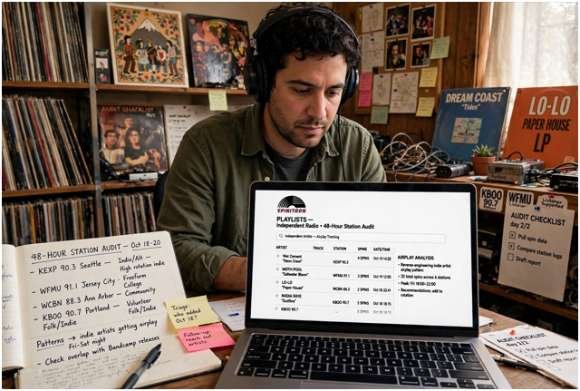
    Curators spot shotgun spam immediately. My first rule is simple: never pitch a station until you run a two-day audit of their active programming schedule.

    Reverse-Engineering Indie Artist Airplay

    Start by tracking five independent artists in your sub-genre who sit just one tier above you. Inspect their social tags and radio charts to see which regional stations feature them. I catalog weekly programming blocks on community and college stations, cross-referencing playlists on platforms like Spinitron.

    This research reveals which specific shows highlight your exact sub-genre, saving you from pitching an acoustic track to a midnight electronic segment. If your catalog also targets micro sync licensing opportunities, focus on shows that syndicate nationally.

    Sifting Decision-Makers from Generic Inboxes

    Avoid pitching to generic addresses like info@ or contact@. Review the station directory to identify the Music Director (MD) or the host running the specialty show. Music directors handle daytime rotation, but volunteer DJs curate their own evening specialty hours. Pitching the individual host guarantees your audio reaches the person queuing the board.

    +——————–+————————+————————–+

    | Role               | Typical Programming    | Submission Target Focus  |

    +——————–+————————+————————–+

    | Music Director     | General Rotation       | Broad album/EP releases  |

    | Specialty Show DJ  | Genre-Specific Blocks  | Singles matching niche   |

    | Program Director   | Station Format / Clock | Station-wide syndication |

    +——————–+————————+————————–+

    Building a Broadcast-Ready Radio Asset Vault

    Building a Broadcast-Ready Radio Asset Vault

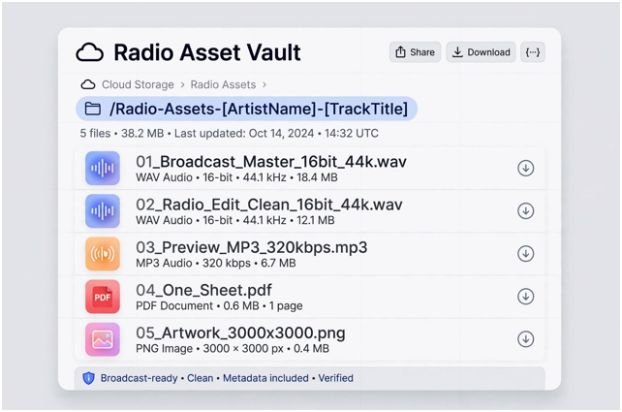
    Radio stations operate under strict delivery requirements. When an MD likes your track, they need to air it immediately without emailing you back for technical fixes. Keep all your deliverables inside a clean cloud folder, ensuring public view permissions remain active.

    /Radio-Assets-[ArtistName]-[TrackTitle]

    │

    ├── 01_Broadcast_Master_16bit_44k.wav

    ├── 02_Radio_Edit_Clean_16bit_44k.wav

    ├── 03_Preview_MP3_320kbps.mp3

    ├── 04_One_Sheet_[ArtistName].pdf

    └── 05_Artwork_3000x3000_HiRes.jpg

    Mastering the FCC-Compliant Clean Edit

    US broadcast transmitters answer directly to the Federal Communications Commission regarding profane and indecent material. Never assume non-commercial stations can bypass daytime decency standards. If your original mix contains explicit language, create an edited version using volume mutes or reversed syllables. Label the filename clearly as Radio Edit – Clean.

    ID3 Metadata and ISRC Tagging Architecture

    Stations automate their digital playout software, which reads track info directly from file tags. Incomplete tags cause files to show up as “Unknown Artist,” leading directors to discard them. Before uploading your MP3s and broadcast WAVs, write exhaustive metadata using tagging tools:

    • Artist Name and Feature Credits
    • Release Title and Track Number
    • Clean/Explicit Status
    • Contact Email and Primary Website
    • International Standard Recording Code (ISRC) assigned via the official US ISRC Agency

    Embedding your ISRC guarantees accurate tracking with performance rights organizations when your spin registers on station logs.

    Structuring the Single-Page Radio One-Sheet

    A one-sheet acts as your release résumé. Station programmers receive hundreds of releases every week and do not have time to read multi-page biographies. Format a one-page PDF containing:

    1. High-resolution album artwork and release date.
    2. A concise 80-word artist biography highlighting your sonic signature.
    3. Three distinct “Recommended If You Like” (RIYL) reference artists.
    4. Focus tracks with explicit running times, beats per minute (BPM), and intro countdown lengths.
    5. Direct links out to your socials and active fan platforms for independent music sales.

    Industry guidelines from the National Association of Broadcasters emphasize clear, instant technical clarity on promotional literature.

    Crafting the Zero-Friction Pitch Email

    Crafting the Zero-Friction Pitch Email

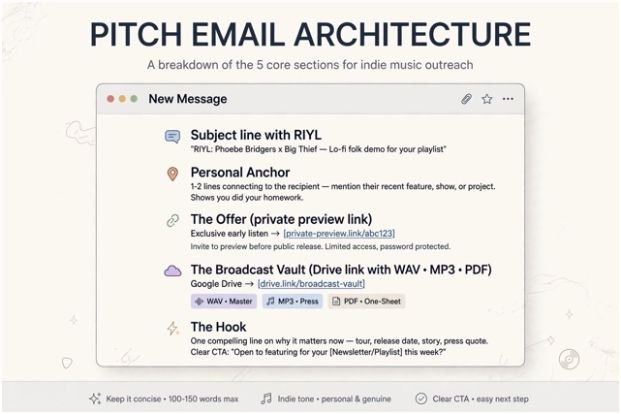
    My open and response rates jumped past 40% when I cut my pitch copy down to three short paragraphs. Treat their inbox with respect. Never attach raw audio files, which trigger spam filters and overwhelm corporate storage limits.

                                  PITCH EMAIL ARCHITECTURE

    ┌────────────────────────────────────────────────────────────────────────────┐

    │ Subject: Music Submission: [Artist] – “[Song]” (RIYL: [Artist A, B])       │

    ├────────────────────────────────────────────────────────────────────────────┤

    │ [Personal Anchor]: “Loved your recent set spinning [Recent Track]…”      │

    │ [The Offer]: Direct, private preview link (SoundCloud / DISCO)             │

    │ [The Broadcast Vault]: Google Drive / Dropbox link with WAV, MP3 & PDF     │

    │ [The Hook]: Key achievement, focus track timing, and clean edit flag       │

    └────────────────────────────────────────────────────────────────────────────┘

    Real-World Pitch Teardown

    Subject: Music Submission: The Static Pines – “Northern Sky” (RIYL: Wilco, War On Drugs)

    Hi Sarah,

    I loved your recent Sunday acoustic block on KXCI, especially your set featuring Skullcrusher. Your focus on layered Americana songwriting prompted me to send our latest single.

    I front The Static Pines, an indie-folk project based in Flagstaff. Our new single, “Northern Sky” (out October 14), fits the atmosphere of your evening rotation.

    • Stream the track: [Private Streaming Link]
    • Download Broadcast Assets: [Dropbox Folder with 16-Bit WAV, MP3, Clean Radio Edit, One-Sheet]

    “Northern Sky” runs 3:28 with an intro clock of 0:14, making it easy to talk over before the vocal hits. The song recently passed 50k independent streams with editorial support on Bandcamp.

    Thanks for your time and for championing independent artists.

    Best,

    Marcus Cole

    Phone: (555) 019-2834 | Website: thestaticpines.com

    Notice how this structure provides every critical programming detail without requiring a single follow-up question.

    Post-Submission Tracking and the Graceful Follow-Up

    Track every submission inside a centralized spreadsheet. Log the station call sign, market location, contact name, date sent, and private stream link analytics.

    Check your streaming link analytics to see if the recipient listened to your track. If seven business days pass without a reply, send a polite follow-up directly within the original email thread:

    “Hi Sarah, checking in quickly on ‘Northern Sky’ for your Sunday rotation. Let me know if you need physical CDs or alternate file masters. Thanks again for your time!”

    If you receive no response to your follow-up, mark the entry as passed and move forward. Station programmers rotate selections rapidly, and aggressive persistence burns professional bridges.

    Frequently Asked Questions

    1. What audio format do independent radio stations prefer?

    Stations prefer uncompressed 16-bit / 44.1 kHz WAV files alongside tagged 320 kbps MP3 files for quick auditioning.

    2. Should I send physical CDs or digital files to radio stations?

    Check the station submission page directly; while most programmers prefer digital cloud links, some traditional stations still mandate physical mailers.

    3. How far in advance should I submit music before my release date?

    Send your pitch three to four weeks prior to your official release date so music directors have adequate lead time to program their logs.

    4. Do independent radio stations pay performance royalties?

    Yes, licensed terrestrial and internet stations submit playlist logs to PROs like ASCAP, BMI, and SESAC to distribute performance royalties.

    Drop the Needle, Own Your Airwaves

    Independent radio remains one of the few places where raw talent beats deep marketing budgets. Treat every station pitch like a creative partnership rather than a cold call. Organize your broadcast files, respect FCC regulations, and send concise emails that respect the curator’s schedule. Pick five target stations this afternoon, run your 48-hour audit, and submit your strongest single.

  • Micro Sync Licensing Opportunities for Independent Musicians: How I Turned Background Audio into Recurring Revenue

    Micro Sync Licensing Opportunities for Independent Musicians: How I Turned Background Audio into Recurring Revenue

    I stopped pitching my catalog to legacy music supervisors after nine months of radio silence. Landing a prime-time television sync or a national commercial placement felt like playing an unpredictable lottery that rarely paid the monthly studio rent. Everything shifted when I shifted my focus to high-volume creator placements. 

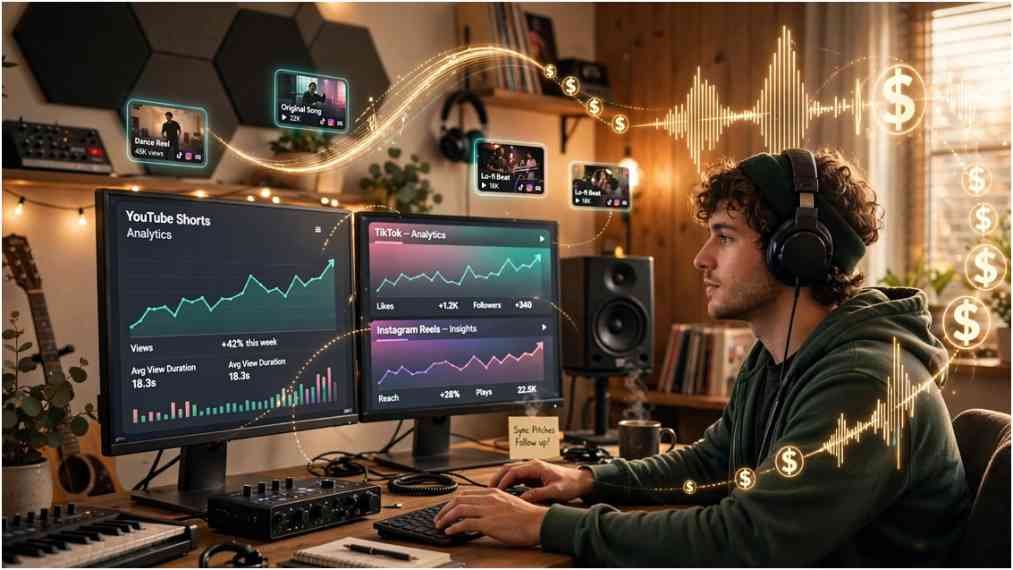
    Exploring micro sync licensing opportunities for independent musicians completely transformed my back-catalog from stagnant files on a hard drive into a steady monthly earner. Rather than chasing a single $10,000 film placement, micro-sync monetizes thousands of short-form videos across YouTube Shorts, TikTok, Instagram Reels, and corporate podcasts. Payouts start as fractions of a cent per play, but they scale aggressively through creator volume.

    What Is Micro Sync Licensing? (And Why Hollywood Isn’t the Only Customer)

    Traditional sync involves manually clearing the master and composition rights for movies, broadcast television, or video games. It is slow, highly political, and heavily gatekept.

    Micro-sync licensing automates this entire pipeline for digital content. Online video creators, small business marketing teams, and social influencers do not have the time or legal budget to negotiate individual licenses. Instead, they access pre-cleared catalogs through subscription platforms, digital distributors, or integrated creator storefronts like YouTube Creator Music.

    The visual creator pays an affordable fee or shares ad revenue, and the music owner gets paid based on tracked platform engagement. It is one of the most reliable hedges against volatile independent music sales.
    The Two-Copyright Leak: Why You Are Probably Leaving 50% on the Table

    When I first uploaded my instrumentals to a distributor, I thought checking the “Social Video Monetization” box was enough. It was not. I was losing half my revenue because I failed to account for the dual nature of copyright law.

                         ┌────────────────────────────────────────┐

                          │            Your Audio Asset            │

                          └──────────────────┬─────────────────────┘

                                             │

                     ┌───────────────────────┴───────────────────────┐

                     ▼                                               ▼

         ┌────────────────────────┐                     ┌────────────────────────┐

         │    Master Recording    │                     │  Composition / Lyrics  │

         └───────────┬────────────┘                     └───────────┬────────────┘

                     │                                               │

                     ▼                                               ▼

         Tracked by Content ID /                         Collected via PROs

           Digital Distributor                             & Publishing Admins

                     │                                               │

                     ▼                                               ▼

           50% of Sync Value                               50% of Sync Value

    Sound Recording vs. Composition in Social Video

    Every recorded track carries two distinct copyrights recognized by the U.S. Copyright Office: the Master (the recorded sound file) and the Composition (the underlying chords, melody, and lyrics).

    Digital distributors like DistroKid, TuneCore, and CD Baby monitor your master file. When their acoustic fingerprinting software detects your sound recording in a user’s clip, they collect the master-side ad revenue.

    However, every public playback of that video also triggers a public performance royalty and a mechanical synchronization royalty on the composition side. If a content creator recreates your progression, covers your melody, or uses your track in a broadcasted web series, master fingerprinting alone will not protect you.

    Plugging the Gap with Global Publishing Administrators

    Plugging the Gap with Global Publishing Administrators

    To capture the composition half of micro-sync revenue, you must join a Performance Rights Organization like BMI or ASCAP to capture performance royalties.

    Even that step leaves money on the table. PROs do not collect digital mechanical royalties.

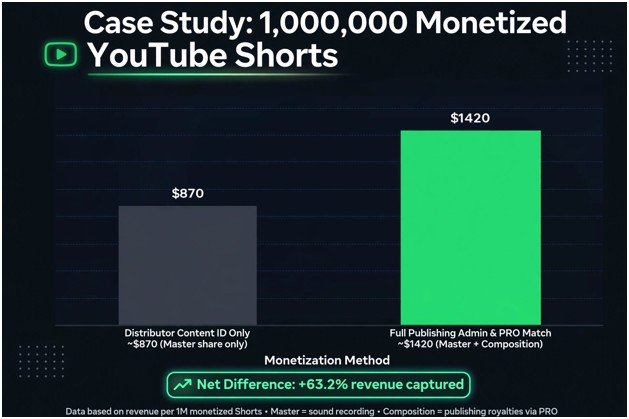
    ┌──────────────────────────────────────────────────────────────────────────┐

    │               Case Study: 1,000,000 Monetized YouTube Shorts             │

    ├─────────────────────────────────────┬────────────────────────────────────┤

    │ Distributor Content ID Only         │ ~$870 (Master share only)          │

    │ Full Publishing Admin & PRO Match   │ ~$1,420 (Master + Composition fees)│

    ├─────────────────────────────────────┴────────────────────────────────────┤

    │ Net Difference: +63.2% revenue captured on the exact same view count     │

    └──────────────────────────────────────────────────────────────────────────┘

    By registering my catalog with a publishing administrator and ensuring my works were active with The MLC, I stopped leaving backend mechanical royalties in global “black box” pools.

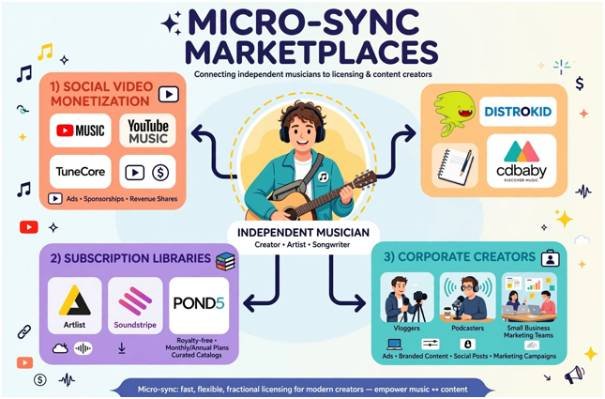
    Where to Monetize: Evaluating the Major Micro-Sync Marketplaces

    Where to Monetize: Evaluating the Major Micro-Sync Marketplaces

    Finding the right distribution channels depends on how you want to manage exclusivity and creative ownership.

    Social Video Monetization and Creator Marketplaces

    Your existing distributor is your fastest point of entry:

    • DistroKid: Charges an optional annual fee per release for YouTube Content ID, retaining a 20% commission on collected ad revenue.
    • CD Baby: Collects social video royalties across Meta and YouTube under their standard setup, charging no recurring annual fee but retaining a 30% cut.
    • TuneCore: Integrates social platform monetization across all release tiers while taking a flat 20% cut.

    Beyond standard distribution, platforms like YouTube Creator Music let creators buy commercial licenses for full-length videos. You set the floor price, and creators license your song directly inside YouTube Studio.

    Subscription Libraries and Buyout Platforms

    Subscription services cater to vloggers, editors, and corporate teams needing vast pools of background music:

    • Artlist & Soundstripe: High-volume platforms where vetted artists receive predictable, pool-based payout models.
    • Pond5: A non-exclusive open marketplace where you set your own licensing rates for indie filmmakers and digital ad creators.
    • Epidemic Sound: Highly lucrative for creator reach, but they generally require a total buyout of rights, conflicting with existing PRO registrations.

    How I Prepare My Catalog for Automated Sync Discovery

    How I Prepare My Catalog for Automated Sync Discovery

    Audio discovery engines do not understand abstract art; they run on structured metadata. To make my music discoverable by algorithms and editors alike, I follow three strict preparation rules:

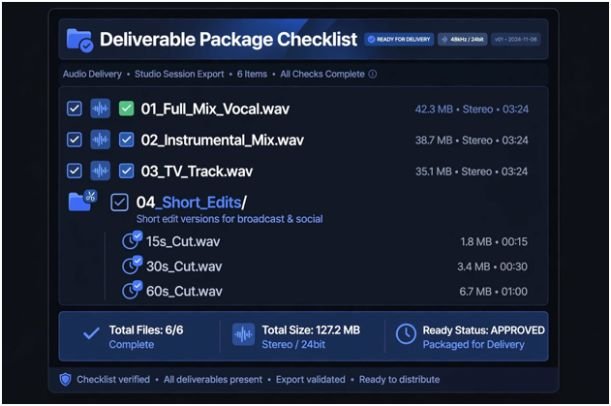
    Deliverable Package Checklist:

    ├── 01_Full_Mix_Vocal.wav (24-bit / 48kHz)

    ├── 02_Instrumental_Mix.wav (Essential for voiceover clarity)

    ├── 03_TV_Track.wav (Instruments + backing harmonies only)

    ├── 04_Short_Edits/

    │   ├── 15s_Cut.wav (Optimized for quick hooks)

    │   ├── 30s_Cut.wav (Standard social ad format)

    │   └── 60s_Cut.wav (Long-form short video)

    1. Deliver Clean Instrumentals: Editors instantly discard tracks that clash with vocal narration. Instrumental mixes are mandatory.
    2. Design Immediate Hooks: Short-form platforms decide track viability in the first three seconds. Avoid long, atmospheric fade-ins.
    3. Use Functional Metadata: Never label files with abstract emotional descriptions alone. Tag files with use-cases (tech unboxing, high-energy fitness, chill study study-vlog), tempo (BPM), key, and dominant instruments (distorted synth, fingerstyle acoustic).

    Stop Pitching Blind and Let the Bots Work

    Waiting around for Hollywood music supervisors or holding out for a major record deal is an exhausting game that leaves your financial fate in someone else’s hands. 

    Micro-sync flips the script: you trade the illusion of an overnight lottery win for the cold, compounding power of automated math. 

    Clean up your split sheets, register your publishing, package your instrumentals, and let thousands of daily video uploads build your royalty foundation. 

    Frequently Asked Questions About Micro-Sync Licensing

    1. What is the average payout for a micro-sync license?

    Payouts range from fractions of a cent per short-form view to $5–$50 upfront for direct creator licenses.

    2. Do I need a publisher to land micro-sync placements?

    No, independent artists can self-administer micro-sync by utilizing digital distributors, open sync marketplaces, and publishing admins.

    3. Can I place the same song in multiple micro-sync libraries?

    Yes, provided you sign non-exclusive licensing agreements rather than exclusive platform contracts.

    4. Will Content ID prevent me from uploading my own music?

    No, you can whitelist your official artist channels with your distributor to avoid copyright flags on personal uploads.

  • How Independent Musicians Make Money Without Touring

    How Independent Musicians Make Money Without Touring

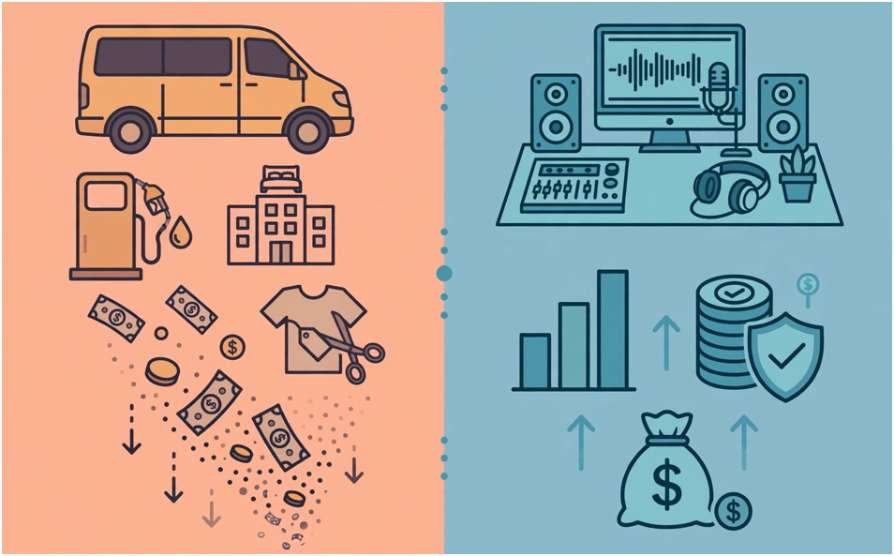
    I spent four years sleeping on floors, watching tour income disappear into fuel tanks and hotel bills. When I audited my year-end earnings, the truth hit hard: six weeks of road dates left me with barely $400 in net profit.

    That brutal reality forced me to rethink my business model. Learning how independent musicians make money without touring transformed my music from an expensive hobby into a sustainable, six-figure operation run entirely from my home workstation.

    You do not need an agent, a live bus, or millions of algorithmic streams to thrive. By establishing direct-to-fan channels, capturing hidden mechanical royalties, and pitching sync placements, you can build a stable music business from your desk.

    The Financial Reality: Why I Parked the Tour Van

    The Financial Reality: Why I Parked the Tour Van

    Most artists believe touring is the only legitimate rite of passage. In reality, touring for indie creators operates on razor-thin margins. Fuel costs, vehicle maintenance, venue merchandise cuts of 20%, and local promoter guarantees make breaking even difficult.

    Breaking Down the True Cost of Life on the Road

    When you tour, you exchange hours of active physical labor for one-time performance fees. If your van alternator breaks or a promoter under-promotes your Tuesday gig, your entire cash margin evaporates.

    By redirecting the months spent booking routing into intentional independent album production, I built assets that pay out continuously. Once I shifted from transient ticket sales to compounding digital catalog equity, my revenue stabilized.

    Unlocking Sync Licensing as a Predictable Revenue Engine

    Media companies, streaming platforms, and indie game studios need a steady stream of original music. Sync licensing pays both upfront placement fees and backend broadcast royalties every time a scene airs.

    Preparing One-Stop Metadata and Instrumental Stems

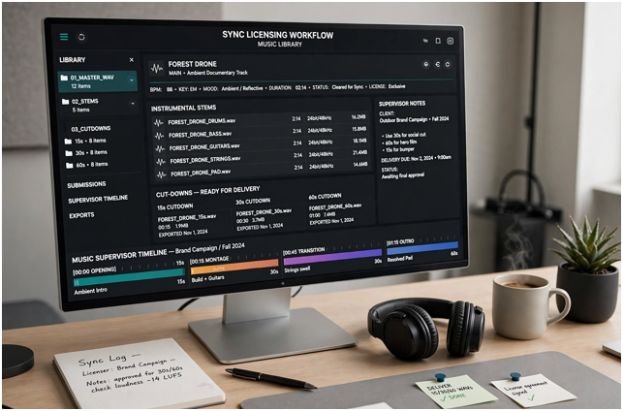
    To secure sync placements, you must operate like a professional music library. Music supervisors work under crushing deadlines. If they cannot license your track within two hours, they pick someone else.

    Every track in my catalog gets organized with clear, immediate deliverables:

    • Full Master and Instrumental WAVs: Always exported at 24-bit / 48 kHz.
    • Cut-Down Mixes: Dedicated 15, 30, and 60-second edits matching broadcast ad standards.
    • Clean ID3 Tagging: Embedding my name, IPI/CAE number, contact email, and explicit wording in the comments field: “100% Pre-Cleared One-Stop Master and Sync.”

    Securing two mid-tier TV placements per quarter consistently yields between $2,500 and $7,500 in upfront synchronization fees, completely bypassing the exhaustion of travel.

    Setting Up Full-Spectrum Royalty Collection

    Setting Up Full-Spectrum Royalty Collection

    Most independent songwriters leave substantial money behind because they assume their digital aggregator handles everything. Distributors deliver audio files to streaming outlets, but they do not collect publishing mechanicals or non-interactive digital broadcast performance money.

    Collecting Digital Mechanicals and Master Performance Royalties

    To ensure every micro-cent reaches your bank account, register your rights across these official collection agencies:

    1. Digital Interactive Mechanicals: Under the Music Modernization Act passed through the U.S. Copyright Office, interactive streaming services must pay separate mechanical royalties. You must affiliate with The MLC to claim these streaming and download mechanical payouts.
    2. Non-Interactive Digital Master Performance: When your master recording plays on Pandora, SiriusXM, or digital webcasts, digital performance royalties accrue. Register directly with SoundExchange as both the Featured Artist and Sound Recording Copyright Owner to receive both splits.
    3. Performing Rights Organizations (PROs): Register your works with ASCAP, BMI, or your local national entity to collect performance royalties from terrestrial radio, clubs, and television broadcasts.

    Claiming these registries turned hundreds of dollars in dormant streaming mechanicals into reliable quarterly deposits. If you lack initial capital to register entities or purchase gear, apply for music grant opportunities through non-profit arts foundations to fund your early business setup.

    Direct-to-Fan Monetization and Digital Sound Design

    Direct-to-Fan Monetization and Digital Sound Design

    Relying on Spotify’s fractions of a cent forces you to chase millions of passive listeners. Direct-to-fan commerce focuses on cultivating a smaller group of dedicated supporters.

    Recurring Memberships and Niche Sample Packs

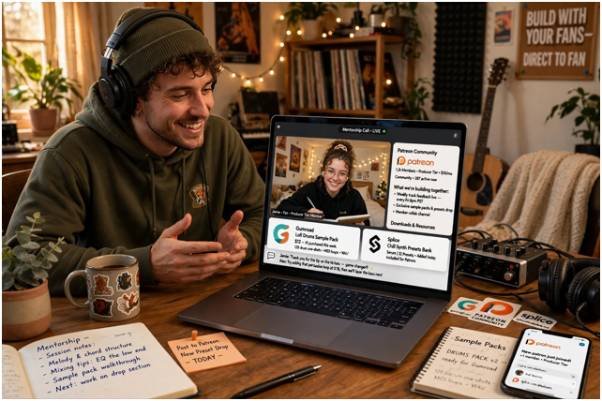
    I run a tiered membership community on Fourthwall and Patreon for 280 core listeners. Charging an average of $9 per month produces over $2,500 in predictable monthly gross income. Members receive monthly acoustic demos, early vinyl access, and a private track-feedback channel.

    Alongside subscriptions, monetize your studio work directly:

    Revenue Channel Typical Price Point Customer Profile
    Boutique Sample Packs $15 – $40 per pack Beatmakers and producers
    Virtual 1-on-1 Mentorship $75 – $150 per hour Aspiring songwriters
    High-Res Digital Discography $25 – $50 one-time Core audiophile superfans

    Selling sound design assets, preset patches, and custom drum kits on platforms like Gumroad or Splice provides pure passive yield from unused session files.

    The Catalog Yield Model: Real Numbers

    Here is an actual 30-day balance sheet from my 10-song studio catalog, demonstrating how passive streams scale without touring:

    • Sync Licensing (One micro-placement + library fees): $1,200
    • Direct Memberships (280 fans at $9/mo): $2,520
    • SoundExchange & The MLC Mechanicals: $340
    • Sample Pack & Digital Preset Sales: $510
    • Streaming Aggregator Payouts: $215
    • Total Monthly Income: $4,785

    Reaching that revenue target on the road requires selling hundreds of club tickets, paying touring musicians, and covering fuel costs. From the studio, it represents high-margin, scalable income.

    Frequently Asked Questions

    1. Can you make a living as a musician without playing live?

    Yes, thousands of producers and songwriters make full-time incomes through sync licensing, digital memberships, production libraries, and sound design.

    2. How much do independent artists make from sync licensing?

    Indie sync placements range from $500 for micro-budget web series to over $15,000 for major television episodes, national commercials, and video games.

    3. Do I need a music publishing administrator?

    A publishing administrator helps collect foreign mechanical royalties, though US songwriters can collect domestic digital mechanicals directly through The MLC for free.

    4. What is the most profitable digital product for musicians?

    Custom drum kits, genre-specific sample packs, and niche preset banks yield the highest profit margins because they carry zero manufacturing or shipping costs.

    Build Your Studio-First Music Career

    Touring is a personal choice, not a mandatory business model. When you stop measuring success by crowded club nights and begin treating your music catalog like intellectual property, everything shifts. Clean up your song metadata, register your mechanical rights, package your stems for sync placement, and start building direct connections with your core fans.

  • Best Direct to Fan Platforms for Independent Music Sales

    Best Direct to Fan Platforms for Independent Music Sales

    I spent years celebrating 50,000 monthly Spotify listeners while struggling to cover basic rehearsal room rent. A royalty check for $180 does not sustain an artistic career. When I shifted my release strategy toward the best direct to fan platforms for independent music sales, my business changed overnight: 62 dedicated supporters out-earned those 50,000 passive streams.

    Relying solely on streaming algorithms leaves you at the mercy of platform changes. Direct-to-fan (D2F) infrastructure allows you to capture listener data, control your retail pricing, and build a resilient income engine.

    The Economics of Direct-to-Fan vs. DSP Streaming

    The Economics of Direct-to-Fan vs. DSP Streaming

    Major streaming platforms pay an average of $0.003 to $0.005 per stream. Generating $1,000 requires roughly 250,000 plays. If a casual listener hears your song ten times across a year, they generate four cents of gross revenue for your project.

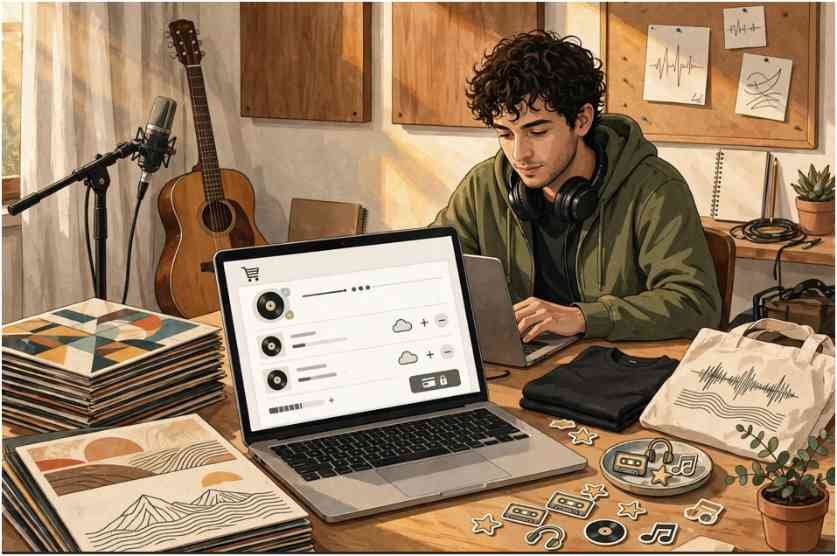
    Direct-to-fan commerce fundamentally shifts this equation. When a fan buys an album directly from you for $15, that single transaction equals the payout of 3,750 algorithmic streams. This structural leverage allows independent musicians make money without touring through high-margin downloads, physical merchandise bundles, and exclusive membership tiers.

    Breaking Down the True Per-Fan Transaction Value

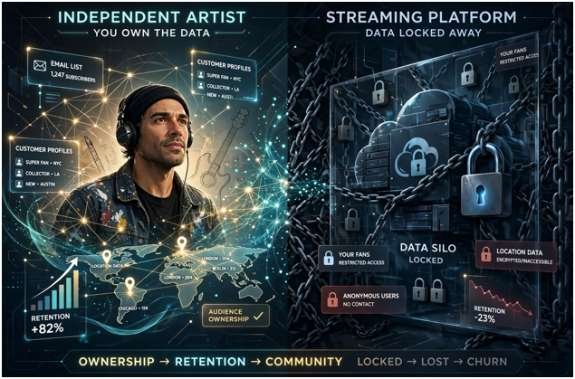
    The primary goal of direct sales is not just higher gross revenue—it is audience retention. When fans stream your record on a DSP, the platform owns their profile, listening habits, and contact information. When fans purchase a track directly through your store, you acquire their email address and purchase history.

    Securing explicit customer opt-in aligns with Federal Trade Commission standards for commercial communication and guarantees you can notify buyers about future vinyl pressings, gig tickets, or digital drops without paying ad networks to reach them.

    The Top Direct to Fan Platforms for Independent Music Sales

    I tested, audited, and sold music across every notable direct platform over the last five release cycles. Each service serves a distinct phase of your fan journey.

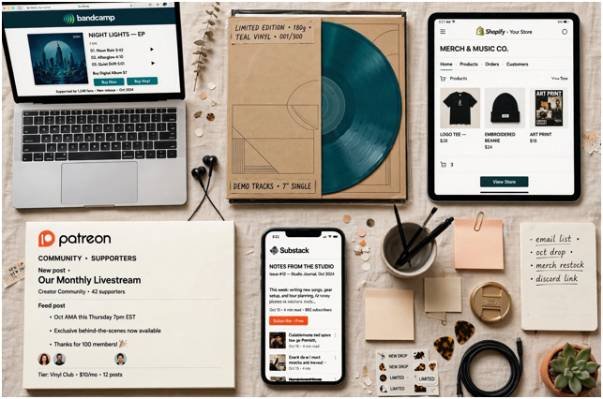
    Bandcamp: The Baseline for Catalogue Discovery and Physical Sales

    Bandcamp remains the benchmark for independent music sales. It functions as both a checkout system and an active discovery marketplace with millions of active accounts.

    • Platform Cut: 10% to 15% on digital sales and physical merch (plus payment processing).
    • Standout Feature: Bandcamp Fridays, where the platform waives its entire cut for 24 hours, sending roughly 93% of revenue straight to your bank account.
    • Audience Ownership: You receive customer emails for every purchase, complete with direct location data.

    Bandcamp makes buying friction almost zero because music fans already trust it. Check the official Bandcamp Artist Guide to make sure your track metadata and digital booklet assets match their distribution formats.

    EVEN: The Best Option for Pre-Streaming Windowing

    EVEN popularized the “sell-before-streaming” window. Instead of dumping your record onto streaming platforms simultaneously, you offer your core community the chance to hear the album 7 to 14 days early for a “pay-what-you-want” price.

    • Platform Cut: Flat 20% commission (this includes all credit card processing fees).
    • Standout Feature: Direct sales report automatically to Luminate for official Billboard and domestic chart tracking.
    • Audience Ownership: Full acquisition of fan email addresses and SMS numbers.

    I found EVEN works best when paired with an impending release date. If fans know they can hear the project ahead of the public for $5 or $20, conversion rates jump noticeably compared to post-release sales campaigns.

    Shopify with Single: Scaled Merch and DSP Integration

    When you reach higher order volumes, running a standalone store on Shopify using the Single Music plugin gives you complete brand autonomy.

    • Platform Cut: Base Shopify subscription ($39/month) plus standard Stripe processing; Single Music takes flat transactional fees or tiered subscription charges.
    • Standout Feature: Seamless product feeds that embed your merch directly onto your Spotify artist profile and YouTube channel.
    • Audience Ownership: 100% owned customer data and complete layout control.

    To make Shopify cost-effective compared to Bandcamp’s 15% cut, you generally need to clear at least $400 to $500 per month in sustained sales. Below that threshold, a flat monthly software subscription chips away at your margins.

    Substack and Patreon: Predictable Recurring Fan Subscriptions

    If you prefer consistent monthly income over one-off release spikes, membership communities solve the feast-or-famine release cycle.

    • Patreon: Charges an 8% to 12% cut and supports complex, multi-tiered reward hierarchies. It natively integrates with Discord to automate subscriber roles and private channels.
    • Substack: Operates on a 10% platform fee and pairs an audio player with a newsletter format. It allows you to deliver voice memos, unreleased acoustic demos, and project reflections directly to subscribers’ inboxes.

    Comparing the Top Direct-to-Fan Platforms

    Comparing the Top Direct-to-Fan Platforms

    Platform Best For Platform Fee Data Ownership Chart Reporting
    Bandcamp Search discovery & physical merch 10–15% cut Direct customer emails Yes
    EVEN Exclusive pre-streaming windowing 20% all-inclusive Email & phone numbers Yes (Luminate)
    Shopify + Single Scaled brands & DSP merchandise sync Monthly fee + card fees 100% owned Yes (Luminate)
    Patreon Tiered communities & private Discord servers 8–12% cut Subscriber list No
    Substack Direct inbox essays & gated audio tracks 10% cut 100% exportable email list No

    How I Build a Zero-Waste Direct-to-Fan Funnel

    How I Build a Zero-Waste Direct-to-Fan Funnel

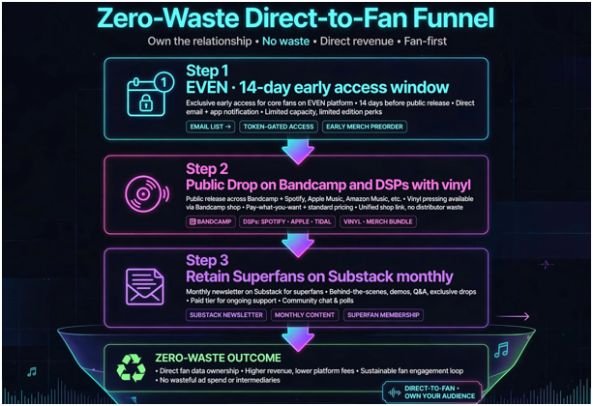
    When self releasing an album, putting all your eggs into a single checkout link leaves money on the table. My preferred system runs on a tiered release sequence:

                     ┌─────────────────────────────────────┐

                      │ 1. Launch on EVEN (14-day window)   │

                      │    Early access digital album sales │

                      └──────────────────┬──────────────────┘

                                         │

                      ┌──────────────────▼──────────────────┐

                      │ 2. Public Drop on Bandcamp & DSPs   │

                      │    Physical vinyl + basic streaming │

                      └──────────────────┬──────────────────┘

                                         │

                      ┌──────────────────▼──────────────────┐

                      │ 3. Retain Superfans on Substack     │

                      │    Monthly stems, demos & updates   │

                      └─────────────────────────────────────┘

    1. Window the Drop: Launch your album on EVEN 14 days before public release to monetize your most dedicated listeners.
    2. Open Wide Distribution: Release the project on streaming apps for discovery while hosting vinyl and apparel purchases on Bandcamp.
    3. Retain the Core: Funnel the buyers from steps 1 and 2 into a monthly Substack or Patreon tier featuring your unreleased demos and production stems.

    Frequently Asked Questions About Direct-to-Fan Music Sales

    1. What platform takes the lowest cut on digital music sales?

    Bandcamp takes 10% to 15% (waived entirely on Bandcamp Fridays), while owned setups like Bandzoogle charge zero commission on sales in exchange for a flat monthly subscription.

    2. Do direct-to-fan sales count toward Billboard and official charts?

    Yes, platforms like EVEN, Bandcamp, and Shopify (via Single Music) report qualifying domestic sales directly to Luminate.

    3. Can I sell music directly to fans without setting up a website?

    Yes, you can upload tracks directly to Bandcamp or EVEN and begin selling within minutes without maintaining custom web hosting.

    4. Should I pull my music off Spotify if I sell directly to fans?

    Keep your catalog on Spotify for top-of-funnel discovery, but use windowing strategies to ensure superfans pay for early access elsewhere first.

    Stop Renting Your Listeners

    Streaming services treat your recorded music as cheap utility content designed to keep listeners subscribed to their apps. If you want a sustainable music career, treat streaming as promotional billboard space and direct-to-fan platforms as your cash register.

    Pick one platform—open a Bandcamp page if you have physical merch, or run an early window on EVEN for your next drop—and start converting passive listeners into paying supporters today.

  • Crowdfunding Strategies for Independent Album Production

    Crowdfunding Strategies for Independent Album Production

    I raised $38,400 to record, press, and tour my third independent record. That success did not happen because I had a massive TikTok following. It worked because I treated the album launch like an equity-free venture fund. 

    Mastering real crowdfunding strategies for independent album production separates musicians who bring their master recordings to life from those who get left with half-finished demos.

    If you step into a campaign expecting fans to stumble upon your page organically, your project will fail. You need calculated financial margins, targeted outreach, and an airtight pre-launch runway.

    The Financial Blueprint: Budgeting Beyond the Studio

    The Financial Blueprint: Budgeting Beyond the Studio

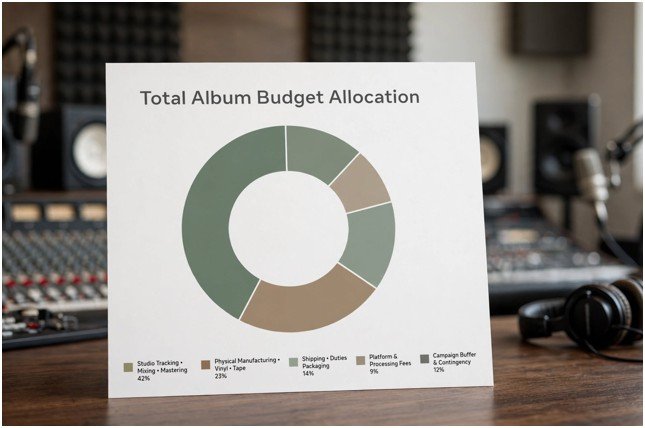
    Most musicians budget solely for tracking, mixing, and mastering. They forget the administrative reality of delivering physical media. When I set up my financial breakdown, studio time consumed less than half the total capital requirement.
    Total Album Budget Allocation

    ├── Studio Tracking, Mixing & Mastering : 42%

    ├── Physical Manufacturing (Vinyl, Tape) : 23%

    ├── Shipping, Duties & Packaging        : 14%

    ├── Platform & Processing Fees (8-10%)  :  9%

    └── Campaign Buffer & Contingency       : 12%

    Account for Hidden Physical Fulfillment Leakage

    Account for Hidden Physical Fulfillment Leakage

    Vinyl production remains a centerpiece for music backers. According to data tracked by the Recording Industry Association of America (RIAA), physical media revenue continues to be driven by passionate collectors willing to pay premium prices.

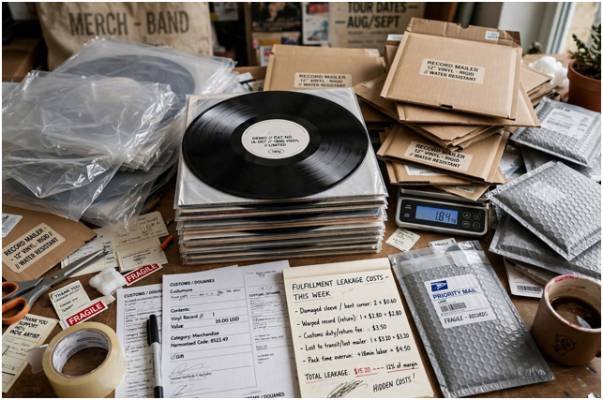
    However, pressing plants demand minimum order runs, test-pressing fees, and freight charges that catch independent creators off guard. Factor in 180-gram record mailers, poly sleeves, bubble mailers, and international customs declarations. Packaging materials alone can erode 15% of your net reward revenue if you do not calculate shipping charges by weight tier before launching.

    Layering Alternative Capital and Grants

    Do not force a single campaign to shoulder every production expense. Before asking your audience for backing, research competitive music grant opportunities for independent artists to cover early pre-production expenses. Grants offset baseline engineering fees, which lowers your public crowdfunding threshold. A lower public target lets your campaign hit 100% funding faster, triggering organic algorithm boosts across discovery feeds.

    The Pre-Launch Playbook: The 35 Percent Secret

    The Pre-Launch Playbook: The 35 Percent Secret

    The first 48 hours determine campaign survival. Platforms favor momentum. When an algorithm detects rapid early pledges, it surfaces the project on curated discovery feeds and newsletter digests.

    The Tier-Zero Seed Strategy

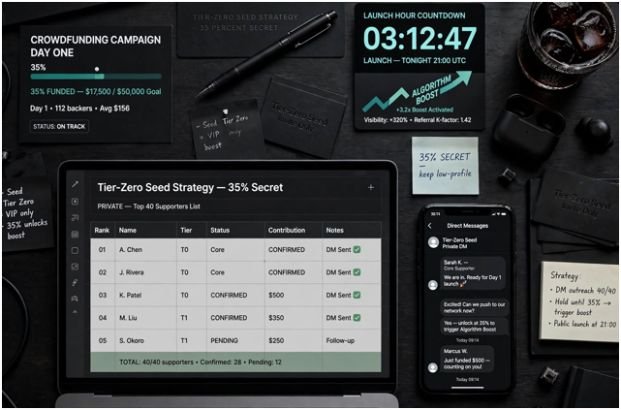
    Never launch a public campaign sitting at zero dollars. I employ what I call the Tier-Zero Seed approach:

    1. Build a private spreadsheet of your top 40 supporters, family, and recurring listeners four weeks out.
    2. Personally call, message, or meet each contact individually.
    3. Secure committed pledge amounts in writing before the public page goes live.
    4. Send direct private links during your launch hour so those pledges register instantly.

    Securing 30% to 35% of your funding goal on day one sends an undeniable signal of legitimacy to casual backers who visit later. For broader baseline parameters, review the Kickstarter Creator Handbook to align your timeline with established creator best practices.

    Choosing the Right Campaign Engine

    Pick your platform based on backer behavior rather than superficial feature lists:

    Platform Model Best For Risk Profile
    Kickstarter All-or-Nothing Defined album production runs with fixed release deadlines Zero financial downside if underfunded; high motivation factor
    Indiegogo Flexible Funding Projects with modular scope where partial funding still works Must fulfill perks even if you hit only 40% of the financial target
    Bandcamp Campaigns Direct-to-Press Vinyl runs aimed exclusively at existing core band listeners Low fulfillment overhead; relies entirely on existing platform fans

    If your production depends on an expensive session orchestra or specialist mixing engineer, choose all-or-nothing. Delivering an album with incomplete funding leaves artists heavily out of pocket.

    Reward Tier Design That Actually Converts

    Reward Tier Design That Actually Converts

    T-shirts and stickers carry miserable profit margins. After factoring in manufacturing and postage, an independent creator often clears under $6 on a $30 swag tier. Instead, build tiers that balance tangible goods with high-margin creative experiences.

    Experiential Value Over Low-Margin Merchandise

    Backers fund your record because they value your creative voice. Independent distribution analysis from Bandcamp Daily shows that dedicated fans routinely invest in exclusive, process-driven artifacts over standardized generic apparel:

    • Executive Producer Credit ($300–$500): Include their name directly on the vinyl jacket liner notes and digital credits. Margins: 100%.
    • Stems & Stems Breakdown Video ($40–$60): Share the raw session multi-tracks alongside a 20-minute screen walkthrough breaking down your arrangement. Margins: 100%.
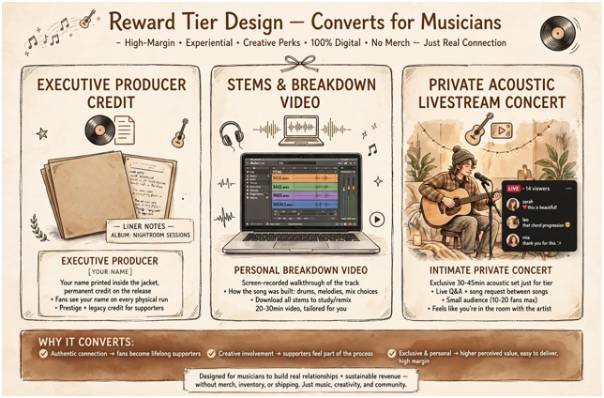
    • Private Acoustic Listening Stream ($75): Host an unlisted livestream concert playing the unreleased album front-to-back with live stories behind each song. Margins: 98%.

    Protecting Your Master and Release Rights

    Never pledge copyright ownership or publishing participation as a backer perk. Always review what rights do independent artists own under distribution deals before negotiating exclusive pre-release licenses with backers or outside sponsors.

    Register your compositions early, and ensure every co-writer and producer signs split sheets before launching your campaign. Collect neighboring rights royalties worldwide through organizations like Sound Exchange so your mechanical and master income remains intact when physical and digital backers stream your project post-campaign.

    Executing the 30-Day Campaign Window

    Run your campaign for no more than 30 days. Longer windows do not yield more capital; they dilute urgency. Expect your backing velocity to resemble a distinct bathtub curve:

    Pledges

      │  \                                   /  Final 48-Hour Surge

      │   \                                 /

      │    \_______________________________/

      │            The Mid-Campaign Lull

      └────────────────────────────────────── Time (30 Days)

    During the mid-campaign lull (days 10 through 22), stop repeating the exact same “pledge now” link across social media. Pivot entirely to storytelling:

    • Reveal isolated vocal tracks or guitar solo outtakes.
    • Share the raw conceptual art sketches that did not make the front cover.
    • Introduce an achievable Stretch Goal, such as pressing on colored heavyweight wax or adding a bonus b-side track, once you reach 100%.

    FAQs About Album Crowdfunding

    1. What is the ideal funding goal for an independent album production?

    Calculate your exact studio and manufacturing costs, add 20% for taxes and shipping, and treat that final figure as your minimum viable baseline.

    2. How long should an album crowdfunding campaign run?

    Keep your campaign between 28 and 30 days to maximize early urgency and capitalize on final-hours alerts.

    3. Should I use flexible or fixed funding for my album?

    Choose fixed, all-or-nothing funding if your album requires a non-negotiable minimum capital injection to finish tracking, mixing, and pressing.

    4. When should I ship physical backer rewards after the campaign ends?

    Promise fulfillment dates 6 to 8 months after funding concludes to allow realistic buffer time for pressing plant delays.

    Pack Up the Gear: Your Next Move

    Stop treating album crowdfunding like a digital tip jar. It is an organized creative pre-order engine that validates your music before you spend thousands of dollars in the studio. Sit down today, audit your actual production numbers, and build your Tier-Zero list of 40 early believers. The funding follows the framework.

  • Music Grant Opportunities for Independent Artists: My Insider Playbook

    Music Grant Opportunities for Independent Artists: My Insider Playbook

    I spent years draining my savings account to finish 4-track EPs before I ever sat on a grant evaluation panel. When you spend your own rent money on studio time, every dollar feels like a compromise. Securing institutional music grant opportunities for independent artists completely changed my production trajectory. 

    It allowed me to hire world-class session players, book proper tracking facilities, and pay myself for creative labor without giving away ownership.

    Securing institutional money requires understanding how selection committees evaluate risk. Grant panels read hundreds of proposals every cycle. They do not fund vague aspirations; they fund structured execution plans.

    The Grant Funding Shift Independent Artists Must Understand

    The Grant Funding Shift Independent Artists Must Understand

    Public funding and private endowments do not function like venture capital or major label advances. They do not demand recoupment, interest, or backend streaming equity. Reviewers look for cultural significance, artistic integrity, and community impact.

    When I evaluate submissions, I grade against a specific ratio: 50% artistic merit, 30% project feasibility, and 20% career impact. If your track sounds remarkable but your budget numbers look arbitrary, your proposal gets disqualified immediately.

    Tier 1: Major National Music Grants in the United States

    Major National Music Grants in the United States

    Large national grants offer substantial capital designed to elevate your long-term creative trajectory.

                        ┌──────────────────────────────────┐

                         │ National Music Funding Streams   │

                         └────────────────┬─────────────────┘

                                          │

                ┌─────────────────────────┴─────────────────────────┐

                ▼                                                   ▼

    ┌───────────────────────┐                           ┌───────────────────────┐

    │ Creative Capital      │                           │ New Music USA         │

    │ (Up to $50,000)       │                           │ (Up to $5,000)        │

    │ Multi-Year Growth     │                           │ New Recording & Works │

    └───────────────────────┘                           └───────────────────────┘

    Creative Capital Award: High-Impact Project Grants

    The Creative Capital Award remains one of the most prestigious funding sources for individual creators in the country. It provides project grants of up to $50,000. Beyond funding, awardees receive multi-year advisory sessions, financial consults, and legal counsel.

    To qualify, you must have at least five years of professional practice, and the project cannot be purely promotional. In my experience, proposals that challenge conventional genre lines or explore urgent social narratives fare best here.

    New Music USA Creator Fund: Composition and Recording Support

    The New Music USA Creator Fund distributes project grants averaging $3,000 to $5,000. This program focuses on original music composition across all styles, including jazz, electronic, folk, and classical avant-garde.

    I frequently recommend this fund to artists embarking on their first professionally tracked studio recording. The application demands high-fidelity audio samples and confirmed collaborator letters. Make sure your collaborators sign off on their quoted rates before submission.

    Tier 2: Rolling Emergency and Micro-Funding Streams

    Tier 2: Rolling Emergency and Micro-Funding Streams

    Long-term project cycles often require six to eight months of deliberation. When unforeseen opportunities or sudden expenses strike, turn to rapid-response funds.

    Foundation for Contemporary Arts (FCA) Emergency Relief

    The Foundation for Contemporary Arts offers immediate micro-grants between $500 and $3,000. These funds operate on a rolling, year-round deadline.

    Eligible expenses include sudden travel costs for unexpected performance invites or urgent gear replacements right before scheduled tour dates. Their board reviews applications on a monthly cycle, making this an essential safety net for working musicians.

    State Arts Agencies and Regional Fellowships

    Do not overlook public funds distributed through the National Endowment for the Arts regional affiliates. State arts councils often distribute grants ranging from $1,000 to $15,000 for local recording and presentation. Competition at the state level is significantly lower than national open calls, making your acceptance probability substantially higher.

    How I Build a Grant-Winning Budget (The 4-Part System)

    How I Build a Grant-Winning Budget (The 4-Part System)

    Reviewers look for balanced ledgers where every cost corresponds to an identifiable milestone. During my last grant submission, I structured our production costs across four transparent tiers:

    • Pre-Production: Rehearsal lockouts and arrangement fees ($40/hr).
    • Tracking Personnel: Commercial live room bookings ($650/day) and session rhythm section rates ($300/song).
    • Post-Production: Dedicated multitrack mixing ($350/track) and stem mastering ($100/track).
    • Direct Artist Compensation: A calculated personal wage ($30/hr across 60 production hours).

    Never list generic lumps like “Studio: $4,000.” Panelists know industry standard day rates. Calculating expenses with formula units proves your project is ready for immediate deployment.
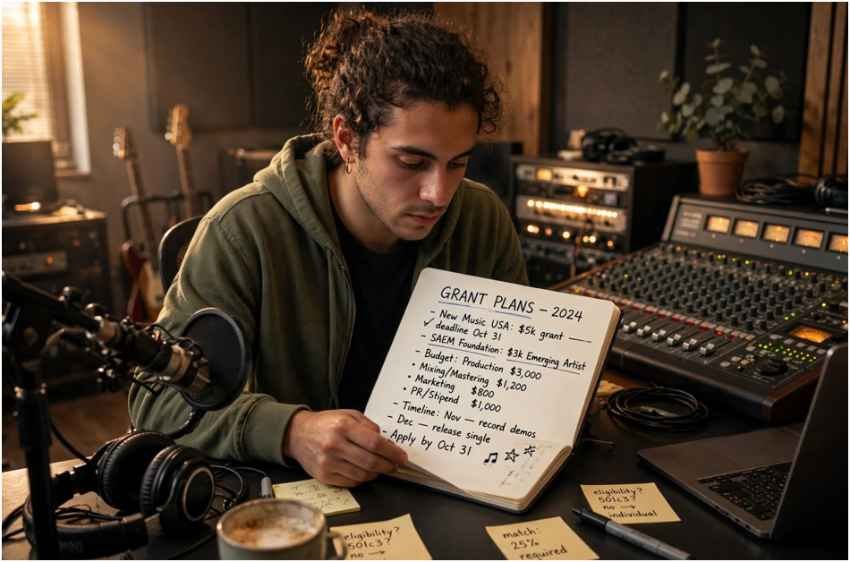
    Legal and Commercial Rights You Must Protect Before Applying

    Receiving public grant money should never jeopardize your intellectual property. Most government agencies and nonprofit foundations place no claim on your sound recordings or underlying publishing copyrights.
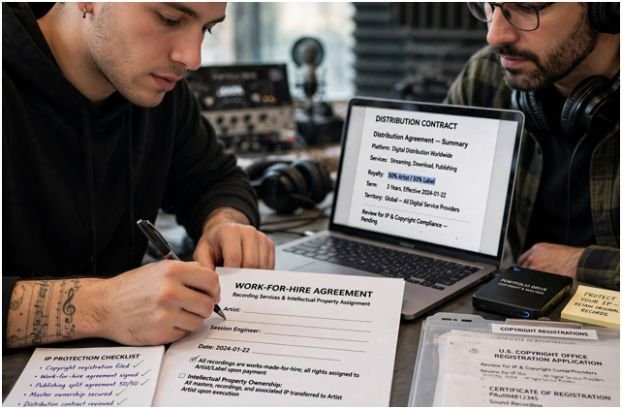
    However, issues frequently arise if you sign distribution contracts simultaneously. Understanding what rights do independent artists own under distribution deals ensures you do not inadvertently license grant-funded masters under restrictive exclusive terms.

    Similarly, if you use grant funds to track an album before shopping it to independent music labels accepting demo submissions, ensure all session engineers sign work-for-hire agreements. Keep these documents organized in a portfolio drive alongside your original grant narrative.

    Frequently Asked Questions About Music Grants

    1. Do I have to repay music grants if my album doesn’t chart?

    No, grants are non-repayable awards, provided you fulfill the agreed project milestones and expenditure reports.

    2. Can I pay myself an artist fee with grant money?

    Yes, most modern panels require primary artists to allocate fair wages for their compositional and performance labor.

    3. Are music grants considered taxable income in the United States?

    Yes, the IRS classifies non-fellowship project grants as taxable gross income, reported on Form 1099-MISC or 1099-NEC.

    4. Can an unsigned solo artist apply without an established 501(c)(3)?

    Yes, many creators apply directly as individuals or partner with a fiscal sponsor to process corporate foundation checks.

    Your Grant Submission Reality Check

    Stop viewing grant proposals as corporate homework. A strong application is simply an itemized blueprint that proves your artistic vision is ready for real-world execution. Select two programs with deadlines four months out, prepare your audio work samples, and build an honest, transparent production budget.