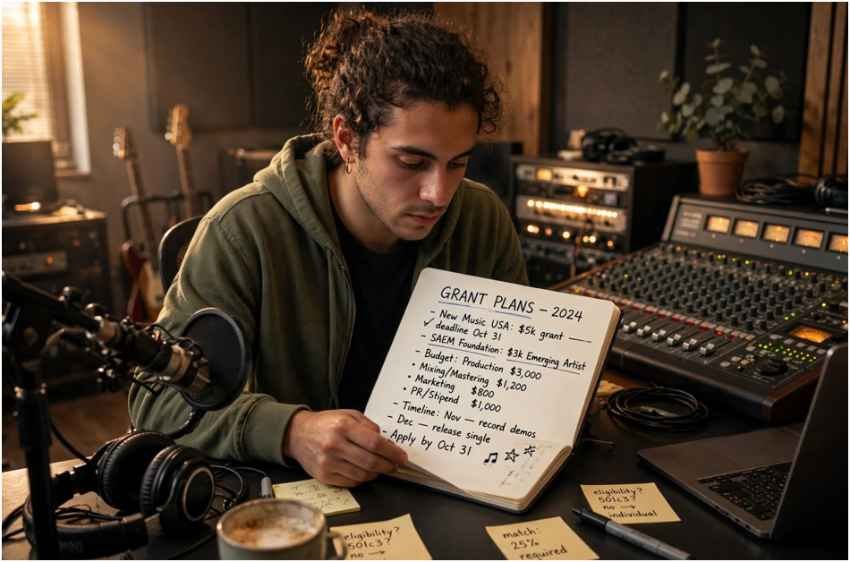
I spent years draining my savings account to finish 4-track EPs before I ever sat on a grant evaluation panel. When you spend your own rent money on studio time, every dollar feels like a compromise. Securing institutional music grant opportunities for independent artists completely changed my production trajectory.
It allowed me to hire world-class session players, book proper tracking facilities, and pay myself for creative labor without giving away ownership.
Securing institutional money requires understanding how selection committees evaluate risk. Grant panels read hundreds of proposals every cycle. They do not fund vague aspirations; they fund structured execution plans.
The Grant Funding Shift Independent Artists Must Understand
Public funding and private endowments do not function like venture capital or major label advances. They do not demand recoupment, interest, or backend streaming equity. Reviewers look for cultural significance, artistic integrity, and community impact.
When I evaluate submissions, I grade against a specific ratio: 50% artistic merit, 30% project feasibility, and 20% career impact. If your track sounds remarkable but your budget numbers look arbitrary, your proposal gets disqualified immediately.
Tier 1: Major National Music Grants in the United States
Large national grants offer substantial capital designed to elevate your long-term creative trajectory.
┌──────────────────────────────────┐
│ National Music Funding Streams │
└────────────────┬─────────────────┘
│
┌─────────────────────────┴─────────────────────────┐
▼ ▼
┌───────────────────────┐ ┌───────────────────────┐
│ Creative Capital │ │ New Music USA │
│ (Up to $50,000) │ │ (Up to $5,000) │
│ Multi-Year Growth │ │ New Recording & Works │
└───────────────────────┘ └───────────────────────┘
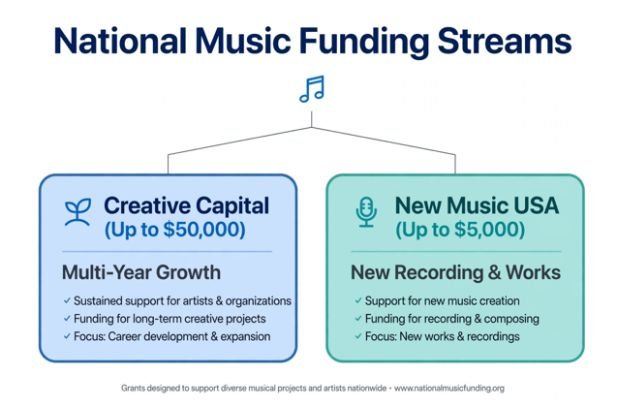
Creative Capital Award: High-Impact Project Grants
The Creative Capital Award remains one of the most prestigious funding sources for individual creators in the country. It provides project grants of up to $50,000. Beyond funding, awardees receive multi-year advisory sessions, financial consults, and legal counsel.
To qualify, you must have at least five years of professional practice, and the project cannot be purely promotional. In my experience, proposals that challenge conventional genre lines or explore urgent social narratives fare best here.
New Music USA Creator Fund: Composition and Recording Support
The New Music USA Creator Fund distributes project grants averaging $3,000 to $5,000. This program focuses on original music composition across all styles, including jazz, electronic, folk, and classical avant-garde.
I frequently recommend this fund to artists embarking on their first professionally tracked studio recording. The application demands high-fidelity audio samples and confirmed collaborator letters. Make sure your collaborators sign off on their quoted rates before submission.
Tier 2: Rolling Emergency and Micro-Funding Streams
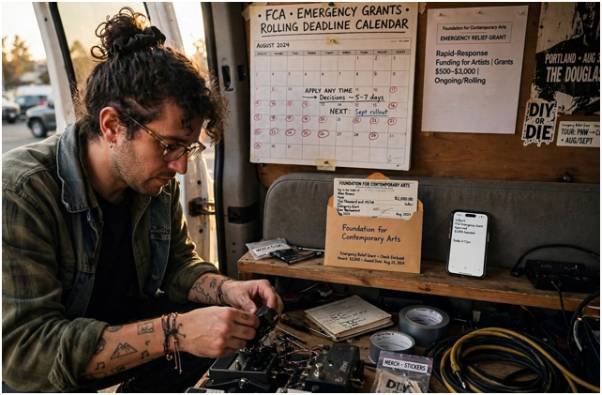
Long-term project cycles often require six to eight months of deliberation. When unforeseen opportunities or sudden expenses strike, turn to rapid-response funds.
Foundation for Contemporary Arts (FCA) Emergency Relief
The Foundation for Contemporary Arts offers immediate micro-grants between $500 and $3,000. These funds operate on a rolling, year-round deadline.
Eligible expenses include sudden travel costs for unexpected performance invites or urgent gear replacements right before scheduled tour dates. Their board reviews applications on a monthly cycle, making this an essential safety net for working musicians.
State Arts Agencies and Regional Fellowships
Do not overlook public funds distributed through the National Endowment for the Arts regional affiliates. State arts councils often distribute grants ranging from $1,000 to $15,000 for local recording and presentation. Competition at the state level is significantly lower than national open calls, making your acceptance probability substantially higher.
How I Build a Grant-Winning Budget (The 4-Part System)
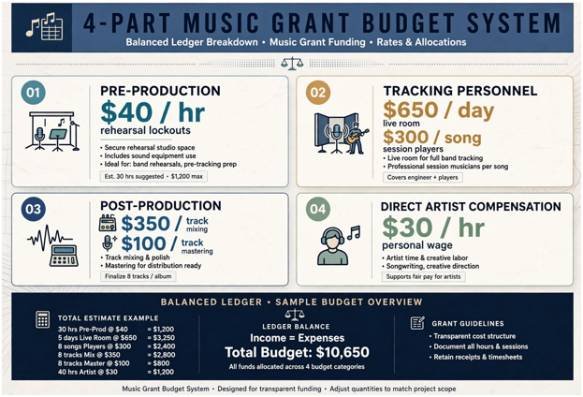
Reviewers look for balanced ledgers where every cost corresponds to an identifiable milestone. During my last grant submission, I structured our production costs across four transparent tiers:
- Pre-Production: Rehearsal lockouts and arrangement fees ($40/hr).
- Tracking Personnel: Commercial live room bookings ($650/day) and session rhythm section rates ($300/song).
- Post-Production: Dedicated multitrack mixing ($350/track) and stem mastering ($100/track).
- Direct Artist Compensation: A calculated personal wage ($30/hr across 60 production hours).
Never list generic lumps like “Studio: $4,000.” Panelists know industry standard day rates. Calculating expenses with formula units proves your project is ready for immediate deployment.
Legal and Commercial Rights You Must Protect Before Applying
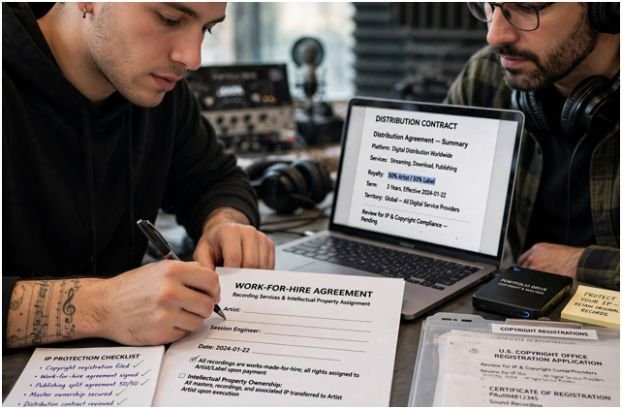
Receiving public grant money should never jeopardize your intellectual property. Most government agencies and nonprofit foundations place no claim on your sound recordings or underlying publishing copyrights.
However, issues frequently arise if you sign distribution contracts simultaneously. Understanding what rights do independent artists own under distribution deals ensures you do not inadvertently license grant-funded masters under restrictive exclusive terms.
Similarly, if you use grant funds to track an album before shopping it to independent music labels accepting demo submissions, ensure all session engineers sign work-for-hire agreements. Keep these documents organized in a portfolio drive alongside your original grant narrative.
Frequently Asked Questions About Music Grants
1. Do I have to repay music grants if my album doesn’t chart?
No, grants are non-repayable awards, provided you fulfill the agreed project milestones and expenditure reports.
2. Can I pay myself an artist fee with grant money?
Yes, most modern panels require primary artists to allocate fair wages for their compositional and performance labor.
3. Are music grants considered taxable income in the United States?
Yes, the IRS classifies non-fellowship project grants as taxable gross income, reported on Form 1099-MISC or 1099-NEC.
4. Can an unsigned solo artist apply without an established 501(c)(3)?
Yes, many creators apply directly as individuals or partner with a fiscal sponsor to process corporate foundation checks.
Your Grant Submission Reality Check
Stop viewing grant proposals as corporate homework. A strong application is simply an itemized blueprint that proves your artistic vision is ready for real-world execution. Select two programs with deadlines four months out, prepare your audio work samples, and build an honest, transparent production budget.
Leave a Reply