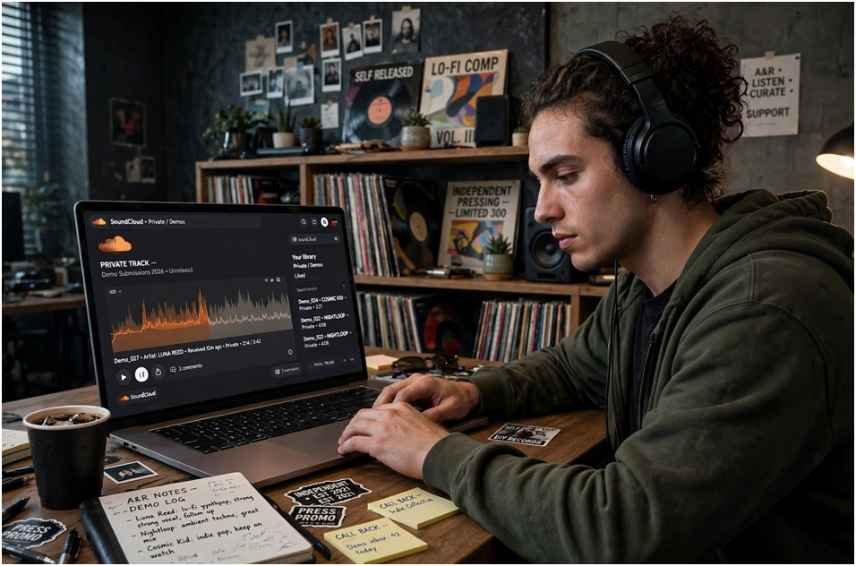
I spent years sending cold MP3 attachments into dead inboxes before learning the hard truth about modern music discovery. If you want to get signed, you must target the top independent music labels accepting demo submissions using the exact technological workflows their A&R teams prioritize.
A cold pitch is an engineering problem as much as an artistic one. Labels filter through hundreds of tracks daily, discarding files that violate submission guidelines before listening to a single note.
Navigating the landscape requires knowing where to look, how to pitch, and how to protect your career equity.
What Top Indie Record Labels Actually Look for in a Demo
Independent labels operate on lean teams and focused budgets. Unlike majors, they rarely sign unproven artists based on vague potential or incomplete rough takes. They sign turnkey assets that integrate seamlessly into their release rosters.
The 20-Second Drop Rule
When I track listening metrics on A&R links via private streaming dashboards, one behavioral trend stands out: an A&R rep spends an average of 18 to 25 seconds on a submission before making a decision. If your track opens with a 45-second ambient drone before reaching the core motif, you have wasted your window.
Your best hook, main groove, or defining vocal line must land upfront. Give the scout an immediate reason to keep listening rather than skipping to the next submission in their queue.
Rights Clearance and Metadata Hygiene
Independent teams cannot afford legal battles over uncleared splice loops or obscure vinyl samples. Every track you pitch must be 100% royalty-free or fully cleared. In fact, organizations like the American Association of Independent Music (A2IM) frequently emphasize that clear master rights and publishing splits are the single biggest factor separating amateur submissions from viable commercial releases.
Ensure your files have embedded ID3 metadata including:
- Artist name and primary contact email
- Track title, BPM, and musical key
- Clear ownership status (e.g., “100% Master & Publishing pre-cleared”)
Electronic and Dance Labels Actively Scouting Talent

Dance music relies on dynamic club testing, making electronic imprints the most systematized demo evaluators in the music business.
Armada Music and Defected Records
Armada Music, co-founded by Armin van Buuren, accepts regular submissions across trance, deep house, and melodic techno. They process entries via designated online portals and platform aggregators like LabelRadar. Expect a structured turnaround window of roughly six to eight weeks.
Defected Records remains the gold standard for pure house music, disco edits, and soulful grooves. Defected routes submissions for its primary roster and eleven sister labels—including Glitterbox and DFTD—directly through automated portal pipelines. Do not send attachments; submit your clean, uncompressed streaming links through their established channels.
Monstercat and Spinnin’ Talent Pool
Monstercat built an empire by signing emerging bass music, glitch, and gaming soundtrack producers out of obscurity. They maintain an always-open submission system on direct evaluation platforms. They prioritize distinct sonic branding over existing social followings.
Spinnin’ Records relies on their dedicated “Talent Pool” platform. This public-facing ecosystem allows creators to upload club cuts, climb community charts, and catch the direct attention of Spinnin’s internal A&R board.
Alternative, Punk, and Indie Rock Powerhouses
Guitar music and alternative songwriting still prioritize raw, unvarnished identity over hyper-quantized production.
Sub Pop Records
Seattle’s Sub Pop remains one of the most culturally revered record labels on the planet. From pioneering grunge to breaking world-class indie acts, they maintain a remarkably accessible intake policy. Sub Pop accepts unsolicited submissions through a dedicated demo review inbox.
Their rules are non-negotiable: send streaming links only. Never attach raw WAVs or MP3s to an email sent to Sub Pop, as their servers will flag or reject files over standard size thresholds. Their team reviews unreleased material on rolling monthly cycles.
Epitaph Records and Glassnote
Founded by Bad Religion’s Brett Gurewitz, Epitaph champions punk, pop-punk, post-hardcore, and left-leaning indie folk. They seek completed arrangements that deliver a tangible counter-culture edge.
Glassnote Records is legendary for breaking alternative giants like Phoenix and Mumford & Sons. They maintain private digital portals for unsolicited work. When pitching Glassnote, emphasize your live performance history or regional audience traction alongside the audio.
Hip-Hop, Beats, and Global Grooves
Urban music scouting moves quickly, relying on distinctive sample work, lyricism, and cross-genre fusion.
Stones Throw Records and Chinese Man Records
Stones Throw Records, founded by Peanut Butter Wolf, is the definitive home for lo-fi hip-hop, underground beatmakers, psych-funk, and boundary-pushing soul. They reject derivative radio rap; their catalog celebrates idiosyncratic, analog-tinged textures.
Overseas, Chinese Man Records curates an international catalog of trip-hop, dub, afro-funk, and experimental hip-hop. They actively evaluate emerging worldwide beatmakers through indie discovery aggregators such as Groover.
By diversifying your streaming, physical, and performance royalties, you build steady independent artist revenue that proves your project is commercially viable from day one.
How to Route and Format Your Pitch
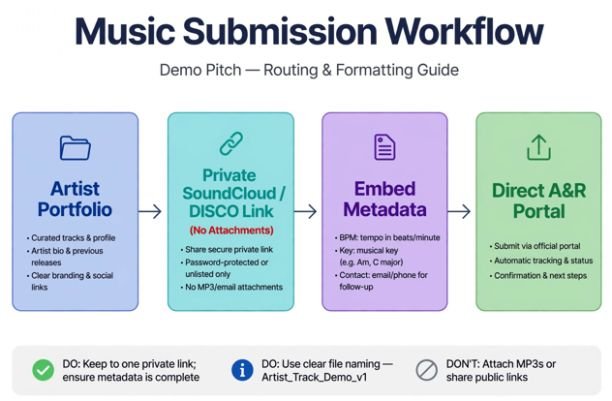
Pitching a record label requires treating your unreleased catalog like proprietary software. Never mass CC a list of fifty A&Rs on a single email. Personalize each message, specify why your sound belongs on that specific roster, and point them to a streamlined listening hub.
[Artist Portfolio]
│
▼
[DISCO / Private SoundCloud Link] ──▶ [No Audio Files Attached]
│
▼
[Embed Core Metadata] ──────────────▶ [Artist Name, BPM, Key, Contact]
│
▼
[Direct A&R Portal / Targeted Email]
Building Your Private Stream Architecture
Host your unreleased music exclusively on a private, streaming-friendly host. Private SoundCloud links with downloads enabled or secure DISCO playlists are the industry standards. According to reports tracking digital audio rights and licensing protocols from Billboard, A&R managers almost universally prioritize platform streams over email attachments.
If you are developing your catalog while retaining ownership, mastering your own independent music distribution gives you immediate leverage. Labels want to see that your track can generate momentum before they invest their capital.
You can also monitor non-interactive digital performance royalties via SoundExchange to register catalog assets before external deals are executed.
Frequently Asked Questions About Submitting Demos
1. How long does an indie label take to review a demo?
Most independent labels take between four to eight weeks to review incoming material due to backlog volumes.
2. Should I send MP3 files or streaming links?
Always send private streaming links like SoundCloud or DISCO with downloads enabled; never send attached audio files.
3. Can I submit a demo that has already been released?
Most labels only accept unreleased, exclusive masters unless you are negotiating an upstream distribution or catalog acquisition deal.
4. Do I need a manager before submitting music to indie labels?
No, independent labels actively review direct artist submissions as long as the music is high-quality and the pitch is professional.
Stop Waiting for Permission and Ship Your Sound
A record deal is a business partnership, not validation of your worth as an artist. Send your submissions to labels whose rosters you genuinely respect, follow their exact delivery instructions, and give them a hard deadline of thirty days.
If they pass or fail to respond, do not stall your rollout. Distribute the project independently, cultivate your own audience, and make the labels come searching for you on your next cycle.
Leave a Reply