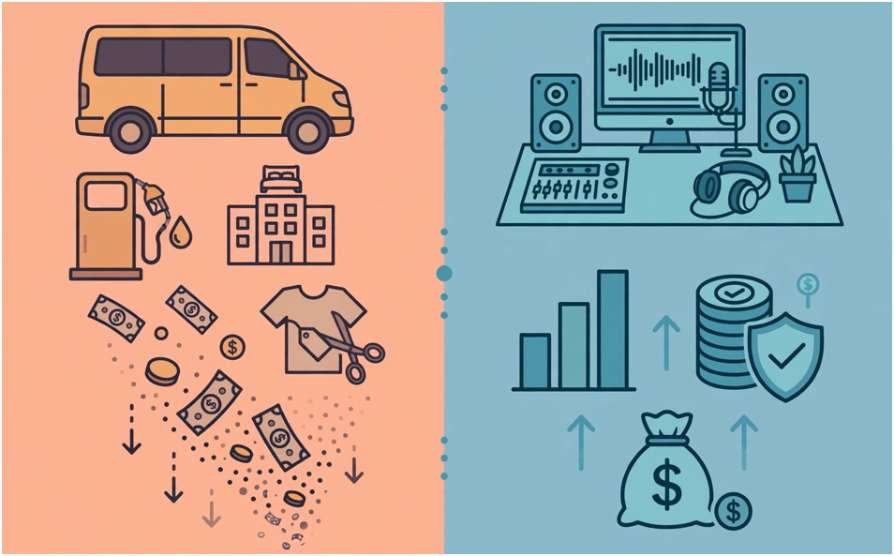
I spent four years sleeping on floors, watching tour income disappear into fuel tanks and hotel bills. When I audited my year-end earnings, the truth hit hard: six weeks of road dates left me with barely $400 in net profit.
That brutal reality forced me to rethink my business model. Learning how independent musicians make money without touring transformed my music from an expensive hobby into a sustainable, six-figure operation run entirely from my home workstation.
You do not need an agent, a live bus, or millions of algorithmic streams to thrive. By establishing direct-to-fan channels, capturing hidden mechanical royalties, and pitching sync placements, you can build a stable music business from your desk.
The Financial Reality: Why I Parked the Tour Van
Most artists believe touring is the only legitimate rite of passage. In reality, touring for indie creators operates on razor-thin margins. Fuel costs, vehicle maintenance, venue merchandise cuts of 20%, and local promoter guarantees make breaking even difficult.
Breaking Down the True Cost of Life on the Road
When you tour, you exchange hours of active physical labor for one-time performance fees. If your van alternator breaks or a promoter under-promotes your Tuesday gig, your entire cash margin evaporates.
By redirecting the months spent booking routing into intentional independent album production, I built assets that pay out continuously. Once I shifted from transient ticket sales to compounding digital catalog equity, my revenue stabilized.
Unlocking Sync Licensing as a Predictable Revenue Engine
Media companies, streaming platforms, and indie game studios need a steady stream of original music. Sync licensing pays both upfront placement fees and backend broadcast royalties every time a scene airs.
Preparing One-Stop Metadata and Instrumental Stems
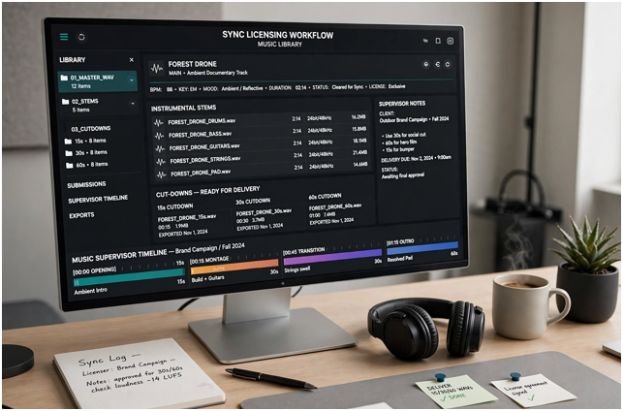
To secure sync placements, you must operate like a professional music library. Music supervisors work under crushing deadlines. If they cannot license your track within two hours, they pick someone else.
Every track in my catalog gets organized with clear, immediate deliverables:
- Full Master and Instrumental WAVs: Always exported at 24-bit / 48 kHz.
- Cut-Down Mixes: Dedicated 15, 30, and 60-second edits matching broadcast ad standards.
- Clean ID3 Tagging: Embedding my name, IPI/CAE number, contact email, and explicit wording in the comments field: “100% Pre-Cleared One-Stop Master and Sync.”
Securing two mid-tier TV placements per quarter consistently yields between $2,500 and $7,500 in upfront synchronization fees, completely bypassing the exhaustion of travel.
Setting Up Full-Spectrum Royalty Collection
Most independent songwriters leave substantial money behind because they assume their digital aggregator handles everything. Distributors deliver audio files to streaming outlets, but they do not collect publishing mechanicals or non-interactive digital broadcast performance money.
Collecting Digital Mechanicals and Master Performance Royalties
To ensure every micro-cent reaches your bank account, register your rights across these official collection agencies:
- Digital Interactive Mechanicals: Under the Music Modernization Act passed through the U.S. Copyright Office, interactive streaming services must pay separate mechanical royalties. You must affiliate with The MLC to claim these streaming and download mechanical payouts.
- Non-Interactive Digital Master Performance: When your master recording plays on Pandora, SiriusXM, or digital webcasts, digital performance royalties accrue. Register directly with SoundExchange as both the Featured Artist and Sound Recording Copyright Owner to receive both splits.
- Performing Rights Organizations (PROs): Register your works with ASCAP, BMI, or your local national entity to collect performance royalties from terrestrial radio, clubs, and television broadcasts.
Claiming these registries turned hundreds of dollars in dormant streaming mechanicals into reliable quarterly deposits. If you lack initial capital to register entities or purchase gear, apply for music grant opportunities through non-profit arts foundations to fund your early business setup.
Direct-to-Fan Monetization and Digital Sound Design
Relying on Spotify’s fractions of a cent forces you to chase millions of passive listeners. Direct-to-fan commerce focuses on cultivating a smaller group of dedicated supporters.
Recurring Memberships and Niche Sample Packs
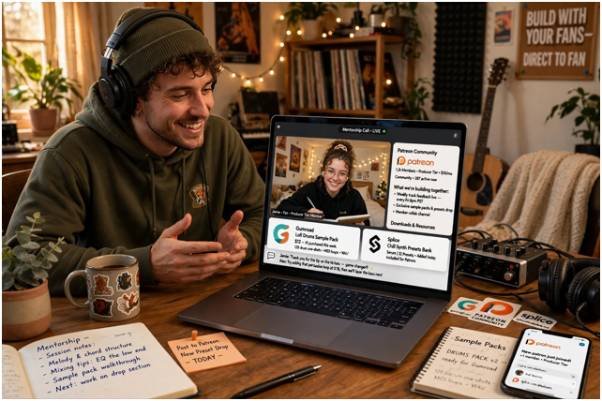
I run a tiered membership community on Fourthwall and Patreon for 280 core listeners. Charging an average of $9 per month produces over $2,500 in predictable monthly gross income. Members receive monthly acoustic demos, early vinyl access, and a private track-feedback channel.
Alongside subscriptions, monetize your studio work directly:
| Revenue Channel | Typical Price Point | Customer Profile |
| Boutique Sample Packs | $15 – $40 per pack | Beatmakers and producers |
| Virtual 1-on-1 Mentorship | $75 – $150 per hour | Aspiring songwriters |
| High-Res Digital Discography | $25 – $50 one-time | Core audiophile superfans |
Selling sound design assets, preset patches, and custom drum kits on platforms like Gumroad or Splice provides pure passive yield from unused session files.
The Catalog Yield Model: Real Numbers
Here is an actual 30-day balance sheet from my 10-song studio catalog, demonstrating how passive streams scale without touring:
- Sync Licensing (One micro-placement + library fees): $1,200
- Direct Memberships (280 fans at $9/mo): $2,520
- SoundExchange & The MLC Mechanicals: $340
- Sample Pack & Digital Preset Sales: $510
- Streaming Aggregator Payouts: $215
- Total Monthly Income: $4,785
Reaching that revenue target on the road requires selling hundreds of club tickets, paying touring musicians, and covering fuel costs. From the studio, it represents high-margin, scalable income.
Frequently Asked Questions
1. Can you make a living as a musician without playing live?
Yes, thousands of producers and songwriters make full-time incomes through sync licensing, digital memberships, production libraries, and sound design.
2. How much do independent artists make from sync licensing?
Indie sync placements range from $500 for micro-budget web series to over $15,000 for major television episodes, national commercials, and video games.
3. Do I need a music publishing administrator?
A publishing administrator helps collect foreign mechanical royalties, though US songwriters can collect domestic digital mechanicals directly through The MLC for free.
4. What is the most profitable digital product for musicians?
Custom drum kits, genre-specific sample packs, and niche preset banks yield the highest profit margins because they carry zero manufacturing or shipping costs.
Build Your Studio-First Music Career
Touring is a personal choice, not a mandatory business model. When you stop measuring success by crowded club nights and begin treating your music catalog like intellectual property, everything shifts. Clean up your song metadata, register your mechanical rights, package your stems for sync placement, and start building direct connections with your core fans.
Leave a Reply