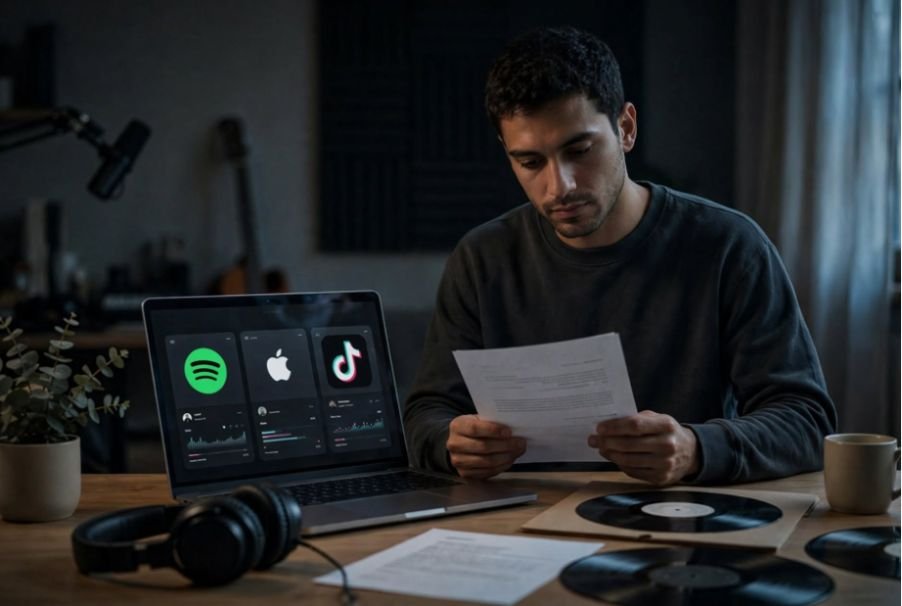
Signing away my master rights to a predatory label was never an option for my projects. Executing independent music distribution without major label backing became my survival strategy. Bypassing the major label machine means you keep your copyright, retain 85% to 100% of your royalty revenue, and reach every global digital storefront within 72 hours.
Direct uploads do not exist for everyday creators on platforms like Spotify or Apple Music. You must partner with an aggregator. Navigating this ecosystem requires clear math, an understanding of rights collection, and ruthless attention to metadata.
Choosing Your Aggregator Model: The Real Math Behind the Fees
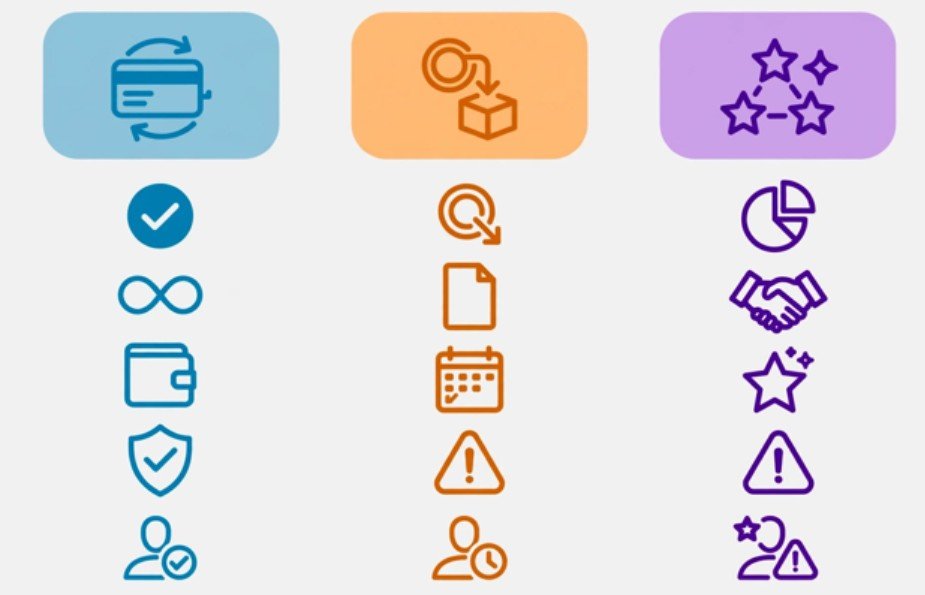
Aggregators generally use two models: recurring subscriptions or pay-per-release commission structures. Choosing the wrong setup eats your margins or drops your catalog from streaming stores when life gets busy.
Artists working with limited release budgets can also explore music grant opportunities for independent artists to help offset distribution, production, and promotional expenses.
For a closer look at pricing structures, royalty retention, and catalog policies, explore the best digital music distribution for independent musicians.
I learned this the hard way when a missed billing notification threatened a year of back-catalog singles on an annual flat-fee service. Evaluate your release cadence before entering your card details.
Flat-Fee vs. Commission Breakdown
| Distributor Model | Cost Structure | Royalty Retention | Catalog Takedown Risk | Best For |
| Flat Annual Fee (e.g., DistroKid, TuneCore) | ~$23–$40/year recurring | 100% | High (music pulled if subscription lapses unless paid extra) | High-volume artists (4+ singles/year) |
| Pay-Per-Release (e.g., CD Baby, EmuBands) | ~$9.99–$20 one-time fee | 91%–100% (CD Baby takes 9%) | Zero (catalog remains live perpetually) | Evergreen catalog releases & low-frequency drops |
| Curated / Tiered (e.g., Symphonic, Too Lost) | Revenue share (15%) or bespoke tier | 85%–100% | Low | Artists with existing streaming traction & video needs |
Flat fees win if you upload tracks monthly. If you release sporadically, a permanent one-time fee protects your catalog from disappearing during dry spells.
The Streaming Payout Reality: The 1,000-Stream Cutoff
Spotify’s payout rules require tracks to hit at least 1,000 streams within a trailing 12-month period to generate recorded music royalties. Below that threshold, your master streams earn $0.
When planning your release cadence, direct your promotional energy toward pushing specific priority tracks past that milestone instead of spreading listeners across scattered releases.
The Rights and Royalties Engine Behind Digital Music Distribution
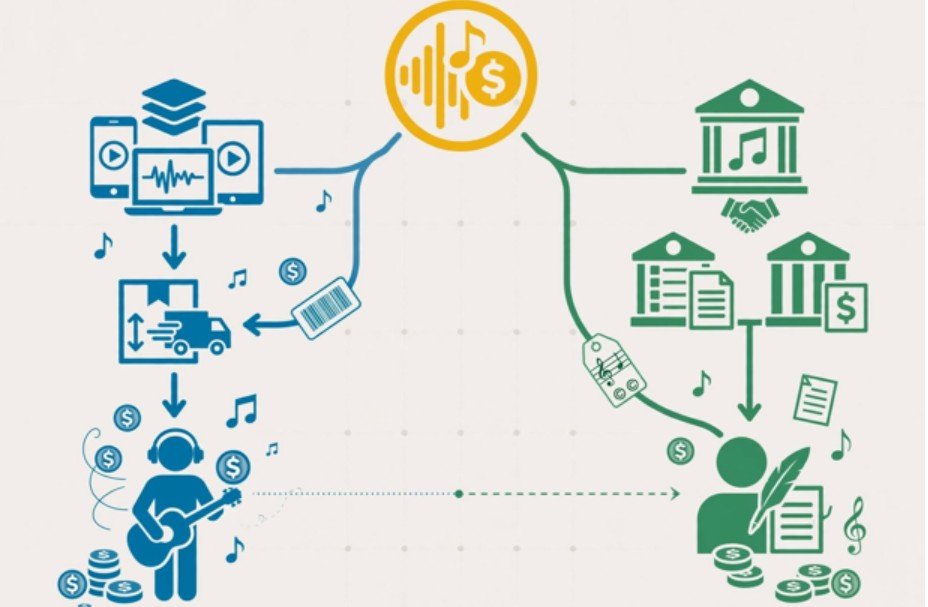
Distributor royalties only account for half your income. When an aggregator routes your audio through modern digital music distribution networks, you only collect the master interactive streaming payout.
If you wrote the song, up to 40% of your earnings stay frozen across multiple collection societies unless you claim the composition side.
Securing your creative assets through the U.S. Copyright Office provides legal foundation, but active pipeline registration drives your ongoing income.
Master vs. Composition Payout Pathways
| Royalty Type | Source | Collection Agency | Who Keeps It |
| Interactive Master Royalty | Spotify, Apple Music, Tidal | Your Distributor (e.g., DistroKid) | Sound recording owner (You) |
| Digital Performance Royalty | SiriusXM, Pandora, Webcasts | SoundExchange | Featured artist & master copyright owner |
| Performance Royalties | Terrestrial radio, venues, streams | PROs (ASCAP, BMI, SESAC) | Songwriter & Music Publisher |
| Mechanical Royalties | Interactive stream reproductions | The MLC | Songwriter & Music Publisher |
Link your metadata with correct International Standard Recording Codes (ISRC) for master tracks and International Standard Musical Work Codes (ISWC) for compositions. Missing these connections guarantees lost revenue.
How I Release an Independent EP: A Tactical Setup Checklist
When you prepare to release an independent ep, rush jobs lead to broken credits, lost playlist placements, and delayed streaming releases.
| Production Window | Action Item | Primary Objective |
| 4 Weeks Out | Final Audio & Asset Export | Master to -9 to -11 LUFS for dynamic punch; verify cover art meets 3000x3000px standards. |
| 3 Weeks Out | Distributor Submission | Upload track files, populate legal songwriter credits, and generate native ISRC/UPC codes. |
| 2 Weeks Out | Editorial Pitching | Access Spotify for Artists to draft your formal editorial pitch with genre tags and mood context. |
| 1 Week Out | Short-Form Campaign Launch | Deploy pre-save links, seed original audio on TikTok and IG Reels, and send bandcamp mailers. |
Never leave delivery to the final week. Aggregator review queues can back up, leaving your release date dead on arrival.
Ditch the Label Handcuffs, Keep the Cash
The old industry myth claimed you needed major label backing to find an audience. Modern streaming and short-form platforms prove that ownership, smart distribution choices, and systematic publishing collection yield far more leverage.
Pick the right aggregator, register your performance rights, and build your release runway. Stop waiting for validation from an A&R representative who wants 80% of your work.
Frequently Asked Questions
1. Does my music get removed if I cancel my distributor subscription?
Yes, subscription platforms remove your music upon account cancellation unless you pay an add-on permanent legacy fee.
2. What is the main difference between an ISRC and a UPC?
An ISRC identifies a specific audio recording, while a UPC identifies the complete product release or album package.
3. Can an independent artist distribute to TikTok and Instagram Reels?
Yes, modern distributors deliver audio to Meta and TikTok sound libraries alongside traditional streaming platforms.
4. Do I need a music publisher to collect mechanical streaming royalties?
No, independent songwriters in the US can register directly with The MLC to claim their mechanical royalties at zero cost.
Leave a Reply