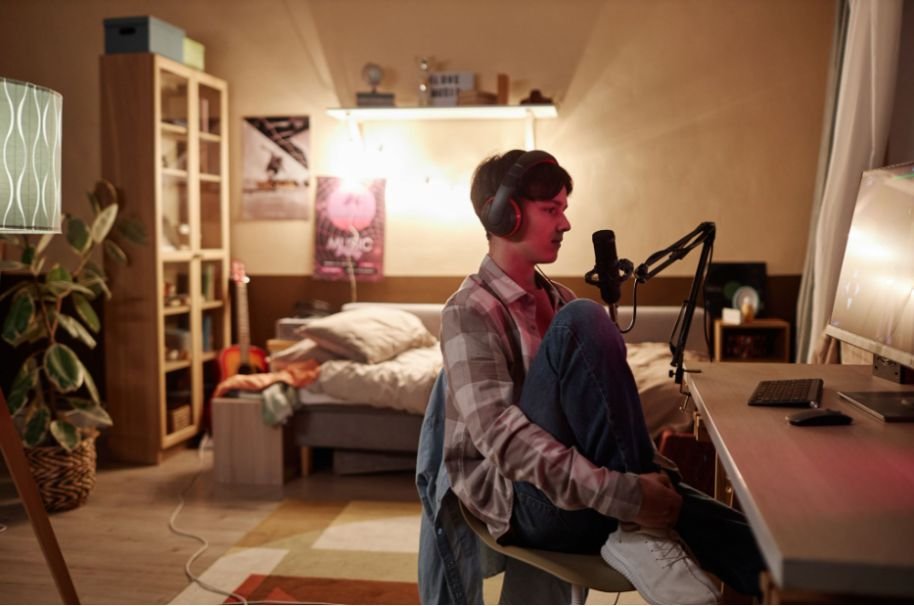
I can usually tell when a bedroom studio has too much room reflection before I even touch the EQ. Vocals feel farther away than they should, claps leave a sharp ring behind, and mixes become harder to judge because the room keeps adding its own sound to everything I hear.
That is why learning how to reduce echo in a bedroom studio is one of the smartest improvements I can make before spending more on microphones, monitors, or plugins. In many US bedrooms and apartment setups, the main culprits are bare drywall, hard floors, windows, low ceilings, and closely spaced parallel walls. The good news is that I do not need a full commercial studio build to fix them.
By treating first reflection points, softening hard surfaces, improving microphone placement, and controlling low-frequency buildup, I can create a noticeably cleaner recording and mixing environment without overcomplicating the room.
Why Does a Bedroom Studio Sound Echoey?
Sound from studio monitors, instruments, or a voice travels outward until it reaches a surface. Hard walls, windows, floors, ceilings, desks, and doors reflect much of that energy into the room.
Because a bedroom is small, those reflections return very quickly. They can interfere with the direct sound and create flutter echo, harshness, boxiness, or an exaggerated sense of room ambience.
Parallel walls are particularly troublesome. I can often identify flutter echo by clapping once and listening for a fast metallic ringing or repeated reflection.
The goal of bedroom studio acoustic treatment is not to eliminate every reflection. I want enough sound absorption and control to hear recordings and mixes clearly without making the room unnaturally dead.
Where Should I Put Acoustic Panels in a Bedroom Studio?
I start with the first reflection points because treating them usually delivers one of the biggest improvements.
These are areas where sound from the monitors hits a wall before bouncing toward my listening position. I can locate them with the mirror method. While I sit in my normal mixing position, another person moves a mirror along the side wall. Wherever I can see a monitor in the mirror is a likely first reflection point.
Dense fabric-wrapped acoustic panels work especially well in these locations. Budget acoustic foam can reduce some high-frequency reflections, but thicker broadband panels generally absorb a wider frequency range.
I also consider the wall behind the listening position. In a compact bedroom studio, reflections from this surface can return quickly. If ceiling reflections are strong, a ceiling cloud above the desk or listening area can provide additional control.
Do Rugs Help Reduce Echo on Hardwood Floors?
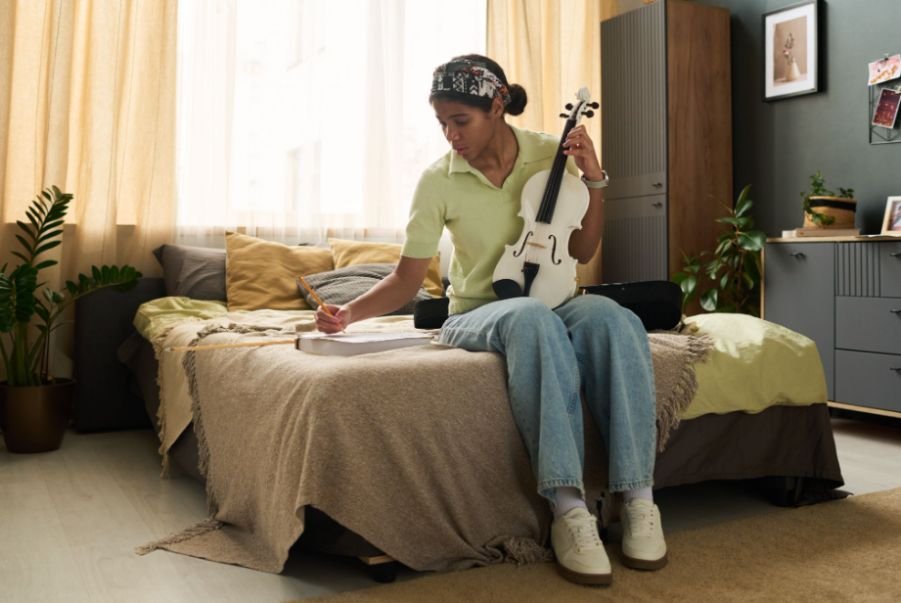
Yes, especially when the bedroom has hardwood, tile, vinyl, or laminate flooring.
Hard flooring reflects a large amount of mid- and high-frequency sound, and the way those reflections behave can vary depending on amplitude and frequency. I prefer a thick area rug that covers a significant portion of the open floor between my workspace and the opposite side of the room.
Adding a dense rug pad underneath can improve absorption further.
A rug will not fix wall reflections or low-frequency room problems, but it can noticeably reduce the brightness and ringing that come from a large exposed floor.
What Curtains Work Best for Bedroom Studio Windows?
Glass is highly reflective, so uncovered windows can contribute significantly to room echo.
I use heavy, floor-length curtains when possible. Thermal curtains, velvet drapes, or dense blackout curtains generally provide more absorption than thin decorative curtains.
For US bedrooms with large windows or sliding glass doors, covering as much glass as practical can help reduce harsh reflections during recording and mixing.
Curtains work especially well when combined with wall treatment rather than used as the only acoustic solution.
Can Bookshelves and Bedroom Furniture Improve Studio Acoustics?
Furniture can help, particularly in a room that would otherwise contain large empty reflective surfaces.
A filled bookshelf with books arranged at different depths can scatter some reflections instead of sending them directly back toward the listener. Fabric storage boxes, soft furnishings, upholstered chairs, and a small couch can also help reduce excessive reflections.
The bed itself is useful. A mattress, comforter, pillows, and other bedding absorb more sound than a completely bare wall or floor.
I do not rely on furniture as a replacement for acoustic panels, but I use it as part of an overall DIY acoustic treatment strategy.
Do Bass Traps Help in a Small Bedroom Studio?
Low-frequency problems deserve separate attention.
Low-frequency pressure often becomes strongest around room boundaries and corners. This can produce boomy bass, muddy mixes, and inconsistent low-end response.
These room-related low-end problems are also important when learning how to make kick and bass not clash, because uncontrolled bass buildup can make it harder to judge the balance and separation between low-frequency elements.
Installing thick bass traps in vertical corners can help control this energy and shorten low-frequency decay.
Thin acoustic foam is not a substitute for bass trapping. Foam can help with flutter echo and higher-frequency reflections, while effective bass treatment generally requires thicker absorptive material.
How Can I Reduce Echo While Recording Vocals?
Microphone placement can sometimes improve a vocal recording before I add any new acoustic treatment.
I avoid recording directly in a corner or placing the microphone close to a bare reflective wall. Recording closer to the microphone can increase the amount of direct voice relative to room sound, allowing me to lower the gain while capturing a cleaner signal.
I can also position a thick acoustic panel, moving blanket, comforter, or other dense absorptive material around the recording area.
When figuring out how to reduce echo in a bedroom studio, I always test several microphone and vocalist positions because a change of only a few feet can produce a noticeably different recording.
Once the room and recording setup are under control, producers can also consider workflow tools and whether do I need a MIDI keyboard for music production based on how they prefer to create melodies, chords, and other MIDI parts.
Is Acoustic Treatment the Same as Soundproofing?
No. They solve different problems.
Acoustic treatment controls reflections, reverberation, frequency buildup, and other sound behavior inside the room.
Soundproofing aims to stop sound from entering or leaving the room. Proper sound isolation usually involves construction techniques such as adding mass, sealing air gaps, decoupling structures, and improving doors or walls.
If a vocal sounds overly roomy, acoustic treatment is usually the priority. If traffic, neighbors, HVAC systems, or outside noise appears in the recording, sound isolation is the larger issue.
How Do I Test Whether My Echo Treatment Is Working?
I make one change at a time and compare the results.
A simple clap test can reveal obvious flutter echo. I clap near the mixing or recording position and listen for metallic ringing.
For vocals, I record the same spoken passage before and after changing the room. I keep the microphone position, gain, and distance consistent so I can make a fair comparison.
I also play familiar commercial recordings through my studio monitors. Checking those same reference tracks through headphones can provide another useful perspective, especially when learning can I mix music with regular headphones and trying to understand how different monitoring environments affect mixing decisions.
Better treatment should make stereo imaging, vocals, bass, and overall balance easier to judge.
What Bedroom Studio Acoustic Treatment Mistakes Should I Avoid?
Randomly covering walls with thin foam is one of the most common mistakes.
Another problem is treating high frequencies heavily while ignoring bass. This can create a dull-sounding room while leaving low-frequency issues untouched.
I also check monitor positioning before buying more treatment. Symmetry, speaker distance, desk placement, and listening position all affect what I hear.
For me, the best approach is gradual: identify a problem, treat it, listen again, and only then decide what the room needs next.
Frequently Asked Questions
1. What is the cheapest way to reduce bedroom studio echo?
I would start with monitor and microphone placement, thick curtains, a rug with a pad, existing furniture, bedding, bookshelves, and moving blankets before investing heavily in professional treatment.
2. Should I cover every wall with acoustic foam?
Usually not. Strategic broadband absorption at reflection points provides better results than filling every surface with thin foam.
3. How much acoustic treatment does a bedroom studio need?
It depends on room dimensions, construction, furniture, speaker placement, and whether the space is mainly used for recording, mixing, or both. I start with the major reflection points and add treatment according to what I hear.
4. How to reduce echo in a bedroom studio for vocal recording?
Focus on microphone distance, recording position, nearby reflective surfaces, thick absorption, curtains, and temporary panels or blankets. Test multiple positions until the direct vocal becomes stronger than the room sound.
5. Can a bookshelf work as acoustic treatment?
A bookshelf can scatter some reflections, especially when objects have different depths and shapes. However, it should complement proper sound absorption rather than replace it.
Final Thoughts
When I think about how to reduce echo in a bedroom studio, I focus on solving the biggest problems first instead of buying every acoustic product I can find.
I treat first reflection points, soften hard flooring, cover reflective windows, use furniture intelligently, control low-frequency buildup with bass traps, and improve microphone placement. I also test the room after every major adjustment.
With thoughtful bedroom studio acoustic treatment, even a typical US spare bedroom or apartment bedroom can become a cleaner, more controlled environment for recording vocals, producing music, and making more confident mixing decisions.
Leave a Reply