
A powerful low end should feel controlled, not crowded. When the kick hits and the bass enters, I want both elements to sound bigger together, not weaker, muddier, or harder to distinguish. That is why learning how to make kick and bass not clash is less about piling on plugins and more about managing space, timing, phase, and frequency with purpose.
In many mixes, the problem starts before EQ or compression ever enters the picture. The kick may be too long, the bass may occupy the same fundamental range, or both sounds may hit with competing energy at the same moment. I prefer to solve those issues at the source first, then use EQ, sidechain compression, dynamic EQ, and phase adjustments only where they genuinely improve the mix.
For US producers working in hip-hop, trap, EDM, pop, and related styles, this approach can help create a low end that stays punchy on studio monitors while still translating well to headphones, cars, earbuds, and everyday consumer speakers.
Why Do Kick and Bass Clash in the First Place?
Kick and bass usually clash because both contain strong energy in the same low-frequency range.
A kick may have its fundamental punch somewhere around 60 to 90 Hz, while a bass or 808 may also carry heavy energy in that area. When both sounds dominate the same frequencies at the same time, frequency masking makes the mix feel muddy, weak, or undefined.
Timing also matters. A long kick tail can continue underneath a sustained bass note. Even if the EQ looks acceptable, excessive overlap can still create low-end buildup.
Phase cancellation creates another problem. If the kick and bass waveforms move against each other, parts of the low end can weaken instead of becoming more powerful.
That is why I treat low-end mixing as a combination of frequency, timing, phase, and dynamics.
Should You High-Pass Kick and Bass Below 20 Hz?

Ultra-low frequencies below roughly 20 Hz are usually more felt than heard, yet they can still consume valuable headroom.
I often check both the kick and bass with a spectrum analyzer and remove unnecessary sub-rumble using a gentle high-pass filter when needed. Tools such as Ableton EQ Eight can handle this easily.
However, I do not automatically cut everything below 20 Hz just because a tutorial recommends it. Some sounds contain useful energy near that region, and overly aggressive filtering can weaken the weight of the mix.
The goal is to remove unnecessary information, not strip away the character of the low end.
How Do You EQ Kick and Bass So They Have Separate Space?
Complementary EQ is one of the most effective methods for reducing frequency masking.
If the kick has its strongest punch around 70 Hz, for example, I may slightly emphasize that area on the kick while making a small reduction around the same frequency in the bass.
The reverse can also work.
If the bass needs to dominate the deepest sub frequencies, I may reduce some low-end weight from the kick and allow more of its character to come from the upper bass or attack frequencies. This kind of separation can also help fix beats that sound empty by making the low end feel more intentional and balanced instead of simply adding more layers.
This does not mean every mix needs dramatic boosts and cuts. Small EQ adjustments often work better because extreme carving can make both sounds feel unnatural.
I always identify the actual kick fundamental frequency before making changes instead of blindly copying fixed EQ settings.
Should the Kick or Bass Own the Sub Frequencies?
Either can control the deepest frequencies.
What matters is creating a low-end hierarchy.
In some trap and hip-hop mixes, the 808 carries most of the sub-bass energy while the kick provides more transient punch. In other productions, the kick sits deeper while the bass occupies a slightly higher range.
Problems usually appear when both elements try to dominate the same area.
I decide which sound should feel deeper based on the genre, arrangement, and character of the track.
Can Shortening the Kick Stop It From Clashing With Bass?
Absolutely.
One of the simplest fixes is reducing the kick length.
If a kick continues playing long after the initial transient, its low-frequency tail can overlap with the bass. I may trim the kick sample or shorten its decay so it ends before the bass reaches full strength.
Some producers use an eighth-note kick length as a rough starting point, but I do not treat that as a strict rule. Tempo and arrangement matter.
The correct kick length is simply one that provides enough weight without unnecessarily covering the bass.
Should You Change Bass MIDI Notes Before Using Plugins?

Yes, especially when the clash comes from timing.
I often inspect the MIDI arrangement before touching another EQ or compressor.
If the bass note begins at the same instant as every kick, I may move selected notes slightly later, shorten their duration, or let them finish before the next kick lands.
Changing the octave of a bass note can also help if a specific note creates excessive low-frequency buildup.
These small arrangement changes allow the kick and bass to move around each other naturally.
In many cases, fixing note placement sounds more transparent than forcing separation with aggressive compression.
How Do You Check Phase Between Kick and Bass?
If the kick sounds strong in solo but suddenly loses power when the bass plays, phase should be one of the first things you inspect.
I compare the two sounds together, flip polarity, and experiment with tiny timing adjustments.
If the low end becomes noticeably stronger after a small timing change, phase interaction was probably contributing to the problem.
I also listen in mono because phase problems often become easier to detect without stereo distractions.
Visual waveform alignment can help, but I trust what I hear more than what the waveform looks like.
How Much Sidechain Compression Should You Use?
Sidechain compression creates temporary space for the kick by reducing the bass volume whenever the kick hits.
I place a compressor on the bass and use the kick as the sidechain trigger.
A relatively fast attack can move the bass out of the way when the kick transient arrives. The release should then allow the bass to return naturally with the groove.
I avoid making the bass pump dramatically unless that sound fits the genre.
The objective is not to make the compression obvious. It is to create enough room for the kick to remain clear.
This is one of the most reliable techniques when learning how to make kick and bass not clash, but it should not replace good sound selection and arrangement.
Is Dynamic EQ Better Than Regular Sidechain Compression?
Dynamic EQ can be more transparent because it targets only the frequencies that are actually colliding.
Traditional sidechain compression lowers the entire bass signal when the kick hits.
A sidechained dynamic EQ can instead reduce only a narrow area, such as 60 or 70 Hz, while leaving the rest of the bass almost untouched.
Plugins such as iZotope Neutron and frequency-selective tools like Fuser can accomplish this type of bass ducking.
This technique works particularly well when full-band sidechain compression makes the bass feel too weak.
How Do You Make Kick and Bass Translate to Cars and Small Speakers?
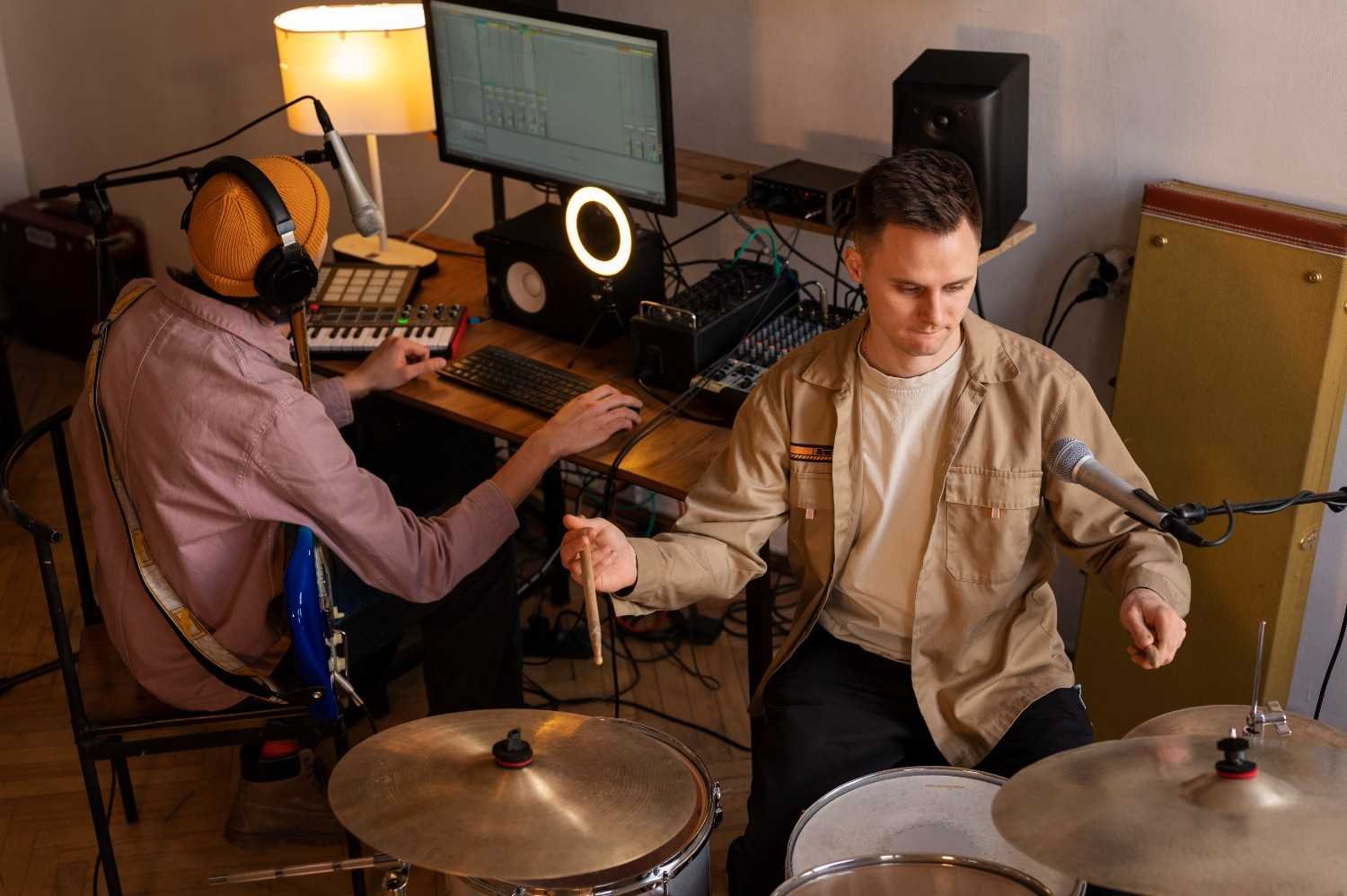
I never finish low-end decisions using only one playback system.
A mix that sounds clean on studio monitors may become overwhelming in a car because the cabin emphasizes certain bass frequencies.
Small speakers create the opposite challenge because they cannot reproduce deep sub-bass effectively.
I check the track on headphones, consumer earbuds, small speakers, and a car system whenever possible.
If the bass disappears on smaller devices, adding controlled harmonic content can help listeners perceive it without increasing the sub frequencies.
If the kick disappears at low volume, it may need more upper-frequency attack rather than more bass.
Frequently Asked Questions (FAQs)
1. What frequency should I cut from bass for kick?
There is no universal frequency. Find the kick’s main fundamental area and reduce the bass slightly there only when audible frequency masking occurs.
2. Should kick and bass hit at the same time?
Yes. They can hit simultaneously as long as their frequency content, phase, sustain, and dynamics allow them to work together.
3. Is EQ or sidechain better for kick and bass?
EQ works well for constant frequency overlap, while sidechain compression works better for short timing conflicts. Many mixes benefit from subtle amounts of both.
4. Why does my kick disappear when the bass enters?
Frequency masking, phase cancellation, and excessive bass sustain are the most common causes. Test each one before adding more processing.
5. Should sub-bass be mono?
Keeping the deepest low frequencies relatively centered usually improves stability and translation, although higher bass harmonics can still contain stereo width.
Final Takeaway
When I work on how to make kick and bass not clash, I start with the simplest fixes first.
I choose complementary sounds, control unnecessary sub-rumble, decide which element owns the deepest frequencies, shorten kick and bass tails, adjust MIDI timing, and check phase. Only then do I use complementary EQ, sidechain compression, or dynamic EQ.
The goal is not to process the low end as heavily as possible. It is to create enough separation that the kick feels punchy while the bass remains full, controlled, and musical.
When those two elements stop competing and begin supporting each other, the entire mix sounds bigger.
Leave a Reply