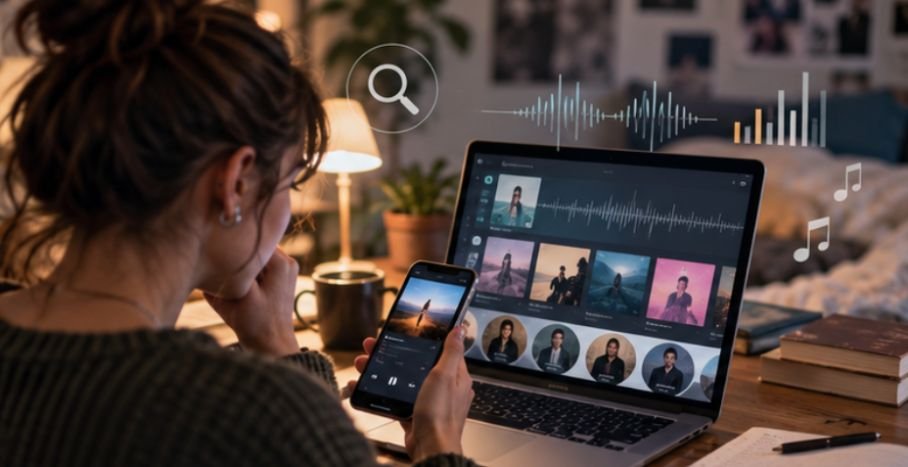
The easiest time to discover a promising band is often when almost nobody is searching for them. Before an artist reaches festival posters, editorial playlists, or viral clips, there is usually a quieter stage: Tuesday-night club shows, college-radio spins, self-released singles, opening slots, local record-store recommendations, and enthusiastic fans telling ten friends.
Learning how to discover bands before they get famous is therefore less about predicting the future and more about getting closer to where new music first circulates. The best discoveries tend to happen one layer below mainstream recommendation systems, where musicians are still building local audiences and human curators are doing much of the filtering.
Why Great New Bands Are Often Easier to Find Offline
Streaming services make enormous catalogs accessible, but accessibility is not the same as discovery.
Algorithms generally become more useful after they have collected signals such as plays, saves, follows, playlist additions, and listener similarities. A genuinely new local band may not have enough activity to generate those signals yet.
That is why live scenes still matter.
The National Endowment for the Arts reported that 48% of U.S. adults attended at least one in-person arts event during the July 2021–July 2022 reporting period. Interestingly, its research also found that social media and peer-to-peer communication were among the most common ways people learned about arts events they attended.
For music discovery, that combination matters: go where musicians perform, then follow the people who are already talking about those performances.
Explore the National Endowment for the Arts research on U.S. arts participation for broader context on how Americans find and experience live arts.
Start at the Bottom of the Concert Poster
Fans naturally look at the headliner first. Early-discovery listeners should often do the opposite.
If a touring indie band has three supporting acts, research the first name on the bill. Local promoters frequently give opening slots to emerging regional artists whose audiences are still small.
Understanding emerging artist meaning can help listeners put that early career stage into context, since an artist may already have a substantial body of work, live experience, and professional activity while still developing wider recognition.
Arrive when doors open rather than halfway through the evening.
Then repeat the process. If an unfamiliar opener impresses you, check which other bands they perform with, which local label released their single, where they rehearse or record, and which venues keep booking them.
One promising band can lead to an entire scene.
Watch Small Venues, Not Only Big Festivals
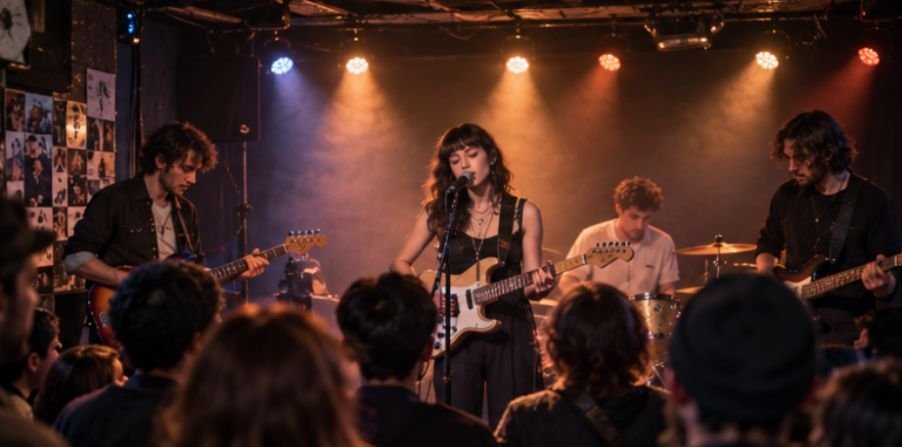
A 200-capacity room usually gives you more useful discovery signals than a massive festival lineup announced months after artists have already gained momentum.
Monitor independent clubs, all-ages spaces, university venues, DIY promoters, community arts centers, record-store performances, neighborhood festivals, and even coffee-shop calendars depending on the genre.
Smithsonian reporting on Washington, D.C.’s DIY music culture highlights how independent promoters, performers, venue operators, designers, and audiences collectively sustain underground scenes. It also notes the continuing importance of word of mouth.
The Smithsonian’s examination of D.C.’s underground music network is a useful example of how scenes develop outside mainstream music channels.
Treat College Radio DJs Like Human Discovery Engines

College and freeform radio remain surprisingly effective because DJs can make choices that are not entirely dictated by popularity.
UC Berkeley’s KALX describes its programming as freeform radio featuring underground music, with DJs encouraged to explore different genres rather than remain inside narrow formats.
That makes stations like these valuable discovery tools.
Do not simply listen passively. Open the station’s playlist history. When something catches your attention, write down the artist, label, city, and release. Then investigate the other musicians appearing immediately before and after them. Explore KALX’s freeform-radio philosophy at UC Berkeley.
The same principle works across the country. UT Austin reports that KUTX regularly features local and touring performers and describes the station as a launch pad for up-and-coming Austin acts.
Use the Internet Differently
You do not need to abandon streaming platforms. You need to stop using only their homepages.
Bandcamp is especially useful when you browse by location, genre tags, labels, supporters, and newly released records rather than waiting for personalized recommendations.
Understanding the difference between curated user playlists vs editorial pitching for indie music can also help you evaluate how independent artists gain visibility online, since listener-driven recommendations and editorial selections can introduce emerging music to audiences through different discovery paths.
SoundCloud can reveal demos, early versions, remixes, and self-released material. Rate Your Music can help you identify obscure releases through community-generated genre charts. Hype Machine provides another angle by surfacing music receiving attention from independent blogs.
Reddit communities and genre-specific Discord servers can also work, but avoid simply asking, “What bands should I listen to?”
Ask narrower questions: Which local bands are drawing crowds in Minneapolis right now? Which shoegaze bands are playing DIY rooms in Philadelphia? Which unsigned punk groups have released their first EP this year?
Specific questions produce earlier discoveries.
Use This Five-Signal Band Discovery Test
A band does not need all five signals to be worth following. The objective is to recognize momentum before mass attention arrives.
| Signal | What to Look For |
| Live activity | Repeated bookings at respected small venues |
| Scene support | Other musicians, promoters, DJs, and local fans recommending them |
| Release momentum | Consistent singles, demos, EPs, or self-released music |
| Human curation | College radio, independent blogs, record stores, or niche playlists |
| Audience behavior | Small but visibly engaged crowds who know lyrics and return to shows |
Pay particular attention when several signals appear simultaneously.
A band with only 2,000 monthly listeners may be more interesting than one with 100,000 passive listeners if local shows are selling out, respected DJs keep playing them, and established bands repeatedly choose them as support.
Browse Freeform Radio Archives
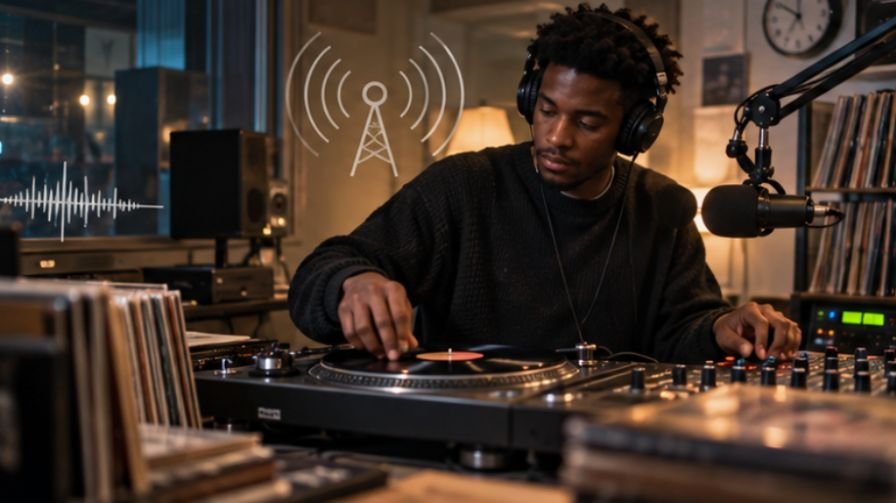
One overlooked trick is searching radio archives rather than listening only to live broadcasts.
Independent station WFMU, for example, maintains extensive playlists and archives across experimental, underground, international, rock, electronic, and other specialist programming. Recent playlists include self-released and newly issued music alongside older recordings.
Browse the WFMU freeform radio archives and playlists and treat each specialist show as a curator you can follow. This method is particularly useful for genres poorly represented by mainstream playlists.
Ask Record Stores the Right Question
Independent record-store employees often see music scenes from several directions simultaneously.
They know which local seven-inches arrive every week, which records musicians themselves are buying, which small labels suddenly have demand, and which bands are promoting release shows nearby.
Instead of asking for “new music,” say what you already like and ask for something local or recently released.
The narrower your question, the more useful the recommendation.
Build a Discovery Chain, Not a Playlist
Once you find one exciting unknown band, do not immediately return to your recommendation feed. Investigate outward.
Check the band’s opening acts, record label, producer, photographer, poster designer, venues, related artists, radio appearances, tagged collaborators, and musicians’ side projects.
This is how to discover bands before they get famous consistently: follow relationships rather than popularity rankings. Music scenes are networks. A promising artist rarely exists alone.
This network-based approach also makes how to find local bands near you more practical, because following opening acts, venues, collaborators, and related artists can uncover local musicians who may not yet appear prominently in mainstream recommendations.
What Does Not Work Every Time
Early discovery is inherently messy.
A brilliant local band may break up after six months. Another may intentionally remain small. Some musicians may have strong local reputations without wanting mainstream careers. High streaming growth can also result from one viral song rather than durable audience development.
Do not treat discovery as an investment contest where you need to predict the next superstar.
The reward is hearing interesting music while it is still close to the community that created it.
Frequently Asked Questions
1. Where can I find bands before they become popular?
Start with small venues, college radio, Bandcamp, independent record stores, regional promoters, opening acts, niche music blogs, and genre-specific online communities.
2. Is Bandcamp good for discovering unknown bands?
Yes. Browsing by location, tag, label, new releases, and supporter collections can expose artists before they accumulate substantial streaming numbers elsewhere.
3. How can I find new local bands?
Follow independent venues, college stations, local promoters, record shops, community festivals, and musicians already active in your city’s scene.
4. How often should I search for new music?
A short weekly discovery session is usually more effective than occasional marathon browsing. Track new releases, local concert calendars, radio playlists, and opening acts regularly.
The Most Valuable Music Usually Has a Trail
Finding tomorrow’s favorite band rarely requires secret industry access. It requires noticing the places most casual listeners skip.
Listen to the first opener. Check yesterday’s college-radio playlist. Browse the label behind a self-released EP. Talk to the person working behind the counter at a neighborhood record store. Follow the tiny promoter announcing a four-band bill in a 150-person room.
If you want to master how to discover bands before they get famous, stop searching only where popularity is already visible. Follow the smaller signals that appear before popularity exists.
Leave a Reply