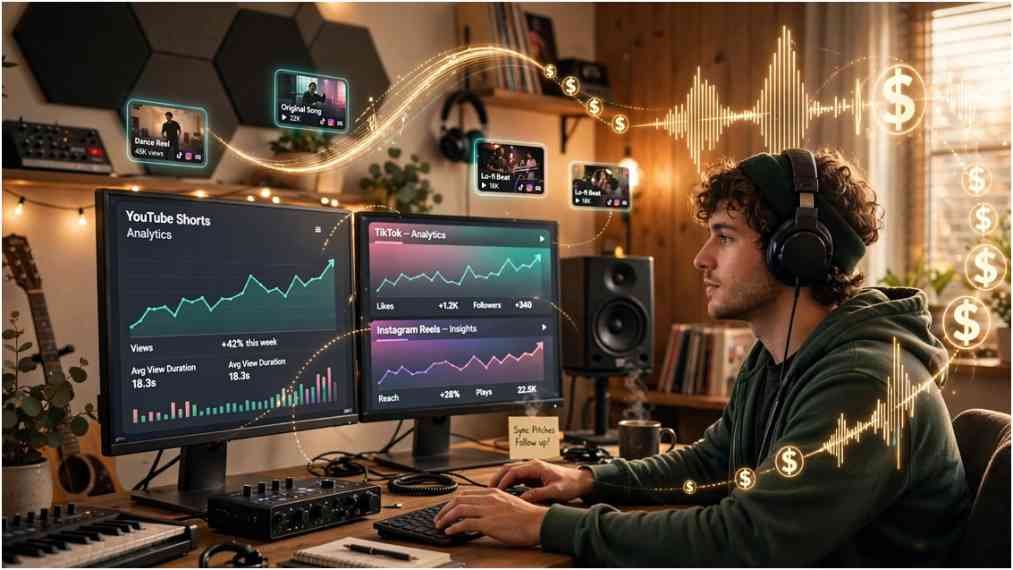
I stopped pitching my catalog to legacy music supervisors after nine months of radio silence. Landing a prime-time television sync or a national commercial placement felt like playing an unpredictable lottery that rarely paid the monthly studio rent. Everything shifted when I shifted my focus to high-volume creator placements.
Exploring micro sync licensing opportunities for independent musicians completely transformed my back-catalog from stagnant files on a hard drive into a steady monthly earner. Rather than chasing a single $10,000 film placement, micro-sync monetizes thousands of short-form videos across YouTube Shorts, TikTok, Instagram Reels, and corporate podcasts. Payouts start as fractions of a cent per play, but they scale aggressively through creator volume.
What Is Micro Sync Licensing? (And Why Hollywood Isn’t the Only Customer)
Traditional sync involves manually clearing the master and composition rights for movies, broadcast television, or video games. It is slow, highly political, and heavily gatekept.
Micro-sync licensing automates this entire pipeline for digital content. Online video creators, small business marketing teams, and social influencers do not have the time or legal budget to negotiate individual licenses. Instead, they access pre-cleared catalogs through subscription platforms, digital distributors, or integrated creator storefronts like YouTube Creator Music.
The visual creator pays an affordable fee or shares ad revenue, and the music owner gets paid based on tracked platform engagement. It is one of the most reliable hedges against volatile independent music sales.
The Two-Copyright Leak: Why You Are Probably Leaving 50% on the Table
When I first uploaded my instrumentals to a distributor, I thought checking the “Social Video Monetization” box was enough. It was not. I was losing half my revenue because I failed to account for the dual nature of copyright law.
┌────────────────────────────────────────┐
│ Your Audio Asset │
└──────────────────┬─────────────────────┘
│
┌───────────────────────┴───────────────────────┐
▼ ▼
┌────────────────────────┐ ┌────────────────────────┐
│ Master Recording │ │ Composition / Lyrics │
└───────────┬────────────┘ └───────────┬────────────┘
│ │
▼ ▼
Tracked by Content ID / Collected via PROs
Digital Distributor & Publishing Admins
│ │
▼ ▼
50% of Sync Value 50% of Sync Value
Sound Recording vs. Composition in Social Video
Every recorded track carries two distinct copyrights recognized by the U.S. Copyright Office: the Master (the recorded sound file) and the Composition (the underlying chords, melody, and lyrics).
Digital distributors like DistroKid, TuneCore, and CD Baby monitor your master file. When their acoustic fingerprinting software detects your sound recording in a user’s clip, they collect the master-side ad revenue.
However, every public playback of that video also triggers a public performance royalty and a mechanical synchronization royalty on the composition side. If a content creator recreates your progression, covers your melody, or uses your track in a broadcasted web series, master fingerprinting alone will not protect you.
Plugging the Gap with Global Publishing Administrators
To capture the composition half of micro-sync revenue, you must join a Performance Rights Organization like BMI or ASCAP to capture performance royalties.
Even that step leaves money on the table. PROs do not collect digital mechanical royalties.
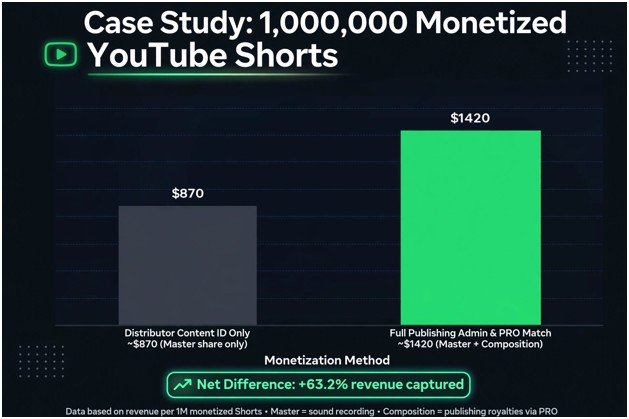
┌──────────────────────────────────────────────────────────────────────────┐
│ Case Study: 1,000,000 Monetized YouTube Shorts │
├─────────────────────────────────────┬────────────────────────────────────┤
│ Distributor Content ID Only │ ~$870 (Master share only) │
│ Full Publishing Admin & PRO Match │ ~$1,420 (Master + Composition fees)│
├─────────────────────────────────────┴────────────────────────────────────┤
│ Net Difference: +63.2% revenue captured on the exact same view count │
└──────────────────────────────────────────────────────────────────────────┘
By registering my catalog with a publishing administrator and ensuring my works were active with The MLC, I stopped leaving backend mechanical royalties in global “black box” pools.
Where to Monetize: Evaluating the Major Micro-Sync Marketplaces
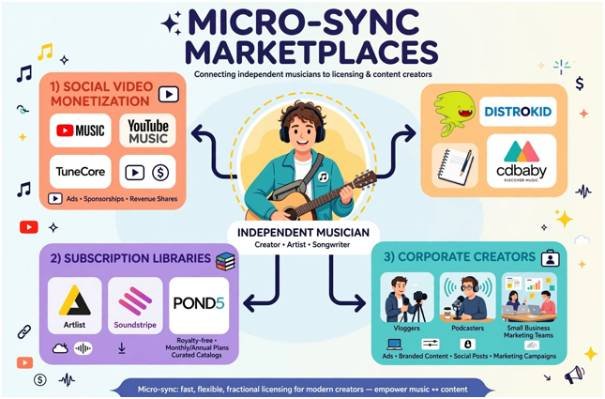
Finding the right distribution channels depends on how you want to manage exclusivity and creative ownership.
Social Video Monetization and Creator Marketplaces
Your existing distributor is your fastest point of entry:
- DistroKid: Charges an optional annual fee per release for YouTube Content ID, retaining a 20% commission on collected ad revenue.
- CD Baby: Collects social video royalties across Meta and YouTube under their standard setup, charging no recurring annual fee but retaining a 30% cut.
- TuneCore: Integrates social platform monetization across all release tiers while taking a flat 20% cut.
Beyond standard distribution, platforms like YouTube Creator Music let creators buy commercial licenses for full-length videos. You set the floor price, and creators license your song directly inside YouTube Studio.
Subscription Libraries and Buyout Platforms
Subscription services cater to vloggers, editors, and corporate teams needing vast pools of background music:
- Artlist & Soundstripe: High-volume platforms where vetted artists receive predictable, pool-based payout models.
- Pond5: A non-exclusive open marketplace where you set your own licensing rates for indie filmmakers and digital ad creators.
- Epidemic Sound: Highly lucrative for creator reach, but they generally require a total buyout of rights, conflicting with existing PRO registrations.
How I Prepare My Catalog for Automated Sync Discovery
Audio discovery engines do not understand abstract art; they run on structured metadata. To make my music discoverable by algorithms and editors alike, I follow three strict preparation rules:
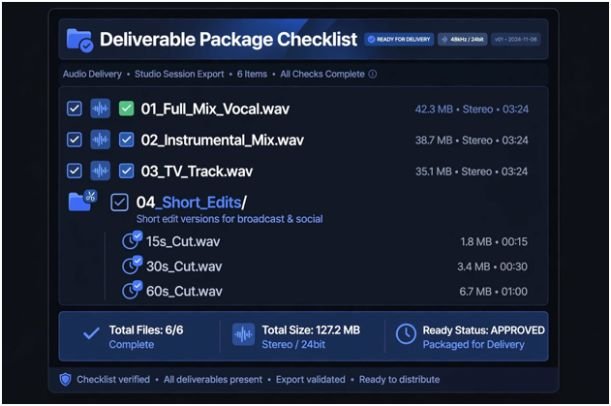
Deliverable Package Checklist:
├── 01_Full_Mix_Vocal.wav (24-bit / 48kHz)
├── 02_Instrumental_Mix.wav (Essential for voiceover clarity)
├── 03_TV_Track.wav (Instruments + backing harmonies only)
├── 04_Short_Edits/
│ ├── 15s_Cut.wav (Optimized for quick hooks)
│ ├── 30s_Cut.wav (Standard social ad format)
│ └── 60s_Cut.wav (Long-form short video)
- Deliver Clean Instrumentals: Editors instantly discard tracks that clash with vocal narration. Instrumental mixes are mandatory.
- Design Immediate Hooks: Short-form platforms decide track viability in the first three seconds. Avoid long, atmospheric fade-ins.
- Use Functional Metadata: Never label files with abstract emotional descriptions alone. Tag files with use-cases (tech unboxing, high-energy fitness, chill study study-vlog), tempo (BPM), key, and dominant instruments (distorted synth, fingerstyle acoustic).
Stop Pitching Blind and Let the Bots Work
Waiting around for Hollywood music supervisors or holding out for a major record deal is an exhausting game that leaves your financial fate in someone else’s hands.
Micro-sync flips the script: you trade the illusion of an overnight lottery win for the cold, compounding power of automated math.
Clean up your split sheets, register your publishing, package your instrumentals, and let thousands of daily video uploads build your royalty foundation.
Frequently Asked Questions About Micro-Sync Licensing
1. What is the average payout for a micro-sync license?
Payouts range from fractions of a cent per short-form view to $5–$50 upfront for direct creator licenses.
2. Do I need a publisher to land micro-sync placements?
No, independent artists can self-administer micro-sync by utilizing digital distributors, open sync marketplaces, and publishing admins.
3. Can I place the same song in multiple micro-sync libraries?
Yes, provided you sign non-exclusive licensing agreements rather than exclusive platform contracts.
4. Will Content ID prevent me from uploading my own music?
No, you can whitelist your official artist channels with your distributor to avoid copyright flags on personal uploads.
Leave a Reply