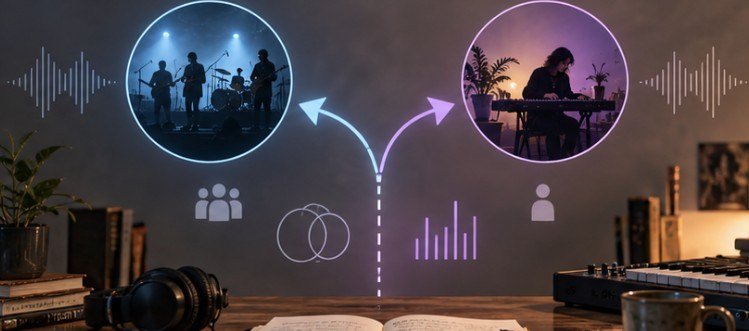
Some of the most interesting music careers have been shaped by records artists were never expected to make. That is the idea behind what is a side project in music: a musician creates a separate musical identity, band, collaboration, or recording project while remaining connected to an established primary act or career. The new project might explore another genre, introduce different collaborators, or simply provide an artistic space where the expectations attached to the musician’s better-known work do not apply.
Despite the name, “side project” does not necessarily mean unimportant, temporary, or commercially small. Some eventually become major parts of an artist’s career.
What Is a Side Project in Music, Exactly?
A musical side project is a distinct creative endeavor that operates alongside an artist’s primary musical work.
For example, a guitarist in an established rock band might start an electronic duo. A singer-songwriter could create an experimental recording identity under another name. Several musicians from different bands might also form a separate group without leaving their original acts.
There is no official legal category called a “side project.” It is primarily an industry and cultural description. That distinction matters. Copyright ownership, songwriting credits, recording ownership, contracts, and trademarks still have to be handled just as seriously as they would for a musician’s primary work.
The U.S. Copyright Office explains that a recorded song can contain two separate copyrighted works: the underlying musical composition and the particular sound recording. Musicians launching another project therefore need to think beyond the new band name and determine who actually wrote, performed, produced, and owns each piece of music. Musicians can review the U.S. Copyright Office’s copyright guidance for musicians for a useful overview.
Why Musicians Start Side Projects
The obvious explanation is creative freedom, but several motivations usually overlap. Lets people find music outside the algorithm without looking too much.
A Sound That Does Not Belong in the Main Band
Established acts develop recognizable identities. Fans, labels, collaborators, and even the musicians themselves may expect new releases to remain within certain boundaries.
A side project removes some of those boundaries.
A punk drummer may want to produce ambient music. A country songwriter might experiment with synth-pop. An artist known as a vocalist may want to play drums or produce instead.
Berklee’s songwriting curriculum emphasizes how collaboration can combine musicians with different backgrounds, skills, creative roles, and approaches. That cross-pollination is one reason separate projects can produce music that would be difficult to make inside an established band’s normal working structure.
For more on the process, Berklee College of Music’s songwriting collaboration resources examine creative collaboration alongside practical issues such as coauthorship and copublishing.
New People Create New Decisions
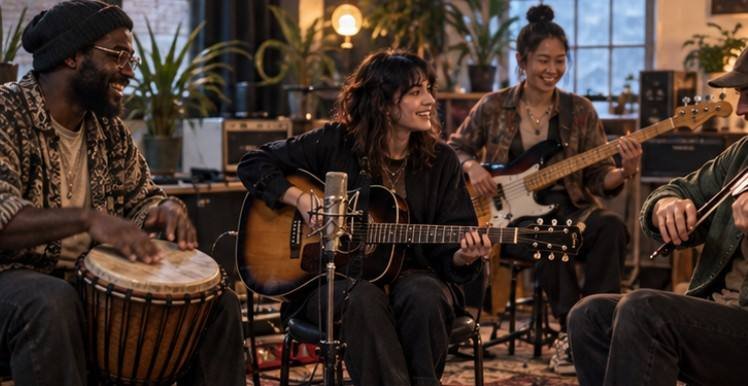
Changing collaborators changes more than the instruments being played. A musician who normally works within a four-member band may suddenly be writing with a producer, rapper, electronic artist, orchestral musician, or songwriter from another scene.
Different collaborators introduce unfamiliar working methods and force artists to make decisions they may never encounter in their primary group. That can make a side project function almost like a creative laboratory.
Less Baggage, at Least Initially
A successful band’s new album arrives with expectations. Critics compare it with previous releases. Fans debate whether it sounds enough—or too much—like earlier material.
A new project often starts without that history. That relative freedom can make experimentation easier, although the low-pressure phase may disappear quickly if the project develops an audience of its own.
Side Project, Solo Career, or Supergroup?
These terms overlap, which is why they are frequently confused.
| Type | What usually defines it | Relationship to main career |
| Side project | Separate musical identity or collaboration | Runs alongside primary work |
| Solo project | Music released principally under one artist’s own identity | May coexist with or replace band work |
| Supergroup | Group formed from musicians already known through other acts | Often begins alongside members’ existing careers |
| New primary band | Artist moves major attention toward another group | May gradually replace earlier work |
The difference depends more on context than on a rigid rule.
Jack White illustrates the ambiguity. He formed the Raconteurs with Brendan Benson, Jack Lawrence, and Patrick Keeler while the White Stripes still existed. Contemporary coverage often treated the Raconteurs as a secondary venture, yet White reportedly resisted describing the band as merely a side project and worked concurrently with both groups.
That example reveals an important point: musicians themselves may not accept the labels journalists or fans apply to their projects.
A Side Project Can Become Bigger Than Expected

The word “side” suggests something peripheral. Music history does not always cooperate. Gorillaz began as a separate creative outlet created by Blur’s Damon Albarn and artist Jamie Hewlett. The project allowed Albarn to work with an unusually broad rotating cast of collaborators and explore musical territory outside Blur’s framework. It eventually developed into an internationally successful act with its own long-running identity.
That evolution demonstrates why side-project status can change. A project may start as one EP, become a touring act, release several albums, and eventually occupy as much of an artist’s attention as the supposed “main” project.
Starting a Side Project? Handle the Boring Parts Early
Creative freedom should not mean administrative confusion.
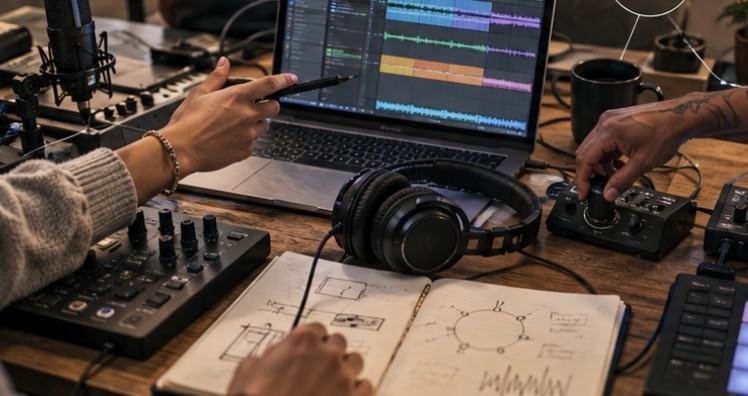
Before releasing music, collaborators should establish songwriting splits, ownership of master recordings, project-name ownership, financial responsibilities, and who can authorize licensing or releases.
The distinction between the composition and recording is particularly important. The Library of Congress explains that these can represent separate copyright interests even though listeners experience them together as one track. Its music and copyright resources provide additional background.
Musicians should also check whether their chosen project name conflicts with an existing trademark. The U.S. Patent and Trademark Office notes that musicians may seek federal trademark protection for artist or band names and explains how ownership can work when several band members are involved.
Its trademark guidance specifically for musicians is particularly useful before investing heavily in branding, merchandise, or touring.
Written agreements are worth considering as well. Berklee’s music-business guidance recommends addressing ownership and revenue during collaborations rather than assuming everyone understands the arrangement.
Common Misconceptions About Musical Side Projects
One misconception is that only have them. Recognition makes the term more visible, but an independent musician playing in a local band can maintain another recording project just as easily as an internationally known artist.
Another is that a side project automatically signals conflict within the main group. Sometimes that happens, but creative curiosity, collaboration, scheduling opportunities, or simply having material that does not fit the primary act can explain the decision.
Finally, “side project” does not mean disposable. The new project may ultimately become the artist’s most experimental work, longest-running collaboration, or even the career for which later audiences know them best.
Frequently Asked Questions
1. What is a side project in music?
It is a separate musical endeavor created alongside an artist’s primary band or career, often involving different collaborators, genres, identities, or creative goals.
2. Does starting a side project mean a musician is leaving their band?
No. Side projects commonly operate alongside the main band. If the musician permanently leaves and focuses elsewhere, the new work may eventually become their primary project.
3. Can a side project become a main project?
Yes. Audience growth, creative momentum, touring opportunities, or changing priorities can cause a secondary project to become equally important or eventually become the musician’s principal focus.
4. Is a supergroup the same as a side project?
Not necessarily. A supergroup contains musicians already recognized through other acts. It may function as a side project, but the terms describe different characteristics.
Where the “Side” Label Stops Mattering
The most useful answer to what is a side project in music is not simply “another band.” It is a separate creative space that lets musicians temporarily rewrite the rules surrounding their established work.
Sometimes that space produces one record and disappears. Sometimes it creates new collaborators, genres, audiences, and businesses. And occasionally, as projects such as Gorillaz demonstrate, the supposedly secondary idea develops a life larger than anyone anticipated.
For musicians considering one themselves, the smartest approach is simple: experiment freely with the music, but define ownership, credits, names, and expectations before the project becomes valuable enough for those questions to cause trouble.
Leave a Reply