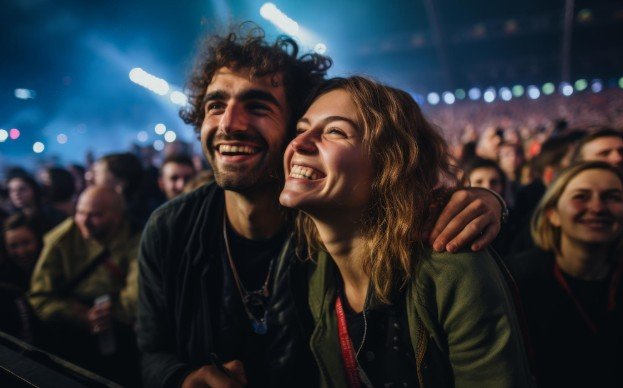
I have listened to favorite songs hundreds of times, yet hearing one performed live can feel entirely different. A lyric I know by heart suddenly carries the memory of when I first needed it. People around me sing the same words, and the artist who recorded them is right there, responding to the room.
That combination helps explain why fans feel emotionally connected at concerts: a show brings personal meaning, live performance, and shared experience together at once.
Familiar Songs Carry Personal Memories
Fans rarely arrive at a concert with a blank slate. They may have played an artist’s music through a breakup, a friendship, a long commute, or a major change in life. By the time they hear those songs live, the music is connected to experiences the performer may know nothing about.
A familiar opening note can bring those memories forward before the first lyric begins. The feeling is personal, even in a packed venue. One fan might celebrate how far they have come; another might remember someone they miss. Both can be moved by the same song for different reasons.
That is why the emotional connection often starts long before the concert. DIY music venues support underground artists by giving fans a chance to discover and connect with their music in an intimate setting. The performance then gives fans a new moment to attach to music that already matters to them.
Live Performance Makes a Familiar Song Feel New

A recording stays the same each time it plays. A live performance can change with the room. The singer may pause before a line, stretch a note, laugh at an unexpected response, or let the audience carry a chorus.
Those small variations hold attention. Fans know the song, but they cannot predict every second of its performance. They can watch the musicians make choices and hear the crowd answer back. Research comparing live and recorded music has found stronger emotional engagement with live performance under the conditions studied, although individual reactions will vary.
The Senses Add to the Experience
Sound is only part of a concert. Fans also see the stage, feel the rhythm, notice the people beside them, and watch the artist react in real time. A quiet verse can command the room’s attention; a sudden chorus can get everyone moving.
These details make a moment easier to remember as an experience, rather than just another time a favorite track played.
Singing Together Creates a Sense of Belonging
One of the most powerful concert moments can be hearing strangers sing a lyric that has always felt private. It shows a fan that other people have found meaning in the same music.
Researchers use the term collective effervescence for the heightened connection people can feel during a shared event. At a concert, that might happen when the audience sings without prompting, moves together, or falls quiet at the same moment. Studies have also observed synchronization in audience movement and physiological responses during live performances.
Fans do not have to talk to everyone around them to feel part of the group. Sharing attention and participating in the music can create a brief but meaningful sense of belonging.
Seeing the Artist Can Deepen the Connection

A fan may know an artist through recordings, interviews, and the stories in their songs. Seeing that person perform can make the music feel more immediate. A spoken introduction gives context to a song; an improvised moment reveals something that could only happen at that show.
Even a small interaction can matter. When an artist listens to the audience finish a lyric or responds to a chant, fans can see that their participation shapes the performance.
This feeling should be understood with care. Enjoying an artist’s work does not mean a fan knows them personally. The concert connection can still be real as an experience: the artist and audience are present for, and responding to, the same moment.
Why Does the Feeling Last After the Show?
When the concert ends, the song remains. Playing it later may bring back the crowd’s voices, the artist’s expression, or the person who stood beside a fan during the chorus. The performance becomes another memory carried by the music.
The experience can also change how fans relate to each other. Friends may revisit a favorite moment for years, while someone who attended alone may remember feeling welcome among strangers. The strongest memories often come from specific details: a changed lyric, an unplanned encore, or a room suddenly singing as one.
Frequently Asked Questions
1. Why do fans feel emotionally connected at concerts?
Fans bring their own memories to the songs, then hear them performed live alongside people who share their enthusiasm. The artist’s presence, the crowd’s participation, and the unpredictability of the show can make familiar music feel newly meaningful.
2. Can a concert feel emotional if I attend alone?
Yes. Going alone can give you room to focus on the performance, and you can still take part in the crowd’s shared reactions. You do not need a companion to feel connected to the music.
3. Is it normal to feel emotional after a concert?
Yes. A meaningful experience can stay on your mind after it ends. Hearing the songs again may bring back particular moments from the show.
What Stays With Me
When I think back on a memorable concert, I rarely remember every song in order. I remember the instant a familiar lyric felt personal again, the sound of everyone joining in, and the surprise of hearing something happen only once. To me, that is the heart of a concert’s emotional pull: music I already care about becomes part of a shared, unrepeatable memory.
Leave a Reply