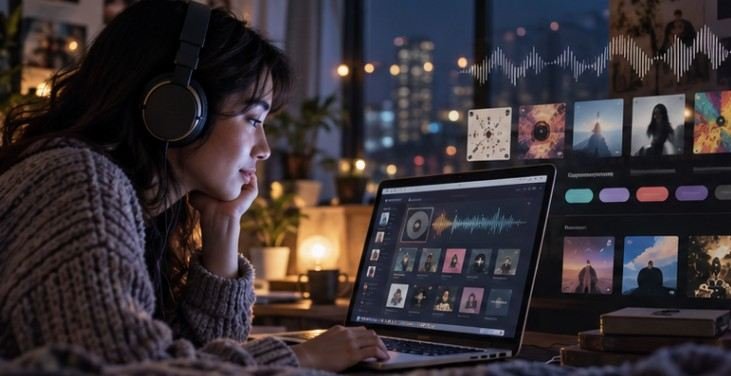
Music discovery has a paradox: the easier it becomes to access millions of songs, the easier it can be to keep hearing variations of what you already know. Recommendation systems learn from past behavior, while popularity can influence what gets surfaced. Research presented through the Association for Computing Machinery has examined popularity bias in music recommenders, including how niche listeners may receive different recommendation experiences.
That is why learning how to discover new indie artists is less about finding one perfect app and more about creating several routes into unfamiliar music. The strongest discovery system mixes algorithms with DJs, labels, local scenes, music writers, live performances, and deliberate exploration.
Why Your Recommendations Can Start Feeling Predictable
Personalized streaming is excellent at answering, “What might I enjoy next?” It is not always designed to answer, “What exists far outside what I already hear?”
Music recommendation technology commonly uses listening behavior, similarities among tracks, popularity signals, metadata, and other information. Stanford’s Center for Computer Research in Music and Acoustics explains how music-information-retrieval systems can analyze characteristics such as tempo, musical structure, key, and other audio features to organize and recommend recordings.
That technology is useful, but discovery becomes narrower when every listening session begins from the same familiar artists.
One study of music recommendation data found that popular artists can be disproportionately represented by some recommendation methods. The research is older and should not be treated as proof that every modern streaming service behaves identically, but it illustrates why active exploration remains valuable.
The solution is not abandoning algorithms. It is feeding yourself music through several independent channels.
Start Where Artists Can Appear Before They Become Famous
Search Bandcamp by sound, not artist name
Bandcamp remains particularly useful for intentional digging because its discovery system supports genre, location and descriptive tags. Its current Discover tools also allow multiple tags to be combined, letting listeners narrow large categories into much smaller scenes.
Instead of searching “indie rock,” try combinations such as:
dream pop + lo-fi
post-punk + Chicago
experimental + folk
shoegaze + Texas
Then explore new releases rather than only best sellers.
This reverses the usual discovery process. You are starting with a musical characteristic and investigating whoever appears, rather than asking a platform for artists similar to somebody you already know.
Use SoundCloud as a scene map
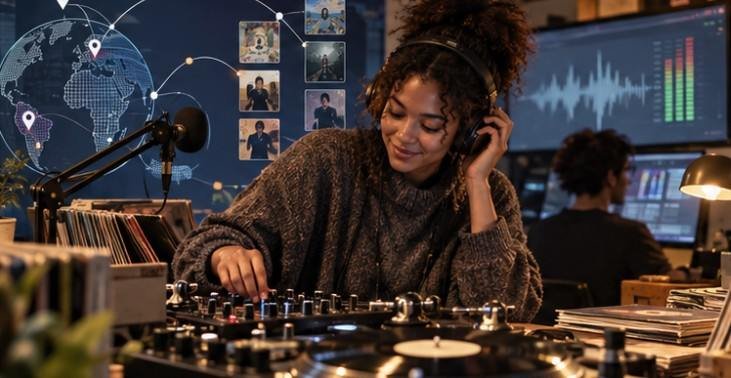
SoundCloud can work differently. Its search system indexes tracks, artists, playlists and DJ sets, while its discovery features use listening behavior and song similarity to make recommendations. Its Following feed also exposes uploads and reposts from accounts you deliberately choose.
The useful trick is following producers, DJs, small labels and artists—not simply individual songs.
When an unknown artist reposts another unknown artist, follow that connection. Repeated connections can reveal a tiny electronic, hip-hop or alternative scene long before its members reach large editorial playlists.
Put Human Curators Back Into the Process
One of the simplest ways to expand your musical world is allowing another person to interrupt your taste profile.
KEXP’s independent music programming is a strong example. Its programming states that DJs hand-select music and mix established acts with emerging performers across rock, electronic, hip-hop, jazz, roots music and other genres. KEXP also says its DJs retain freedom over what they play rather than following a single centralized playlist.
College music communities are another productive route. Berklee College of Music’s emerging-artist events, for example, include its Fresh Prospects series, which highlights emerging performers selected by student curators. In September 2026, the series was promoting developing indie artists from the Boston and Northeast music scenes.
Search your own area for university radio stations, community stations, independent record stores and small venues. A local DJ who hears 50 regional submissions may expose you to music that national recommendation systems have little data about.
Follow the People Who Find Artists for a Living
Music blogs still matter because good writers explain why something deserves attention.
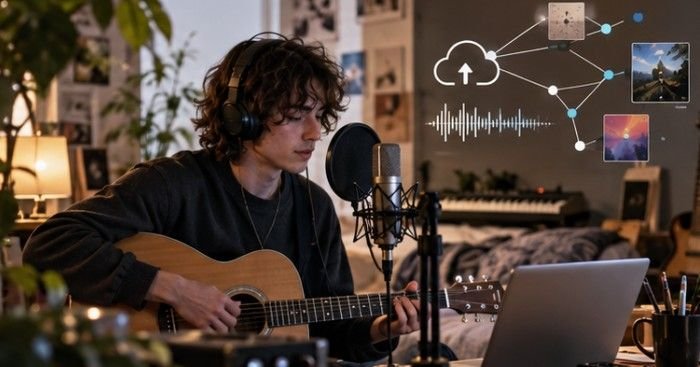
Hype Machine aggregates music being discussed by independent sites, making it useful for spotting an artist repeatedly appearing across different publications.
Indie Shuffle takes another approach: individual songs receive short editorial notes and “sounds like” references, allowing readers to jump between stylistically related artists without depending entirely on automated similarity.
Labels are equally useful discovery filters.
If one small label releases three records you love, subscribe to its mailing list and investigate its entire roster. Sub Pop, Merge, Ninja Tune and smaller regional labels often provide stronger taste signals than browsing an enormous genre category.
The same principle applies to producers, booking agents, supporting acts and festival lineups.
Use a Four-Lane Discovery System
A practical answer to how to discover new indie artists is to deliberately divide discovery across four channels.
| Discovery lane | Where to look | What it reveals |
| Direct artist platforms | Bandcamp, SoundCloud | Early releases and niche scenes |
| Human curation | Independent and college radio | Artists selected by knowledgeable listeners |
| Editorial discovery | Music blogs, Hype Machine | Context and emerging critical attention |
| Scene discovery | Venues, labels, opening acts | Local artists and real-world networks |
Spend roughly equal time in each lane for a month. The objective is not collecting hundreds of songs. Save only artists you genuinely want to revisit.
That small constraint improves discovery because it separates “interesting for 30 seconds” from “I actually want another record from this artist.”
Follow Connections Instead of Rankings
One of the most effective techniques requires no specialized platform.
Take one relatively unknown artist you already enjoy and investigate:
their record label,
the producer of the recording,
artists they have toured with,
opening acts from past shows,
featured musicians,
artists they publicly recommend.
Then repeat the process with the most interesting discovery. This creates a human network rather than a popularity chart.
Smithsonian Folkways offers a historical example of how productive this approach can be. Its archive documents thousands of recordings, regional traditions and musicians, including material from independent labels that preserved less-commercial musical communities.
It is especially valuable if your definition of “indie” extends beyond contemporary guitar bands into folk, roots, experimental and regional American music.
Don’t Confuse Obscurity With Quality
There is an easy mistake in underground music discovery: assuming an artist is more interesting simply because almost nobody knows them.
Popularity does not determine quality, but neither does obscurity. Give each discovery three tests. Listen to one song that initially caught your attention, another track from the same release, and something older or live. If your interest survives all three, save the artist rather than merely the song.
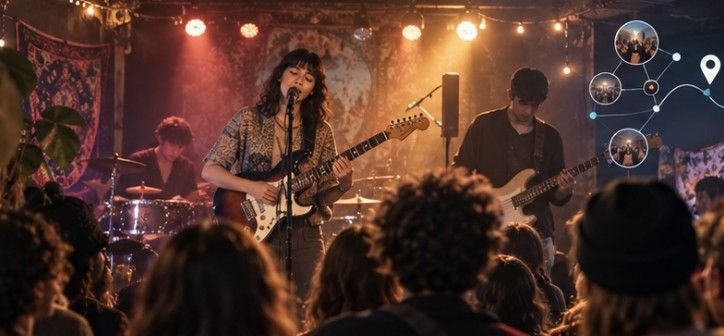
Live material is particularly revealing. Berklee’s student-produced performance projects have intentionally showcased emerging musicians in intimate environments, illustrating how universities and small performance spaces can function as discovery networks as well as venues.
Create a Weekly Discovery Habit
You do not need hours of daily digging. Try 30 minutes once a week:
Spend ten minutes exploring unfamiliar tags on Bandcamp or SoundCloud. Spend another ten with a DJ-curated station or program. Use the final ten to investigate one artist’s label, collaborators, supporting acts or local scene.
Keep a playlist titled by month rather than genre. Add no more than five artists each week. At the end of the month, remove anything you no longer care about. The artists who survive become starting points for the next month’s search.
That process gradually produces something no default playlist can perfectly recreate: your own independent discovery network.
Frequently Asked Questions
1. What is the easiest way to find unknown indie musicians?
Start with Bandcamp’s niche tags, independent radio playlists and small-label rosters. These sources let you browse beyond artists already dominating major recommendation feeds.
2. Where can I discover indie artists before they become popular?
Bandcamp, SoundCloud, college radio, independent stations, small venues, local festival lineups and emerging-artist showcases are particularly useful for finding developing musicians.
3. Does Spotify or another streaming service work for indie discovery?
Yes. Algorithmic recommendations can uncover excellent music. For broader discovery, combine them with human-curated radio, independent blogs, labels and local scenes rather than relying on one recommendation system.
4. How often should I search for new artists?
A focused 30-minute session once a week is enough. Consistency matters more than endless browsing because following labels, collaborators and scenes compounds your discoveries over time.
The Artists Worth Finding Usually Have a Trail
Understanding how to discover new indie artists ultimately means changing what you follow. Instead of waiting for another personalized playlist, follow scenes, labels, DJs, producers, venues, writers and musicians themselves.
Algorithms are useful shortcuts, but curiosity is still a better exploration tool. Begin with one unfamiliar record this week, find out who released it, see who played alongside that artist, and follow whichever connection looks interesting. The point is not being able to say you heard somebody “first.” It is building a music library that feels discovered rather than delivered.
Leave a Reply