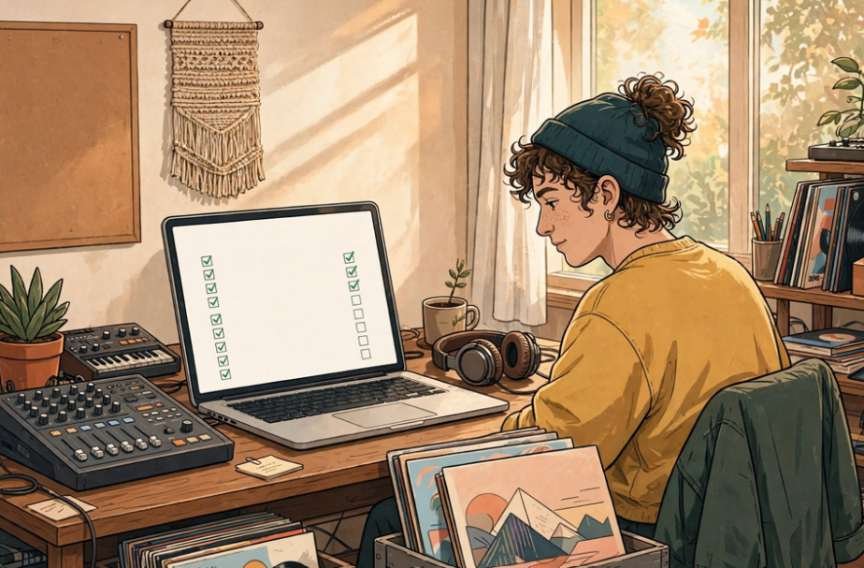
I blew my first album release by uploading raw files directly to a distributor five days before launch. I earned zero playlist placements, neglected mechanical royalties, and burned out my audience with sporadic social posts. After years of producing records and managing releases, I built an organized system. This self releasing an album checklist for indie artists eliminates chaos, secures your revenue streams, and delivers your music to the right listeners.
Whether you plan a full twelve-track LP or scaled back to release an independent ep, an eight-week runway remains the industry standard for a reason.
Weeks 8 to 6: Locking Production Assets and Metadata Hygiene
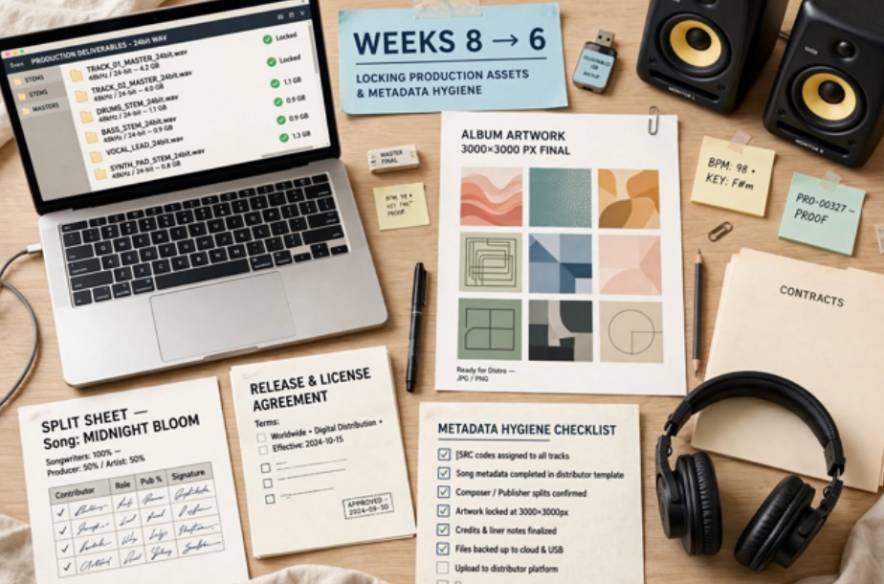
Rushing production deliverables corrupts your release downstream. Your mixing and mastering engineers must deliver archival-quality files before you sign off on any distribution contracts.
Clearing Rights, Splits, and Master Files
Export your master audio as 24-bit, 44.1kHz uncompressed WAV files. Verify your artwork measures exactly 3000 x 3000 pixels at 300 DPI, configured in RGB color space. Streaming services reject artwork displaying social media handles, pricing stickers, or retailer logos.
Never rely on verbal agreements for songwriting. Draft signed split sheets detailing the precise percentages owed to co-writers, topliners, and session musicians. If you used samples, clear both the master sound recording and underlying composition licenses now. Untangled publishing disputes freeze distribution assets and escrow royalty payouts indefinitely.
Compile your metadata into a single offline document. Collect primary artist display names, featured performers, producers, engineers, and explicit content designations. Double-check the legal spelling of every contributor. Fixing spelling mistakes across digital service providers after release often takes weeks.
Weeks 5 to 4: Distribution Pipelines and Royalty Architecture
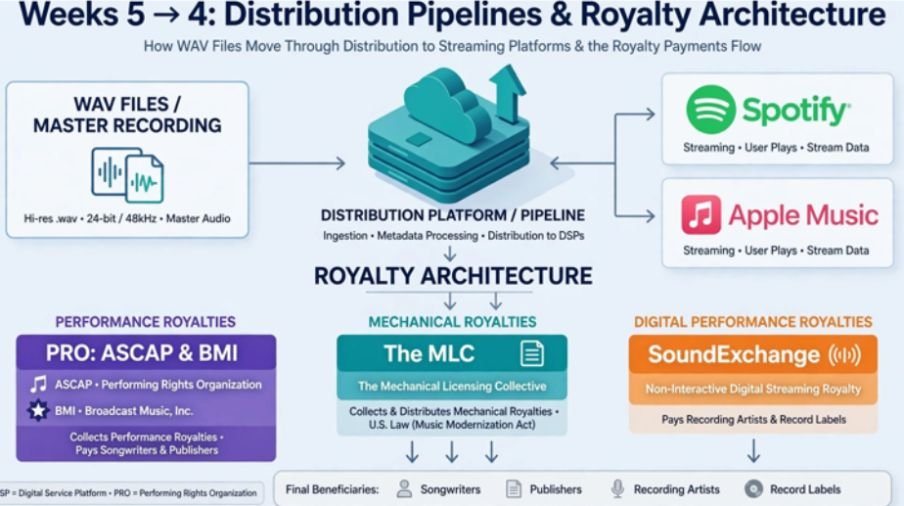
Uploading your album a month in advance ensures you never miss a street date. Modern independent music distribution platforms need sufficient lead time to process, inspect, and ingest multi-track deliverables across global networks.
Always select a Friday release date to synchronize with standard weekly platform updates and global charting windows.
| Platform / Entity | Function | Asset / Requirement |
| Digital Distributor | Ingestion to Spotify, Apple, etc. | 24-bit WAVs, 3000x3000px Cover, Metadata |
| PRO (ASCAP / BMI) | Performance Royalty Collection | Work Titles, Writer IPIs, Publisher IPIs |
| The MLC | Digital Audio Mechanicals | Master Song Titles, ISRCs, Writer Splits |
| SoundExchange | Non-Interactive Digital Audio Royalties | Master Recording ISRCs, Featured Artist Info |
Setting Up Mechanical and Digital Performance Pipelines
Distributors deliver your songs to DSPs, but they do not collect your global songwriting royalties. Register your songs with your local Performing Rights Organization to secure broadcast and live performance revenue.
Next, submit your catalog data directly to The MLC to collect domestic mechanical royalties generated by on-demand interactive streams. Pair this step with a complete catalog upload to SoundExchange, which recovers non-interactive digital performance royalties from satellite and internet radio broadcasts. Missing these steps leaves roughly 20% to 30% of your earned music revenue sitting in unclaimed black-box pools.
Finally, build your smart pre-save link through platforms like Feature.fm or Hypeddit. This single page aggregates fan interest across all primary platforms.
Weeks 3 to 2: Editorial Pitching and Asset Batching
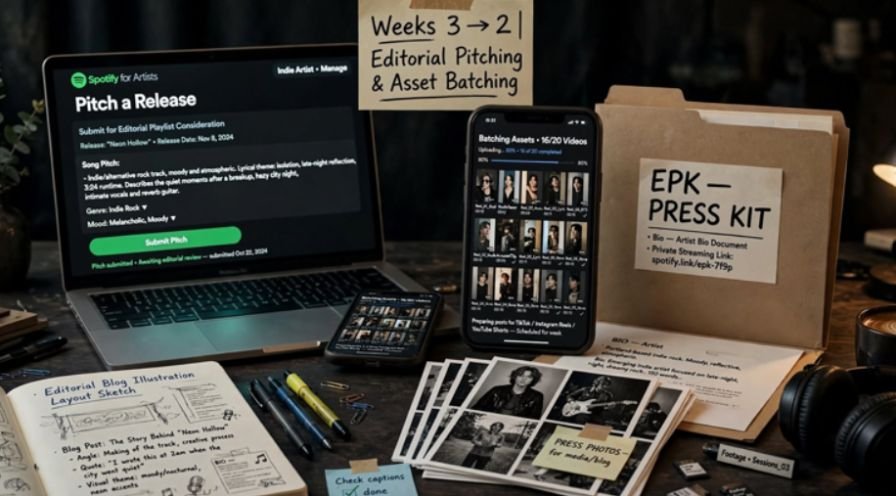
With your release ingested and assigned unique ISRCs and UPCs, your streaming profiles will display the upcoming release in your creator dashboards. This begins your promotional campaign.
Pitching Spotify Editorial Without Wasting Your Shot
Log into your dashboard and follow the Spotify for Artists Pitching Best Practices to target human curators. You must pitch your chosen focus track at least 14 days before launch.
Avoid generic descriptions in your pitch. Detail the musical instrumentation, identify complementary artists, specify your target audience demographic, and describe your external promotional budget.
Alongside editorial playlist pitching, artists can learn how to get featured on independent music blogs and podcasts to expand their release campaign beyond streaming platforms.
Pitching on time guarantees your single lands on your existing followers’ personal Release Radar playlists on morning one.
Simultaneously, craft a lightweight Electronic Press Kit hosted on an unlisted webpage or cloud folder. Include:
- A concise 250-word narrative bio framing the record’s sonic identity
- Two high-resolution press photos in both horizontal and vertical crops
- High-res album artwork files
- A private, password-protected streaming link for journalists and playlisters
During this quiet window, batch 15 to 20 vertical videos. Create short-form performance takes, lyric breakdowns, and behind-the-scenes recording footage. Trying to shoot, edit, and post video daily during release week causes immense stress. Bank your assets early.
Launch Week: Execution, Direct Outreach, and Algorithm Triggers
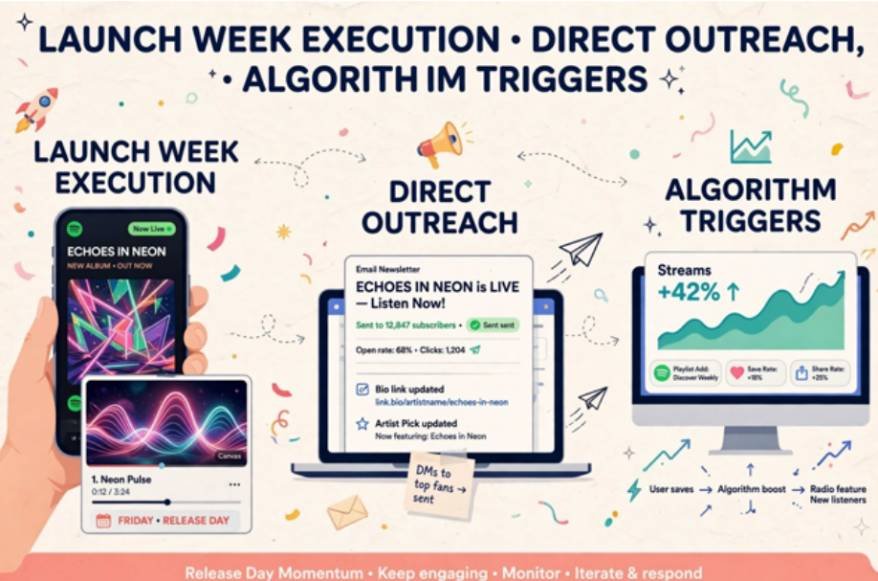
Friday morning brings the official rollout. First, audit every major storefront to ensure the album appears correctly without orphaned tracks, mismatched metadata, or split artist profiles.
Swap the primary URL in your social bios to direct fans to your live smart link. Update your Artist Pick on your streaming profiles to prioritize the new album, and link your custom vertical Spotify Canvas videos to your focus tracks.
Send an email newsletter directly to your core subscribers with clickable links to every service. Direct-to-fan email marketing repeatedly yields four times the conversion rate of standard social posting. Thank your engineers, visual artists, and collaborators publicly across your channels, tagging their handles to cross-pollinate reach.
Post-Launch: The Second Wave and Algorithmic Momentum
The work continues after the first weekend. Streaming algorithms analyze listening trends, skip rates, and playlist-add ratios during the initial 14-day window.
Publish your batched social clips on a disciplined schedule. Respond to every user-generated clip, comment, and story mention within an hour of posting to keep platform engagement metrics high.
Deliver secondary promotional assets during weeks two and three. Release an acoustic performance video, drop a visualizer for track four, or share an in-depth track-by-track interview. Continuous activity tells Spotify’s Discover Weekly algorithm that your release maintains organic interest beyond launch day.
Frequently Asked Questions
1. How far in advance should I upload an album for distribution?
Upload your album four to six weeks before your target release date to secure editorial pitching access and prevent technical delays.
2. What is the ideal day of the week to release indie music?
Friday is ideal for competing for algorithmic playlists, whereas a Tuesday or Wednesday release minimizes competition if you rely strictly on direct-to-consumer sales.
3. Do I need a record label to collect streaming mechanical royalties?
No, independent artists can collect their mechanical royalties directly by registering their catalog with The MLC and a publishing administrator.
4. How much money should indie artists budget for marketing an album?
Allocate at least 50% of your total project budget strictly toward external marketing, video assets, and targeted playlist pitching campaigns.
Cut the Ribbon, Keep the Equity
Self-releasing music requires discipline, careful project management, and patience. Following an established framework shields you from copyright roadblocks, missing royalty checks, and unforced distribution errors. Run through this roadmap, check off your production deliverables early, and focus on building genuine connections with your audience.
Leave a Reply