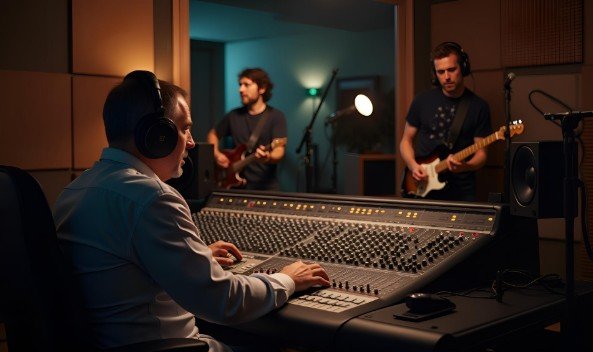
I have often left a concert thinking that a familiar song sounded bigger, faster, heavier, or more emotional than the version I knew. Sometimes the vocals seemed rougher, the bass felt overwhelming, or an instrument nearly disappeared. Those changes are not necessarily mistakes.
Why live music sounds different from studio recordings comes down to the contrast between a carefully constructed recording and a performance unfolding in real time. The musicians, room, equipment, audience, and even where a listener stands can reshape the music.
Studio Recordings Are Carefully Constructed
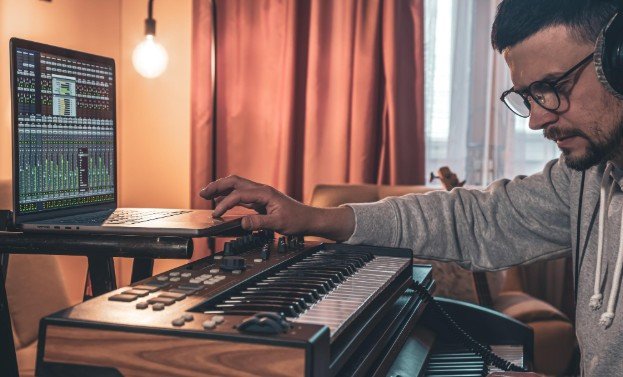
A finished track is rarely the untouched sound of musicians playing from beginning to end. Modern studios allow performers and producers to build a song layer by layer under controlled conditions.
Artists Can Record Multiple Takes
In a studio, a singer can repeat a verse until the desired tone, timing, and emotion are captured. A producer may combine the strongest lines from multiple performances through a process known as comping. Instrumental mistakes can also be corrected without recording the entire song again.
This flexibility produces a consistent performance that can withstand repeated listening. A small error might feel harmless during a concert, but it would become distracting if heard every time someone played the album.
Overdubbing Creates Layers
One musician can record several guitar parts, vocal harmonies, keyboards, percussion, and background textures. These layers may be impossible for the touring lineup to reproduce simultaneously.
During a concert, the artist must simplify the arrangement, hire additional musicians, use backing tracks, or replace certain layers with new instrumental parts. The resulting version may feel more spacious, raw, or rhythmically driven than the record.
Mixing Shapes Every Instrument
Studio engineers can spend hours adjusting volume, equalization, stereo placement, compression, reverb, and other effects. They can make a quiet vocal line audible, reduce muddiness in a guitar, or position instruments across the stereo field.
Mastering then prepares the finished mix for consistent playback through headphones, car speakers, home systems, and streaming services. A concert engineer must make similar decisions in seconds while responding to conditions that may change throughout the show.
Live Performances Happen in Real Time
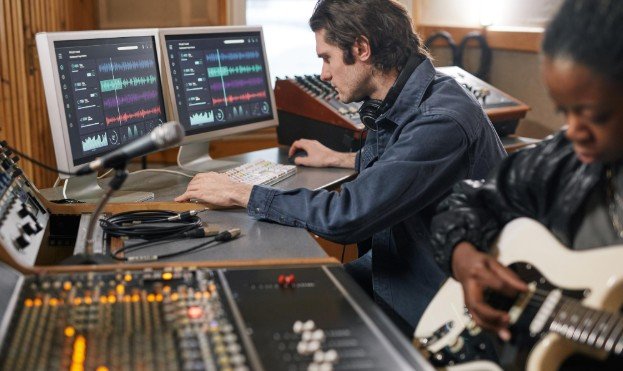
Musicians onstage generally cannot stop and repeat a section. They must continue through equipment problems, missed cues, broken strings, vocal fatigue, and unexpected audience reactions.
That pressure can give live music its excitement. Instead of presenting a fixed version, performers respond to one another in the moment. A drummer might push the tempo, a singer may hold a note longer, or a guitarist could extend a solo because the audience is reacting strongly.
Some bands deliberately redesign songs for concerts. They may create a quieter opening, a heavier ending, a call-and-response section, or a transition into another track. These decisions help familiar material work in a visual, communal setting rather than simply copying the album.
The Venue Becomes Part of the Music
Hard walls and ceilings reflect sound, potentially making vocals and drums feel blurred. Large spaces can create long reverberation, while outdoor venues lose many of the reflections that make indoor shows feel full. Low frequencies may accumulate near corners and walls, causing bass to sound powerful in one location but weak only a few steps away.
A full audience changes the room as well. People and clothing absorb certain frequencies, particularly higher ones. This is why engineers often continue adjusting the mix after the audience enters, even if everything sounded balanced during an earlier soundcheck.
PA Systems and Stage Sound Change the Mix
At most amplified shows, the audience hears a combination of the main PA system and sound coming directly from the stage. Acoustic drums, guitar amplifiers, monitors, and other equipment create their own volume before the main speakers are considered.
Microphones can capture sound from nearby instruments. This microphone bleed makes it harder to process every source independently. Engineers must also prevent feedback, which occurs when amplified sound reenters a microphone and creates a loud loop.
The audience mix is different from what the musicians hear. Performers rely on stage monitors or in-ear monitors containing personalized combinations of vocals and instruments. If a singer cannot hear clearly, pitch, timing, vocal tone, and projection may change.
Your Position Affects What You Hear
Two people at the same show may experience noticeably different sound. Someone close to a speaker may hear one side of the stereo mix more strongly. A listener near a wall may experience exaggerated bass, while a person under a balcony could hear additional reflections and reduced clarity.
The front-of-house mixing position often offers one of the most balanced listening areas because the engineer makes decisions from that location. Standing reasonably close to that area can provide a clearer representation of the intended mix.
Excessive volume can also cause temporary listening fatigue, making details harder to distinguish as the performance continues. Properly fitted concert earplugs can reduce harmful volume while preserving more clarity than simply blocking the ears.
Live Music Is a Physical and Emotional Experience
A studio track reaches listeners through a playback device. At a concert, high sound-pressure levels allow bass drums and low frequencies to be felt through the body. Lighting, movement, anticipation, and the presence of other listeners strengthen the emotional response.
The crowd also influences the performers. Singing, cheering, silence, or visible enthusiasm can affect how musicians phrase a song and how much energy they bring to it. This feedback loop cannot be captured completely in a fixed recording.
That explains why a technically imperfect performance may feel more powerful than a polished album. The listener is responding to physical sensation, visual information, social connection, and the knowledge that the moment cannot be recreated exactly.
Why Phone Videos Rarely Capture the Real Experience
A phone recording is not a reliable representation of concert sound. Its small microphones must handle extreme volume, heavy bass, crowd noise, and reflections arriving from multiple directions.
Automatic processing may lower the volume suddenly, distort low frequencies, or make the crowd sound louder than the band. The recording also loses the physical impact and scale of the venue. A disappointing phone clip does not necessarily indicate that the concert sounded poor in person.
Commercial live albums are different. They may use separate soundboard tracks, audience microphones, professional mixing, mastering, and occasionally corrections. Even then, they preserve an interpretation of the event rather than everything heard and felt inside the venue.
Frequently Asked Questions
1. Why do singers sound different during concerts?
Singers must move, project, manage their breathing, interact with the audience, and perform an entire set. Microphone choice, monitor quality, fatigue, room acoustics, and the absence of studio layering can all change their vocal tone.
2. Why do bands sometimes play faster live?
Adrenaline and audience energy can encourage musicians to increase the tempo. Bands may also intentionally speed up songs to maintain momentum, although many modern performances use click tracks to keep timing consistent.
3. Do musicians use studio recordings during concerts?
Some performers use backing tracks for electronic elements, vocal layers, sound effects, or instruments that cannot be reproduced by the touring lineup. Others rearrange the music entirely and perform every part live.
4. Is live sound worse than studio sound?
Not inherently. Studio sound prioritizes control, repeatability, and detail, while live sound prioritizes immediacy, energy, scale, and interaction. The quality of either format depends on the performers, engineers, equipment, environment, and artistic goals.
Final Thoughts
I see studio tracks and concert performances as two interpretations of the same music. One captures carefully selected details that can be replayed consistently, while the other creates an unrepeatable exchange between artists, technology, space, and audience.
Neither format needs to replace the other. The record lets me explore the arrangement closely, while the concert reveals how the song can breathe, evolve, and respond to a particular moment. That difference is not a flaw—it is one of the reasons live music remains exciting.
Leave a Reply