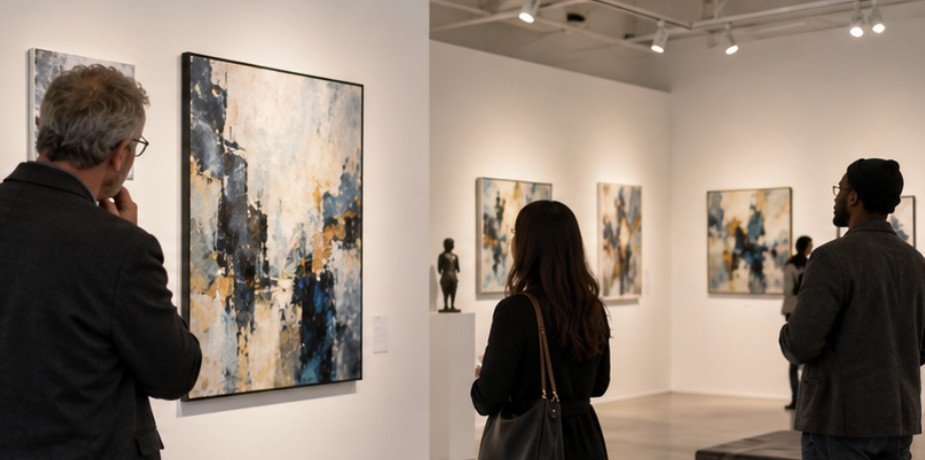
An artist can be 25, 45, or 70 and still be described as “emerging.” That is one of the most important facts hidden behind the label. The emerging artist meaning has much less to do with age than many people assume. In the U.S. art world, it generally describes a creator who has moved beyond making art casually and is developing a professional practice, but has not yet built the sustained recognition associated with a mid-career or established artist.
That distinction matters because galleries, residencies, grants, fellowships, museums, and arts organizations often use career-stage labels when deciding who qualifies for opportunities.
What Does Emerging Artist Mean?
An emerging artist is usually someone in the early or developing stage of a professional artistic career. They are actively producing work, developing a recognizable practice, and beginning to accumulate public evidence of that work through exhibitions, performances, publications, commissions, sales, awards, residencies, or media attention.
Developing a recognizable artistic identity extends beyond the work itself; for musical artists, it can also encompass deliberate choices about public presentation and identity, including how do bands choose their name to establish a distinctive and memorable presence.
There is no universal definition. The New York Foundation for the Arts notes that terms such as emerging, mid-career, and established can mean different things depending on the organization using them. An emerging visual artist might have several exhibitions but no major gallery representation, while an emerging writer might have published individual pieces without yet publishing a major book.
That flexibility is why artists should treat “emerging” as a career-stage description rather than a permanent professional title.
Emerging Does Not Mean Beginner
One of the biggest misconceptions is that an emerging artist must be learning basic artistic skills. Usually, that is not the case.
A serious emerging painter, photographer, musician, sculptor, writer, filmmaker, or interdisciplinary artist may have spent years mastering their craft. What is still developing is their professional footprint.
For musicians in particular, experimenting beyond an established project can be part of that development, which is why understanding what is a side project in music can provide useful context for how artists explore new creative directions while continuing to build their primary careers.
Artist Communities Alliance provides a useful example. Its MacColl Johnson Fellowship criteria describe emerging artists as people in the early years of professional practice who already have a substantive body of work and may have begun receiving critical notice, commissions, programming, or presentations.
In other words, “emerging” does not necessarily mean inexperienced. It often means professionally developing. Building a professional art career involves developing a body of work while also learning how to navigate opportunities, visibility, and professional relationships.
The Five Signs an Artist Is Emerging

Instead of asking how old an artist is, look at what is happening in their career.
They Are Creating Consistently
An emerging artist normally has more than isolated experiments. There should be an evolving body of work that demonstrates continuing artistic activity.
That might mean a series of paintings, several completed films, a portfolio of photography, published writing, recordings, performances, installations, or another sustained creative practice.
Their Work Has Started Reaching the Public
The transition from hobbyist to professional practice often becomes clearer when the work begins moving beyond the artist’s private space.
That could include juried exhibitions, artist-run spaces, community galleries, festivals, readings, performances, online exhibitions, professional publications, commissions, or sales.
Recognition Exists, but It Is Still Developing
An emerging artist may already have achievements.
They could have won a small grant, completed a residency, appeared in local media, participated in several exhibitions, sold artwork, or developed an online following.
What they generally do not yet have is a long, sustained record of national or international institutional recognition.
They Are Building Professional Infrastructure
Professional development is another useful signal.
The School of the Art Institute of Chicago advises emerging artists to focus on visibility, participate in exhibitions, maintain an online presence, and develop professional materials such as artist statements and CVs.
An artist who maintains a portfolio, documents work properly, submits applications, develops relationships and searches for professional opportunities is behaving differently from someone creating only for recreation.
They Have Not Yet Reached Sustained Establishment
This is perhaps the simplest dividing line.
The artist has started attracting attention, but that attention has not become consistently broad or institutionally established.
Emerging Artist vs. Amateur vs. Mid-Career Artist
These labels are imperfect, but the distinction can be useful.
| Career stage | Typical position |
| Amateur or hobbyist | Creates mainly for personal enjoyment, with professional development not necessarily being the goal |
| Emerging artist | Builds a professional body of work and begins gaining exhibitions, sales, commissions, publications or recognition |
| Mid-career artist | Has an established professional record and more sustained regional or national recognition |
| Established artist | Has a substantial long-term record, broad recognition and significant professional or institutional presence |
The boundaries are not fixed.
Someone might appear mid-career according to one residency’s criteria but qualify as emerging under another grant’s rules.
That is why artists should never rely solely on the label.
Does an Emerging Artist Have to Be Young?

No. The emerging artist meaning describes career development more reliably than biological age.
The Joan Mitchell Foundation’s former Emerging Artist Grant program explicitly described emerging artists as people early in their artistic careers regardless of age. Its definition also considered whether artists had developed major gallery representation, substantial exhibition histories, awards, commissions, or sufficient market establishment.
This makes room for second careers.
A 52-year-old accountant who develops a serious sculpture practice, begins exhibiting, receives a first residency, and starts selling professionally may reasonably occupy an emerging career stage.
Meanwhile, a 29-year-old artist with extensive museum exhibitions and years of major representation may no longer fit it.
A Quick Test: Are You an Emerging Artist?
Ask yourself five questions.
Have you produced a coherent body of work rather than occasional standalone pieces?
Have you presented, published, performed, sold, or exhibited your work publicly?
Are you actively seeking professional opportunities?
Have you received some external recognition but not yet developed a sustained national or institutional profile?
Are you building a career rather than simply exploring the activity recreationally?
If most answers are yes, “emerging artist” may accurately describe your current professional position.
But there is an important catch: if you are applying for a grant, residency, fellowship, or exhibition, the organization’s definition overrides your personal interpretation.
Why the Label Matters in the United States
Career-stage terminology can affect access to funding, residencies, exhibitions and professional development.
The National Endowment for the Arts illustrates how artists’ careers can develop through opportunities, communities and institutional support, while its profiles also show that artistic careers rarely follow one standardized path.
Residencies can be particularly important during this stage. Research published by Artist Communities Alliance found that residency experiences can contribute to new work, exhibitions, professional connections and longer-term support networks for participating artists.
A music collective can provide another form of professional community, bringing artists together around collaboration, shared resources, creative exchange, and opportunities to develop their work and reach new audiences.
That helps explain why emerging-artist opportunities frequently offer more than money. Mentorship, studio access, introductions, professional training and time to work may be equally valuable.
Why the Definition Can Be Frustrating
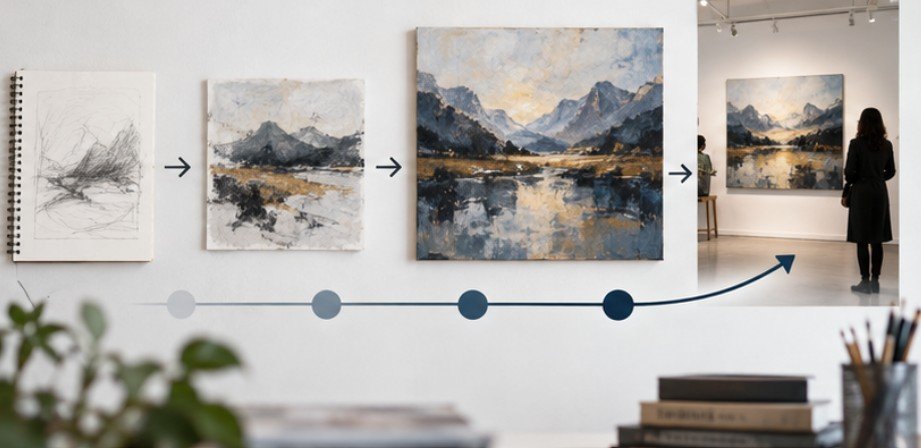
The term sounds precise, but it is not.
One funder may define emerging as one to five years of professional activity. Another may expect at least three years. Another may use exhibition history rather than years. Some programs allow career changers, while others impose geographic, education, age or professional-history requirements.
That ambiguity is not necessarily a problem until someone assumes the term has the same meaning everywhere.
Before applying for anything labeled “emerging artist,” read the eligibility language carefully. Check how the organization measures professional experience, exhibitions, representation, education, awards and career interruptions.
If the wording remains unclear, contact the organization rather than reshaping your résumé to fit what you think the term means.
Frequently Asked Questions
1. What is the simplest emerging artist meaning?
An emerging artist is a creator building an early professional career, with a developing body of work and some public recognition but without the sustained visibility usually associated with established artists.
2. How long can someone be considered an emerging artist?
There is no universal duration. Some programs specify a particular number of professional years, while others evaluate exhibitions, recognition, representation and overall career development.
3. Can a self-taught artist be an emerging artist?
Yes. Formal art-school education is not universally required. Professional practice, quality of work, public presentation and career development can matter more than a degree.
4. Is an emerging artist the same as an unknown artist?
Not necessarily. Emerging artists may already have exhibitions, awards, commissions, sales or press coverage. The term describes a developing professional position rather than complete lack of recognition.
The Label Matters Less Than the Evidence
Understanding the emerging artist meaning becomes easier once you stop treating “emerging” as an age bracket or measure of artistic talent. It is better understood as a temporary position in a professional journey.
What matters most is the evidence surrounding the label: the work you have created, where it has appeared, how consistently you practice, who has recognized it and what opportunities you are ready to pursue next.
For artists themselves, that is the useful takeaway. Do not spend too much energy trying to perfectly name your career stage. Build the record that makes your next stage unmistakable.
Leave a Reply