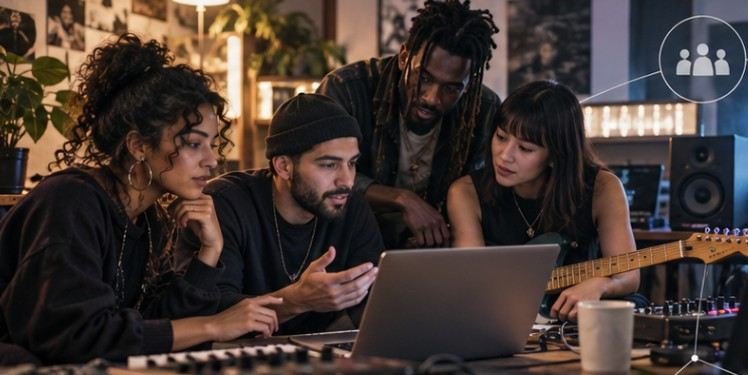
Some of the most influential music organizations do not function like bands at all. Their members may release solo records, produce for one another, organize events, design merchandise, run radio shows, or disappear into separate projects for months before collaborating again.
That flexibility is the simplest answer to what is a music collective: it is a community of musicians and other creative people who collaborate, share resources, audiences, skills, or opportunities while usually retaining separate artistic identities.
A collective can look informal from the outside, but the strongest ones often operate with surprisingly clear relationships behind the scenes.
A Music Collective Is More Network Than Band
A traditional band is normally built around a recognizable lineup. The same musicians rehearse together, perform under one name, and contribute to a shared body of work.
A music collective is looser. A rapper might release a solo album while another member produces it. A DJ could organize events for the group. A photographer may shape its visual identity, while several singers appear only on selected tracks. Members can collaborate intensely without appearing on every project.
That distinction matters because collaboration has become increasingly central to independent music careers. Berklee songwriter Andrea Stolpe argues that working with other musicians can expose creators to perspectives and creative territory they may struggle to reach alone.
Berklee also encourages musicians to build relationships through local scenes, songwriting groups, workshops, and existing creative networks. Berklee’s advice on finding music collaborators A collective essentially turns that idea into an ongoing ecosystem.
How Music Collectives Actually Operate
There is no universal organizational chart. Some collectives begin with a handful of friends making music in a bedroom. Others develop into recognizable creative brands with record releases, touring operations, merchandise, radio programs, festivals, or independent labels. Most successful collectives share several characteristics.
Members Bring Different Skills
The group does not have to consist entirely of performers. Producers, engineers, DJs, visual artists, photographers, videographers, managers, designers, promoters, and songwriters may all participate.
That diversity can create a powerful exchange: one member gains production help, another reaches a new audience, and someone else gains material for a portfolio.
The Smithsonian has documented similar cross-disciplinary and cross-cultural creative collaboration. Its coverage of the Aga Khan Master Musicians, for example, describes artists from different musical traditions combining instruments, influences, and individual approaches into a shared contemporary project.
Resources Are Shared
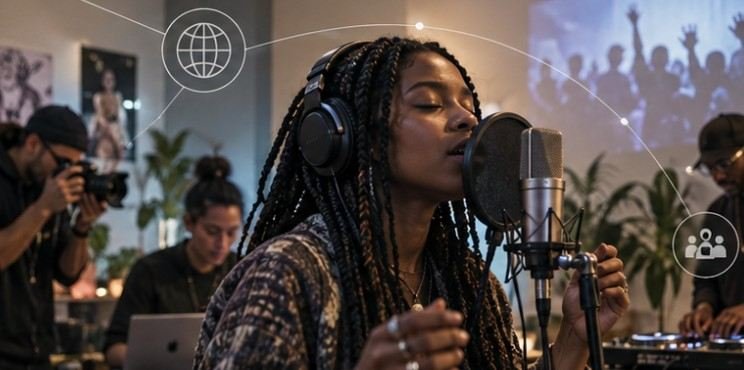
Collectives can reduce the isolation and expense of independent careers. Members may share rehearsal rooms, recording equipment, studio knowledge, contacts, transportation, show bills, promotional networks, or creative labor.
The principle extends beyond informal collectives. The American Federation of Musicians notes that self-contained recording groups whose members share ownership can use joint-venture arrangements for recording projects, illustrating how collaborative musical projects may involve shared economic interests as well as creative ones.
Individual Identity Usually Remains
A collective does not necessarily erase the individual artist. Members may have completely separate careers, sounds, audiences, contracts, and release schedules. The collective becomes the connective tissue rather than the sole artistic identity.
Music Collective vs Band vs Record Label
The easiest way to understand the structure is to compare what each organization is primarily designed to do.
| Structure | Main Purpose | Membership | Typical Releases | Creative Control |
| Band | Perform and record as one act | Usually stable | Primarily under one band name | Shared within the band |
| Music collective | Collaborate and share creative resources | Often flexible | Group, solo, and collaborative projects | Usually remains with individual artists |
| Record label | Finance, distribute, market, or administer releases | Contract-based roster | Releases from signed artists | Depends on contracts |
The lines can blur. A collective might eventually create a record label. A band may launch side projects that resemble a collective. A collective can also become a commercial organization while continuing to describe itself as a creative community. That is why the name alone tells you very little about the legal or financial structure.
Famous Music Collectives Show How Flexible the Model Can Be
The Los Angeles collective brought together rappers, singers, producers, skaters, and other creatives, including Tyler, the Creator, Earl Sweatshirt and Frank Ocean. The Los Angeles Times has described how the group’s internet-driven approach helped its members develop distinct careers while emerging from the same creative network.
Soulection demonstrates another version. Rather than functioning simply as a performing group, it has grown around music discovery, DJs, radio, records, events, and a global creative community. Its official site describes 15 years of connecting listeners through sound.
Elephant 6 represents an earlier indie-rock model. The interconnected musicians and bands associated with the Elephant 6 Recording Company developed overlapping projects and a recognizable creative community rather than operating as one conventional band. Its organization remains active around releases connected with that musical family.
Different genres, different decades, same underlying principle: relationships are often more important than a fixed lineup.
The Business Side Is Where Collectives Can Get Complicated
The U.S. Copyright Office explains that musical compositions and sound recordings are separate works. It also states that joint authors can become co-owners of copyright, while ownership of separate contributions can depend on how the work was created and whether rights were transferred.
This is also where the phrase “collective work” can cause confusion.
Under U.S. copyright law, a “collective work” is a specific legal concept involving separate contributions assembled into a larger work. That copyright definition is not the same thing as calling Odd Future or another creative network a music collective.
Artists forming a collective should therefore document songwriting splits, master ownership, expenses, revenue divisions, trademarks, merchandise rights, and decisions about who can use the collective name. Friendship is useful. Written expectations are safer.
Why Artists Form Collectives Instead of Working Alone
The obvious attraction is access. A singer who knows a producer, designer, photographer, promoter, and videographer already has the beginning of an independent creative infrastructure.
Collectives can also create discovery loops. Fans who arrive for one artist may encounter several others through collaborations, events, playlists, shared social channels, or compilation releases. Community can strengthen experimentation too.
The Library of Congress’s American Folklife Center has repeatedly used collaborative programs such as its Archive Challenge to connect musicians with archival material and encourage new arrangements and interpretations. The program shows how shared resources and creative exchange can produce work that might not emerge from isolated creation.
Where Music Collectives Can Go Wrong
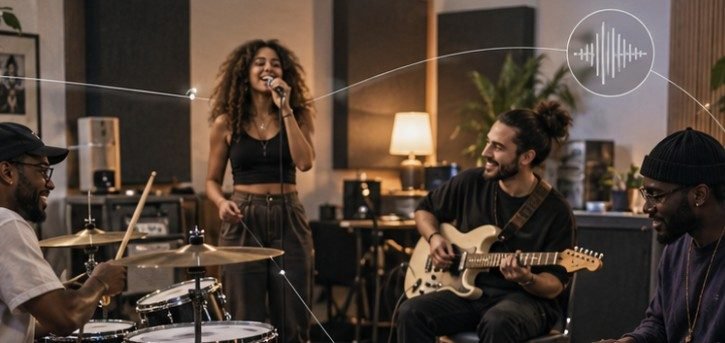
Not every collective becomes a creative success story. Informal organizations can struggle when nobody knows who makes decisions, pays bills, owns recordings, controls passwords, schedules releases, or receives revenue.
Unequal effort becomes another problem. One independent artist prep for a live show may generate most of the audience while another contributes primarily behind the scenes. Without clear expectations, resentment can replace collaboration.
Collectives also need enough flexibility to let members grow independently. If every solo opportunity is treated as disloyalty, the organization has effectively stopped behaving like the open creative network that made it valuable in the first place.
FAQ
1. What is a music collective in simple terms?
A music collective is a flexible community of musicians and other creatives who collaborate, share resources, and support one another while often maintaining separate artistic careers.
2. Does a music collective need a record label?
No. A collective can release music independently, work with outside labels, or eventually create its own label or distribution operation.
3. Do members of a music collective have to make music together?
Not always. Members may collaborate selectively while working on solo projects, visual art, production, events, promotion, radio, or other creative activities.
4. Can a music collective make money?
Yes. Revenue can come from recordings, performances, merchandise, events, production services, licensing, subscriptions, or other activities. Ownership and payment terms should be documented clearly.
More Than a Group Name
The most useful way to understand a music collective is not to count its members but to examine how they work together. A band generally asks musicians to build one identity; a collective allows several identities to strengthen one another.
That openness explains why collectives can produce such unusual creative networks. Artists gain collaborators, resources, audiences, and opportunities without necessarily surrendering their independence. But flexibility works best when creative freedom is matched by clear agreements about money and ownership. The strongest collective is not simply a circle of talented people. It is a system in which collaboration makes each member capable of doing more than they could alone.
Leave a Reply