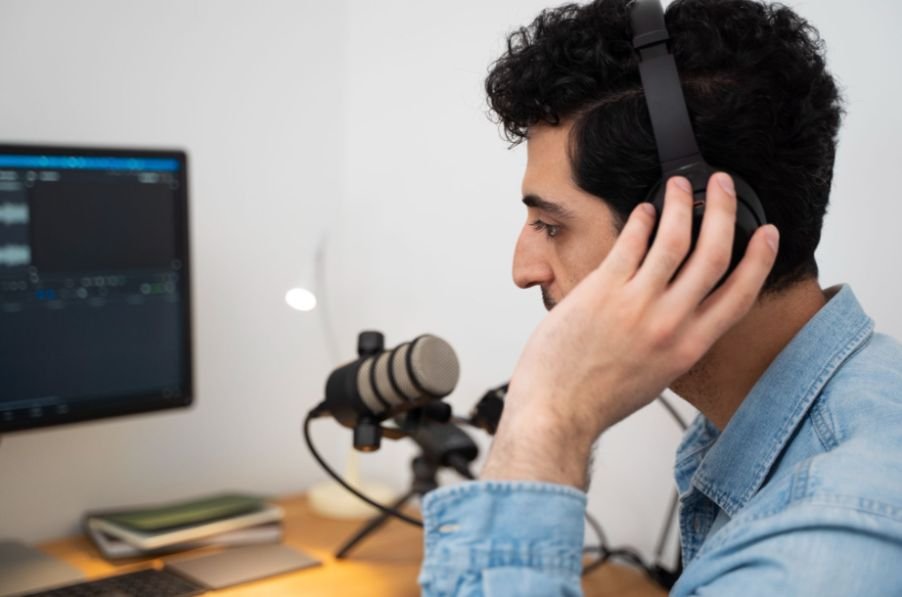
A vocal can sound powerful while I am performing it and still feel surprisingly weak the moment I listen back. That contrast is usually what makes me ask, why do my vocals sound thin after recording? The answer is rarely just “bad EQ.” Thinness can start with microphone distance, room reflections, the way the voice was captured, or the way instruments compete with it later in the mix.
What makes this problem confusing is that a vocal can lose body at several different stages. It may be recorded without enough low-mid warmth, weakened by comb filtering in an untreated room, thinned out by aggressive high-pass filtering, or buried by guitars, synths, and keys occupying the same frequency range.
I find the fastest way to fix it is to identify exactly where the vocal starts sounding small, then correct that stage instead of stacking more processing on top.
What Makes a Recorded Vocal Sound Thin?
A thin vocal usually lacks the low-mid warmth and density that make a voice feel full and present. It may sound overly bright, nasal, distant, brittle, or disconnected from the rest of the track.
However, a dry raw vocal should not necessarily sound like a finished commercial recording. Professional releases build vocal size through strong tracking, arrangement space, compression, saturation, automation, EQ, delay, and reverb.
Your first goal should therefore be identifying whether the raw vocal is genuinely weak or simply unfinished.
Is Your Microphone Too Far From Your Voice?
Microphone distance can dramatically change your recorded tone.
Many directional microphones create a proximity effect, which increases low-frequency response as you move closer to the capsule. Moving too far away can reduce this natural warmth and capture more room reflections.
For many large-diaphragm condenser microphones, around 6 to 10 inches with a pop filter can provide a useful starting position. Some voices and microphones may work better slightly closer or farther away.
Rather than following one fixed measurement, I recommend recording several short takes at different distances and comparing them at the same playback volume.
Can an Untreated Room Make Vocals Sound Thin?

Yes. Reflections from hard walls, ceilings, windows, desks, and floors can return to the microphone milliseconds after your direct voice.
For a more complete approach to controlling those reflections, how to reduce echo in a bedroom studio covers practical ways to improve room acoustics with absorption, positioning, and other treatment methods.
When those signals interact, they can create comb filtering. Certain frequencies reinforce each other while others partially cancel, leaving the vocal sounding hollow, phasey, or weak.
This is why a better microphone does not automatically solve a thin vocal recording.
For US home producers working in untreated rooms, adding broadband acoustic panels, thick absorption, or other appropriate treatment around reflection areas can help.
Understanding why do my recorded vocals sound muffled can also help producers identify whether room reflections are contributing to a dull, unclear, or less defined vocal recording.
Recording closer to the microphone can also reduce how much room sound reaches the mic compared with your direct voice.
Is Frequency Masking Making Your Vocal Disappear?
Sometimes the vocal sounds perfectly acceptable when soloed but suddenly loses its body when the instrumental starts.
That usually points to frequency masking.
Guitars, synths, keyboards, samples, and other instruments may occupy important vocal frequencies. The broad 400 Hz to 1.5 kHz area can become particularly crowded in dense arrangements, although the exact conflict varies from song to song.
I would avoid automatically boosting the vocal by several decibels.
Instead, listen to the competing instrument and create small EQ reductions where it masks the voice. Dynamic EQ or frequency-conscious sidechaining can be even more effective because the competing frequency range moves out of the way primarily when the singer is active.
Are You High-Passing Too Much Vocal Body?
High-pass filters are useful for removing HVAC rumble, floor vibration, handling noise, and unwanted sub-bass information. However, aggressive filtering can remove part of the vocal itself.
Many voices carry useful warmth somewhere around 100 to 250 Hz.
If you push the high-pass filter too far upward simply because a tutorial recommends a particular number, you may remove exactly what gives the singer weight.
When using thin vocal EQ, I prefer moving the cutoff while listening to the whole song rather than looking at the frequency number alone.
Are Your EQ Boosts Making the Vocal Brighter but Smaller?
Another common mistake is repeatedly boosting presence and air.
Boosting frequencies around 2 to 5 kHz can improve articulation and help the voice cut through a mix. High-frequency boosts above roughly 10 kHz can create additional air. However, a careful analysis of load frequency across the vocal and instrumental can also help reveal whether too much energy is building up in these higher ranges while the vocal lacks sufficient low-mid support.
But if the vocal already lacks low-mid body, those boosts can exaggerate the imbalance.
Before adding more highs, I check whether I have removed too much around 150 to 300 Hz. A subtle low-shelf adjustment or carefully chosen bell boost may restore weight, but the exact frequency should depend on the singer and recording.
Can Too Much Compression Make Vocals Sound Thin?

Compression can make vocals denser, more consistent, and easier to hear, but aggressive settings can make them feel smaller.
Very fast attack settings may reduce the natural impact of words and phrases. Heavy gain reduction can also make a performance feel choked.
If a vocal sounded healthy before compression, I bypass the compressor and compare.
I often get better results from gentler compression than forcing one processor to control every peak. The goal is to stabilize the voice while preserving its natural character.
Can Saturation Add Warmth to Thin Vocals?
Subtle saturation can help a vocal feel fuller by introducing additional harmonic content.
Tape-style or tube-style saturation can create perceived density without simply turning up the low frequencies. This can be especially useful for clean condenser microphone recordings that feel overly clinical.
I still treat saturation as an enhancement rather than a repair tool. If the recording suffers from severe room reflections, bad mic placement, clipping, or strong phase problems, saturation will not solve the underlying issue.
Why Do Double-Tracked Vocals Sometimes Sound Hollow?
Vocal layering can create impressive width and size, but similar recordings can interact in unpredictable ways.
If two tracks line up closely, phase relationships can cause some frequencies to partially cancel. The combined vocal may actually sound thinner than one track alone.
Mute the doubles and listen to the lead. If the vocal suddenly regains its weight, check the timing and phase relationship between the layers.
Small timing differences often sound natural, but problematic cancellation may require editing or a different approach to the doubles.
How Can I Tell Whether the Recording or Mix Is the Problem?
This is the test I recommend before changing anything else.
Bypass every plugin and listen to the raw vocal.
If the unprocessed recording already sounds thin, focus on mic distance, microphone choice, gain staging, room acoustics, performance, and recording position.
If the raw vocal sounds full but loses weight after processing, reactivate the plugins one at a time. You may quickly discover that a high-pass filter, EQ cut, compressor, noise reduction processor, or effect is causing the problem.
If the vocal only becomes weak when the instrumental plays, investigate frequency masking instead.
How Do I Make Thin Vocals Sound Fuller?

I start with the recording rather than immediately boosting bass.
A good vocal sound comes from capturing enough natural body at the source, minimizing destructive room reflections, and leaving enough space for the voice in the arrangement.
That arrangement principle also matters when deciding how long should a beat intro be, because the opening section can establish the track’s space and energy before the vocal enters.
After that, I use corrective EQ carefully, maintain useful low-mid energy, apply controlled compression, and add subtle saturation when appropriate. I also shape competing instruments instead of continuously making the vocal louder.
This approach usually creates more natural vocal warmth than stacking corrective plugins.
Frequently Asked Questions
1. Why does my recorded voice sound thinner than my voice in real life?
You hear your own voice partly through vibrations conducted through your head as well as through the air. A microphone mainly captures airborne sound, so your recorded voice may initially seem lighter than what you hear while speaking or singing.
2. What frequency adds body to vocals?
Vocal body often exists somewhere around 100 to 300 Hz, but the ideal frequency varies with the singer, microphone, and recording. Avoid blindly boosting one frequency on every vocal.
3. Why does my vocal sound good alone but thin in the mix?
Frequency masking is usually responsible. Guitars, keyboards, synths, and other instruments may compete with the vocal’s important midrange frequencies. EQ or dynamic processing on the competing instruments can create more room.
4. Can room reflections really make my vocals sound hollow?
Yes. Early reflections can interact with the direct signal and create comb filtering, causing some frequencies to become stronger while others partially cancel.
5. Can compression make my vocals fuller?
Moderate compression can increase perceived density and consistency. Too much compression, however, may make the vocal feel flat, choked, or smaller.
6. Why do my vocals sound thin after recording even before I start mixing?
If why do my vocals sound thin after recording is the problem you hear in the completely raw take, I would check microphone distance, gain level, room reflections, microphone choice, and performance before applying EQ or compression.
Final Thoughts
When I hear a thin vocal, I no longer assume that EQ is automatically the answer. I first listen to the raw take, check microphone placement and room acoustics, and then determine whether processing or arrangement masking is changing the sound.
Getting enough vocal body at the recording stage makes everything afterward easier. From there, careful EQ, restrained compression, subtle saturation, and intelligent arrangement choices can help a vocal sound warm, clear, and confident without making it artificially bass-heavy.
Leave a Reply