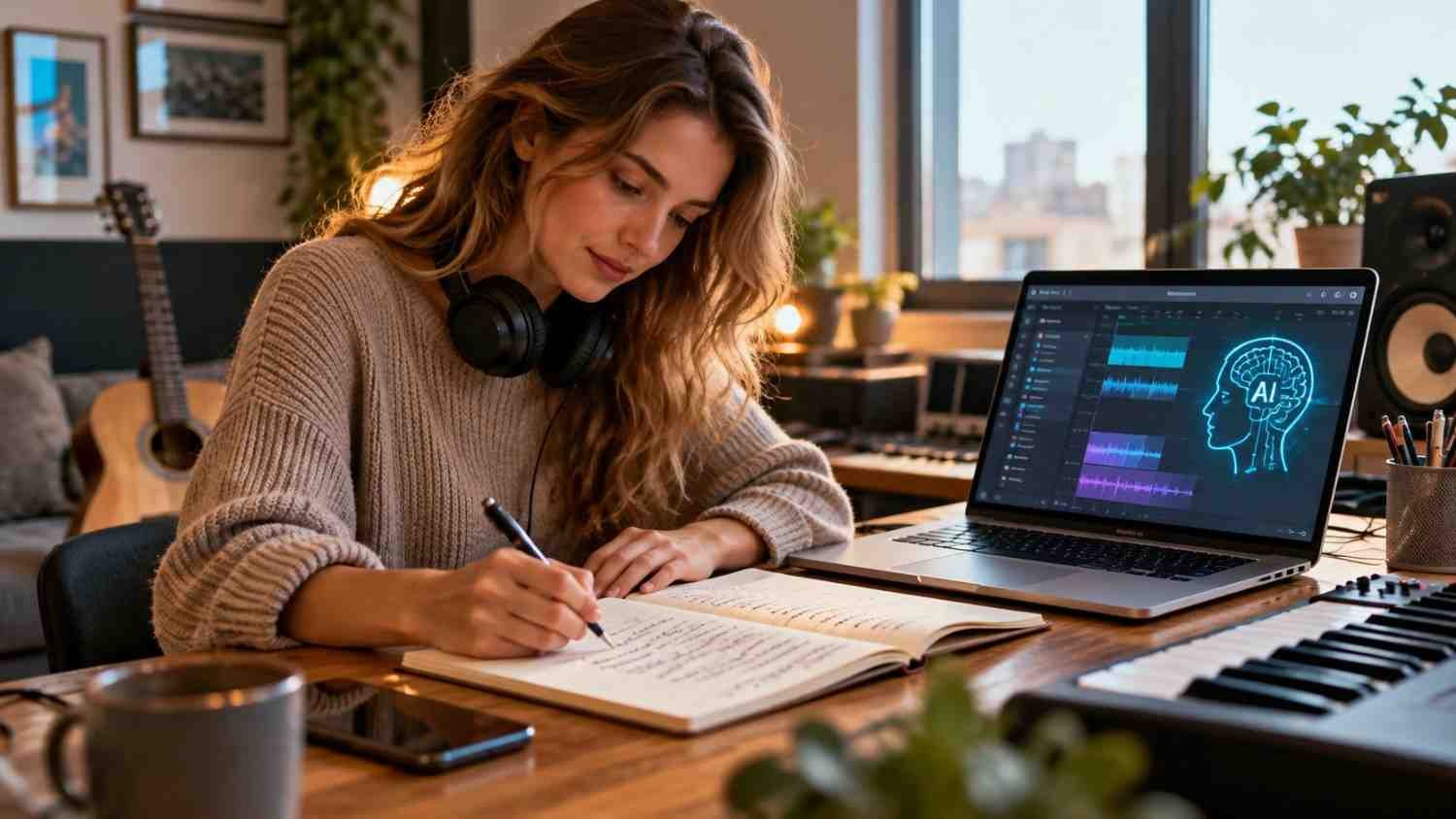
I started using AI music tools for practical reasons: getting unstuck, testing a rhyme, or hearing how an idea might work over a beat. What surprised me was how quickly a polished line could feel strangely empty. It sounded like a song, but it did not sound like something I would actually say.
I realized that authenticity does not come from avoiding AI altogether. It comes from deciding which parts of songwriting belong to me. When I bring the story, emotion, details, and final judgment, AI can help with mechanics without taking over the identity of the song.
Start With Your Own Story
AI lyrics often feel generic when the starting point is generic and vague. A vague prompt gives the system little personal material, so familiar images can fill the gaps.
Start with an emotional blueprint. Write down the specific moment behind the song, what changed, and the detail you still remember. It could be a coffee cup left beside the sink, a voicemail you never deleted, or the street where an argument ended. Those details give the lyric a point of view.
Give AI a Smaller Job

AI songwriting becomes more useful when its task is narrow. Instead of asking it to write an entire song, ask for five rhymes for one line, alternative ways to express a feeling, or different syllable patterns for a chorus.
That approach keeps creative decisions in human hands. If one option works, keep it. If another contains an interesting word but feels unnatural, borrow the idea and rewrite the line yourself.
A useful workflow is simple: create a human brief, generate options, test the rhythm, then rewrite. Treat the first output as raw material, not a finished lyric.
Protect the Lines That Sound Like You
Your strongest lyric may not be the cleverest. It may be the sentence that could only have come from your experience.
Keep unusual observations, personal phrases, specific images, and emotional contradictions that reflect your perspective. If an AI suggestion is technically stronger but removes that personality, it may not belong in the final version.
Sing them over the melody. Some lines look impressive on a screen but become awkward when you breathe or emphasize a beat.
This also helps catch “AI-isms”: polished but familiar language, perfect rhymes, predictable metaphors, and lines that communicate an emotion without showing anything specific. A lyric can be grammatically flawless and still feel lifeless.
Rewrite Until the Lyrics Feel Lived-In
Revision is where much of the authenticity happens. AI can offer a starting point, but your rewrite gives the material context and character.
Look for broad emotional statements and replace some with physical details. Instead of simply saying someone feels lonely, show what loneliness looks like in that person’s life. Instead of reaching automatically for a perfect rhyme, consider a slant rhyme or a phrase that sounds more like everyday speech.
You can also change the rhythm. A slightly uneven line can feel more human than a perfectly symmetrical verse. Natural vocal phrasing depends on pauses, breaths, tension, and moments that do not fit neatly into a template.
Read every line and ask: would I actually say this? If the answer is no, rewrite it.
Keep the Human Behind the Hook
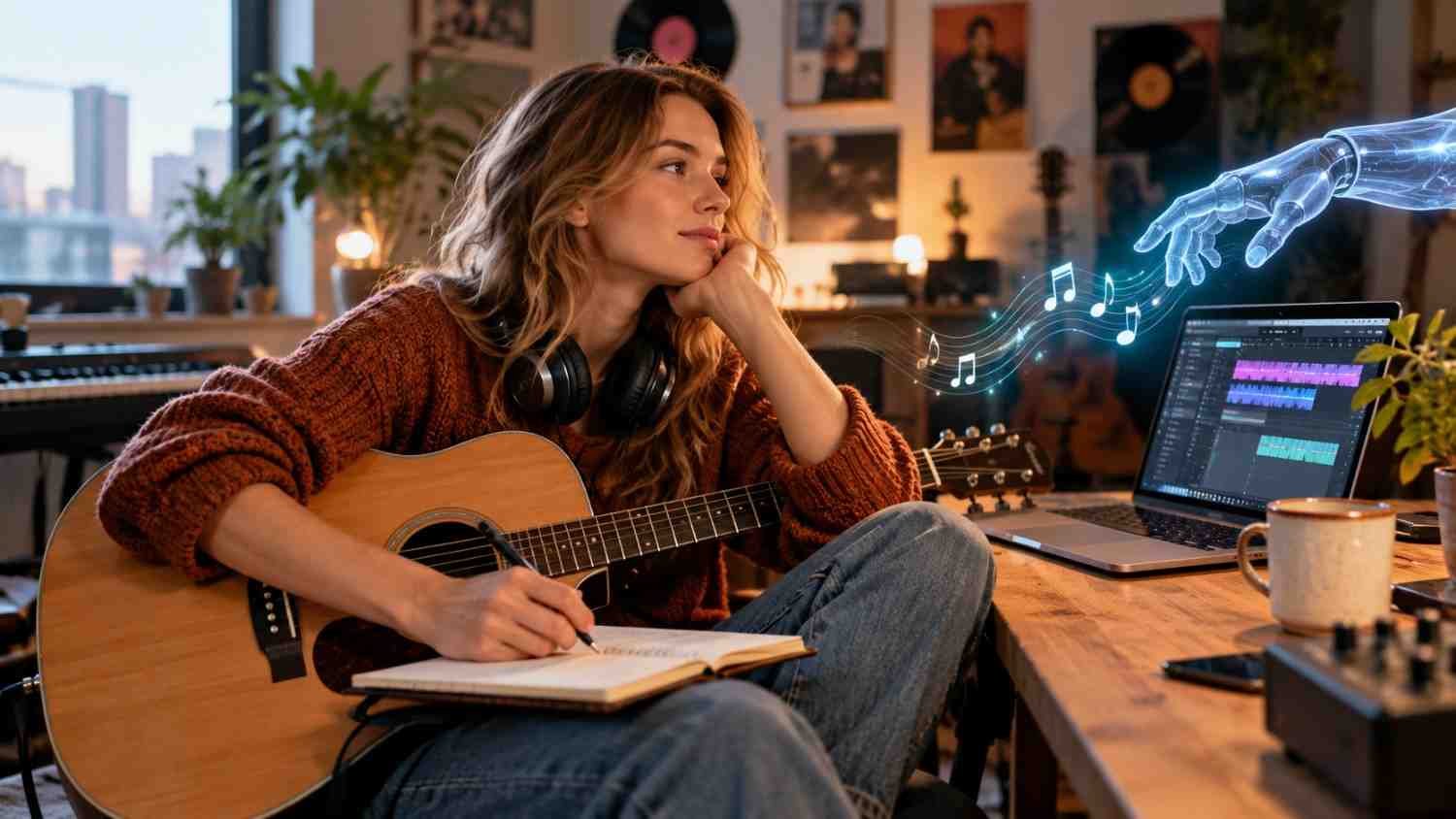
Thinking about how songwriters create hooks that work beyond TikTok can help because a hook should not depend only on repetition or short-form visibility. It should carry the central emotional idea of the song.
AI can suggest catchy phrases quickly, but it cannot decide which phrase captures your story best. A strong hook often becomes more distinctive when it contains a specific image, tension, or phrase that means something within the wider song.
Know Where AI Helps and Where It Should Step Back
AI can help with brainstorming, rhyme alternatives, structure, syllable checks, and variations. Human writers remain responsible for perspective, emotional context, cultural nuance, vocal delivery, and the final decision about what the song means.
The important part is staying involved throughout the process rather than approving whatever sounds polished first.
Keep Your Creative Process Documented
There is also a practical reason to keep drafts, notes, and revisions. In the United States, the Copyright Office says AI assistance does not automatically prevent copyright protection. The key issue is whether a human contributed sufficient expressive authorship. The Office also states that prompts alone generally do not establish authorship of the resulting expressive output.
For songwriters thinking about AI songwriting tools versus human lyric writing, that distinction matters: technology can support technical tasks, while creative judgment still shapes the finished work.
For songwriters, the distinction between writing lyrics yourself and simply requesting a finished song is particularly relevant. Original drafts, edits, arrangements, and creative decisions can help show what you contributed.
FAQs: How to Keep Lyrics Authentic When Using AI Music Tools for Songwriting
1. Can AI write authentic lyrics?
AI can help develop lyrics, but authenticity usually depends on the songwriter’s personal perspective, details, revisions, and final creative choices.
2. How can I make AI lyrics sound less generic?
Give the tool specific story details, then replace clichés with personal images, natural phrasing, unusual observations, and language you would actually use.
3. Should I let AI write the whole song?
You can experiment with full generations, but narrower AI tasks often give you more creative control. Use it for options, structure, rhyme, or rhythm, then make the final decisions yourself.
4. Can I copyright a song made with AI?
In the United States, copyright depends on the human contribution. The Copyright Office says AI-assisted works can qualify where sufficient human expressive authorship is present, while AI-generated material itself may not receive the same protection.
Let the Technology Serve the Song
The most useful way to approach AI music tools is as another instrument inside the process. The technology can throw possibilities onto the page, test patterns, and help when the blank screen becomes frustrating. What it cannot supply is the particular memory behind your lyric, the private meaning of a phrase, or the instinct that tells you a technically good line is still wrong for the song. Those decisions are where a songwriter’s identity remains visible.
A song does not become authentic because AI stayed out of it. It becomes authentic when the person behind it still has something real to say.
Leave a Reply