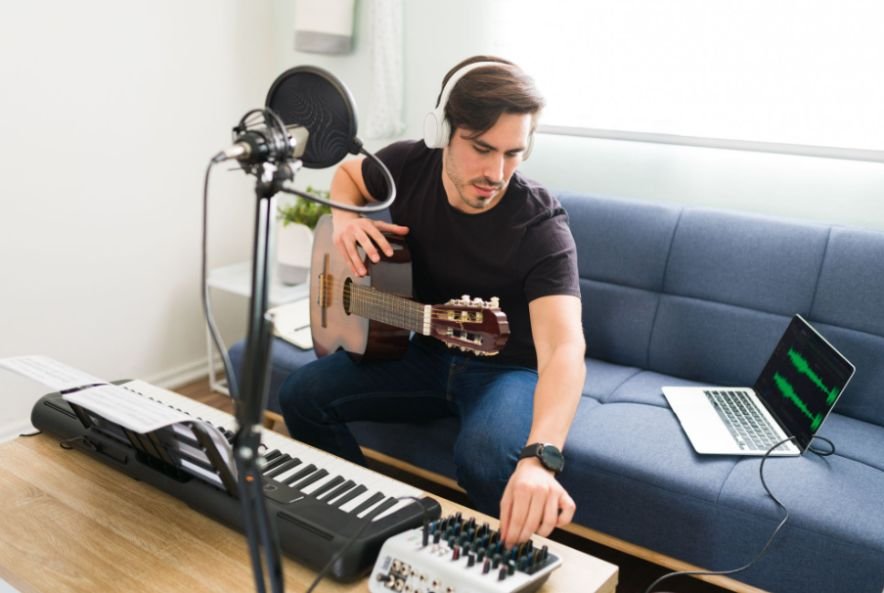
The first time I opened a DAW, the screen looked more like a control panel than a place to make music. Tracks, plugins, MIDI, waveforms, effects, and dozens of unfamiliar buttons made the whole process feel more technical than creative. But music production becomes much easier once I stop trying to understand everything at once and start learning one practical skill at a time.
For anyone figuring out how to learn music production from scratch at home, the best starting point is not buying expensive studio gear or downloading hundreds of plugins. It is building a simple setup, choosing one DAW, learning how rhythm and song structure work, and completing small projects consistently.
A laptop, headphones, basic software, and regular practice can take a beginner surprisingly far. The goal is to turn that simple setup into a working creative space where each finished track teaches the next skill.
What Do I Need to Start Producing Music at Home?
The minimum setup is surprisingly simple. I need a capable computer or laptop, a digital audio workstation, and dependable headphones.
If you are starting with minimal equipment, learning how to start music production with just a laptop can help you understand what you actually need before investing in additional studio gear.
For modern music production, a computer with around 8GB to 16GB of RAM can provide a practical starting point, although demanding virtual instruments and large projects may benefit from more processing power and memory.
The DAW becomes the center of the home studio. It is where I record audio, program drums, create MIDI parts, arrange songs, add effects, mix tracks, and export finished music.
GarageBand offers an accessible starting point for Mac users, while Reaper provides a flexible recording and production environment. FL Studio is popular for beat making and electronic production, while Ableton Live is widely used for electronic music, songwriting, sampling, and live performance.
The most important decision is not finding the supposedly perfect DAW. It is choosing one and staying with it long enough to understand the workflow.
Good studio headphones are also valuable, especially when I cannot use speakers loudly in an apartment or untreated room. Closed-back headphones can also help when recording vocals because they reduce sound leaking into the microphone.
A MIDI keyboard can make playing chords, bass lines, and melodies easier, but it is optional. If I want to record vocals, guitar, or other instruments, I can later add an audio interface and microphone.
What Is the Best Order to Learn Music Production?
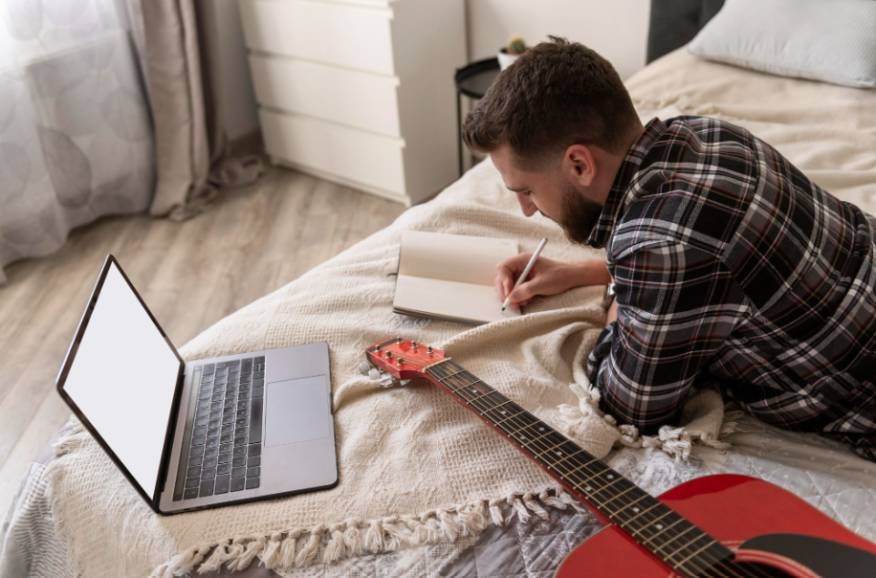
I would learn production in a clear sequence rather than jumping between random tutorials.
First, I would learn my DAW. Next, I would understand rhythm, basic music theory, MIDI, audio, and samples. After that, I would practice recreating existing songs, arranging complete tracks, and using basic mixing tools. Finally, I would develop my ears, improve sound selection, explore sound design, and learn more advanced mixing and mastering.
As you explore different artists and styles, understanding what indie means in music can also give you useful context for how independent artists approach production and release their work.
Following this order prevents me from spending weeks learning advanced compression techniques before I can even arrange a complete song.
How Should I Learn My DAW as a Complete Beginner?
My first goal should be navigating the DAW (A digital audio workstation) without constantly searching for basic controls.
I would learn how to create tracks, use the timeline, load virtual instruments, import audio samples, record MIDI, edit notes in the piano roll, adjust track volume, add stock plugins, automate parameters, and export an audio file.
Stock plugins are more than enough at this stage. Buying large plugin collections before understanding EQ, compression, reverb, and delay often creates more confusion rather than better music.
I would also learn keyboard shortcuts gradually. Faster navigation gives me more time to stay creative instead of fighting the software.
How Much Music Theory Should a Beginner Producer Learn?
I do not need to become a trained pianist or study advanced harmony before making music.
Basic music theory is enough to remove much of the guesswork. I would start with tempo, rhythm, musical keys, major and minor scales, chords, chord progressions, melodies, and basic song structure.
Once I understand which notes belong to a key, writing melodies becomes easier. Once I understand simple chords, creating harmonic progressions becomes less random.
The fastest way to make theory useful is to apply it immediately inside the DAW rather than studying it only from a textbook.
Should I Reverse Engineer Songs to Learn Music Production Faster?
Yes. Recreating parts of existing songs is one of the most practical learning exercises available.
I can import a song I like into my DAW as a reference track and listen carefully to its tempo, drum pattern, bass line, chords, transitions, and arrangement.
If the song is being developed for an independent release, understanding curated user playlists vs editorial pitching can also help you think about how the finished track may be promoted after production.
Then I can attempt to recreate those elements with basic virtual instruments and samples.
The purpose is not to copy or release somebody else’s music. I am studying how professional songs are constructed.
Reverse engineering also teaches me how intros develop, when choruses arrive, how instruments enter and leave, and how energy changes throughout a track. These lessons can be harder to understand through theory alone.
How Do I Build a Complete Song Instead of an Eight-Bar Loop?
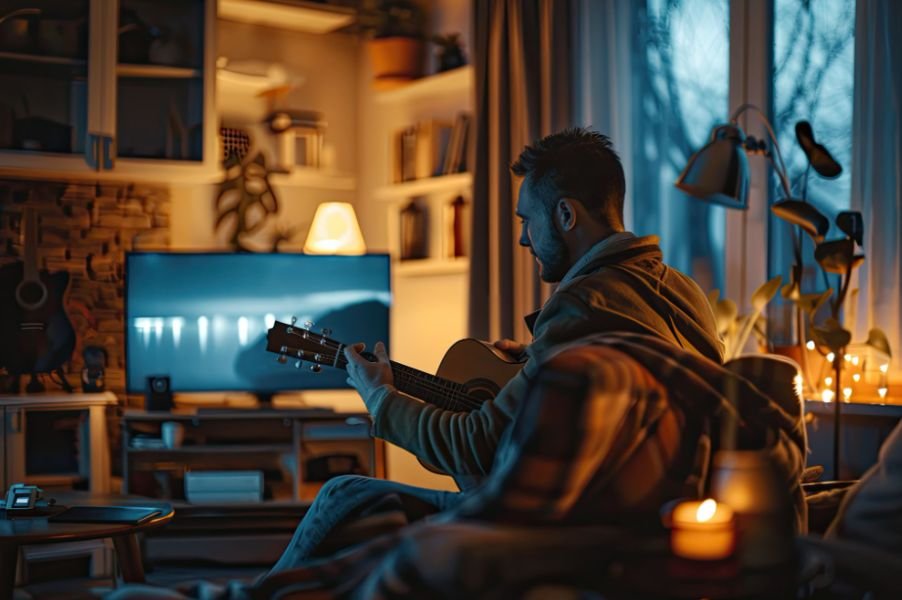
Many beginners become good at creating loops but struggle to finish songs.
Learning how to make music without any instruments can also help beginners build complete songs using MIDI, samples, loops, virtual instruments, and other digital production tools.
I would begin with rhythm by building the drums and bass. Then I would introduce harmonic elements such as chords, pads, or keys. After establishing that foundation, I could add melodies, leads, vocals, samples, and additional textures.
Next, I would turn the loop into an arrangement.
Depending on the genre, the structure might include an intro, verse, pre-chorus, chorus, bridge, breakdown, buildup, drop, or outro. Not every track needs every section.
The goal is movement. Different parts of the song should create changes in energy, density, and emotion.
Finishing imperfect music is far more educational than repeatedly polishing the same eight bars.
When Should I Start Learning Mixing?
I would start learning basic mixing after I can create a reasonably complete arrangement.
The first mixing tool I would use is volume. Many problems can be solved simply by making one element quieter or louder.
Next comes panning, which helps position sounds across the stereo field. From there, I can begin learning EQ to manage frequencies, compression to control dynamics, reverb to create space, delay to add repeats and depth, and automation to make parameters change throughout the song.
I would avoid assuming that professional mixing requires dozens of plugins. Good arrangement, sound selection, recording, and volume balance often matter more.
How Do Reference Tracks Improve My Mixing and Ear Training?
Reference tracks help me understand what professional production sounds like within the genre I am creating.
I can compare my track with professionally released music and listen for differences in bass level, kick impact, vocal placement, brightness, stereo width, dynamics, and overall energy.
This develops critical listening skills.
Over time, ear training helps me recognize muddy low frequencies, harsh highs, weak drums, buried vocals, excessive reverb, and other production problems much faster.
How Can I Learn Without Watching Tutorials All Day?
Tutorials become useful when they solve a real problem.
Instead of watching hours of unrelated music production videos, I would open my DAW and start creating. When I encounter something I cannot solve, I can search specifically for that problem.
For example, if my kick and bass sound muddy together, I can research frequency balance, EQ, sidechain compression, and arrangement techniques that address that issue.
This problem-based learning approach immediately connects information with practical experience.
What Should My First 30 Days of Music Production Look Like?
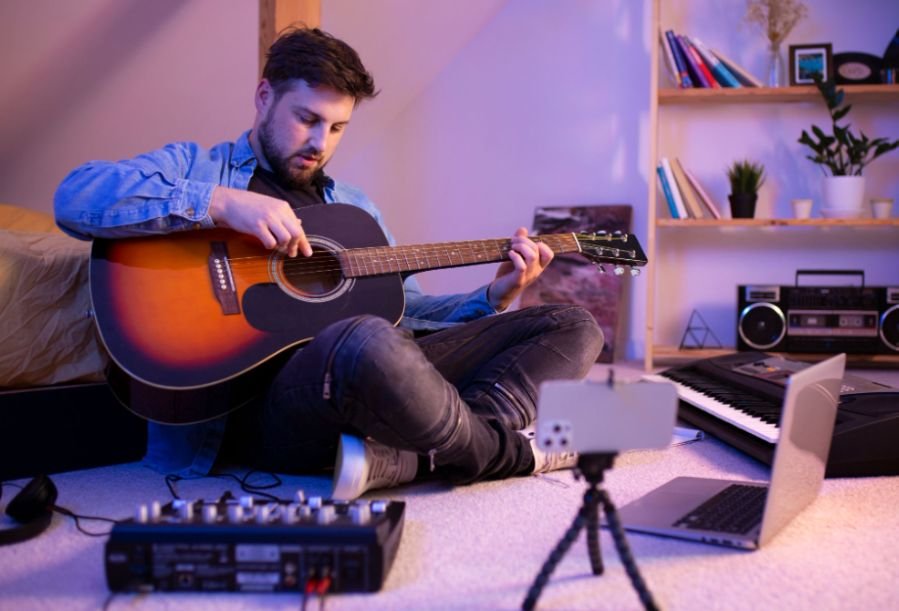
During the first week, I would focus almost entirely on learning the DAW. I would create tracks, load instruments, program basic drums, experiment with MIDI, use samples, and export small projects.
During week two, I would practice beats, bass lines, chord progressions, melodies, and basic music theory. I would also begin recreating simple parts of songs I enjoy.
Week three would focus on turning short ideas into complete arrangements while introducing basic EQ, compression, panning, reverb, and volume balancing.
During week four, I would finish and export at least one complete track.
It does not need to sound professional. Completing the project teaches me arrangement, decision-making, mixing, workflow, and problem-solving in a way unfinished loops cannot.
What Beginner Music Production Mistakes Should I Avoid?
One common mistake is constantly switching DAWs because another producer uses different software. Another is buying expensive plugins before understanding stock tools.
I would also avoid comparing my first few tracks with commercially mastered releases created by experienced producers, engineers, and musicians.
Finally, I would not expect mastering to repair weak production. Mastering is the final preparation of an already strong mix. It cannot completely fix poor sound selection, weak arrangement, badly recorded vocals, or major balance problems.
Frequently Asked Questions
1. Can I Produce Music Without Playing an Instrument?
Yes. MIDI programming, piano rolls, samples, loops, virtual instruments, and step sequencers allow me to produce music without traditional instrumental skills.
2. Do I Need an Audio Interface to Start Producing Music?
Not necessarily. I mainly need an audio interface when I want to connect microphones, guitars, studio monitors, or other external audio equipment.
3. Can I Make Professional Music Using Only Headphones?
Headphones can take a beginner surprisingly far. I should learn how my headphones sound and regularly compare my mixes with professional reference tracks. Studio monitors and acoustic treatment can become useful upgrades later.
4. How Many Hours Should a Beginner Practice Music Production?
Consistency matters more than occasional marathon sessions. Even 30 to 60 focused minutes several times per week can produce noticeable improvement when I spend most of that time actively creating.
5. What Is the Fastest Way to Understand How to Learn Music Production From Scratch at Home?
The fastest approach is to choose one DAW, learn its essential tools, practice rhythm and basic theory, understand MIDI and audio, recreate simple songs, arrange complete tracks, learn basic mixing, and finish projects consistently.
Turning Beginner Practice Into Real Production Skills
When I think about learning music production from scratch at home, I would not measure progress by the number of tutorials I have watched, plugins I own, or pieces of studio equipment on my desk.
I would measure progress by finished music.
Every completed track reveals something new about arrangement, rhythm, sound selection, mixing, recording, or songwriting. My next track allows me to correct those weaknesses.
A computer, DAW, headphones, consistent practice, and the willingness to finish imperfect projects are enough to begin. The studio can improve later. The most important step is opening the DAW and making music regularly.
Leave a Reply