An artist can have millions of listeners and still be independent. Another artist can sound unmistakably “indie” while working with a major-label company. That apparent contradiction explains why the word has become so confusing.
So, what does indie mean in music? At its core, “indie” is short for “independent” and historically refers to music created, released, or managed outside the traditional major-label system. But decades of musical evolution have given the word a second meaning: a recognizable culture and loose collection of sounds associated with experimentation, individuality, and DIY production.
Understanding the distinction matters because “indie” tells us as much about how music reaches listeners as it does about what comes through the speakers.
Indie Originally Described Independence, Not a Genre
The simplest historical definition of indie has little to do with guitar tones, vocal styles, or production techniques. It described independence from major record companies.
The American Association of Independent Music, or A2IM, represents more than 600 independently owned labels in the United States. Importantly, the organization says independent music is not a specific genre and represents labels working across rock, hip-hop, jazz, classical, country, electronic music, blues, gospel, and many other styles.
That distinction changes how we should think about indie artists.
An independently released electronic producer, country singer, rapper, punk band, or experimental composer can all be “indie” in the industry sense, even if their music sounds completely different.
Independent artists may self-release their recordings or work with smaller labels that operate outside major-label ownership structures. Those labels can still provide distribution, promotion, financing, marketing, and artist development. Being indie therefore does not necessarily mean doing everything alone.
How Indie Became a Sound as Well as a Business Model
The meaning became more complicated as independent scenes developed recognizable musical identities.

Research presented through Grinnell College’s Subcultures and Sociology project traces indie’s roots through the late 1970s and 1980s and notes its connections with punk’s DIY culture. Independent musicians built networks for recording, performing, distributing music, and reaching audiences without depending entirely on established commercial channels.
Those communities naturally influenced one another.
Certain approaches appeared repeatedly: unconventional songwriting, imperfect or deliberately understated production, smaller recording budgets, distinctive artwork, intimate live scenes, and a willingness to experiment outside prevailing radio formulas.
Eventually, audiences began associating those characteristics with “indie.” That is how a description of an artist’s business circumstances gradually became a musical adjective.
Why an artist can sound indie without being independent
Today someone might describe a song as indie because of jangly guitars, understated vocals, lo-fi textures, unusual song structures, intimate lyrics, or an alternative aesthetic. None of those characteristics proves the artist is independently owned or distributed.
Even musicians themselves recognize the ambiguity. A Smithsonian American Art Museum interview with the band Fellow Creatures described “indie rock” as a difficult catchall term because artists grouped under the label can have substantially different sounds.
This is why asking whether a song “sounds indie” and asking whether an artist “is independent” are now two different questions.
Indie as a Business Term vs. Indie as a Musical Label
The easiest way to separate the meanings is to look at what the speaker is describing.
| Use of “indie” | What it usually describes | Example |
| Industry meaning | Ownership, label relationship or release structure | A musician self-releasing an album |
| Cultural meaning | DIY values, creative independence and community | A local artist-run music scene |
| Genre meaning | A loose sonic or aesthetic category | Indie rock, indie pop or indie folk |
| Marketing meaning | Music positioned as alternative to mainstream pop | A playlist categorized as “indie” |
The categories overlap, but they are not interchangeable.
An independent musician can make highly polished commercial pop. A major-label act may make music that critics and listeners categorize as indie rock. An indie label can also become a substantial business rather than a tiny operation run from someone’s bedroom.
That is one reason it is risky to judge an artist’s business status solely from their sound.
What Actually Makes an Artist Independent?
If you want a practical answer to what does indie mean in music, ignore the artist’s clothes, follower count, recording quality, and genre for a moment.

Instead, ask three questions.
1. Who controls the recording?
Ownership matters more than aesthetic.
The U.S. Copyright Office explains that a musical composition and its sound recording are legally separate works. The underlying song generally concerns the music and lyrics, while the sound recording concerns the recorded performance and production.
An independent artist may own or control the master recording instead of transferring that control through a traditional label agreement. That ownership can influence licensing, distribution and long-term revenue.
For musicians interested in the financial side, understanding the independent artist revenue split across streaming platforms helps show why ownership and contractual arrangements can matter as much as stream counts.
2. Who releases and distributes the music?
Self-releasing does not mean manually uploading files everywhere.
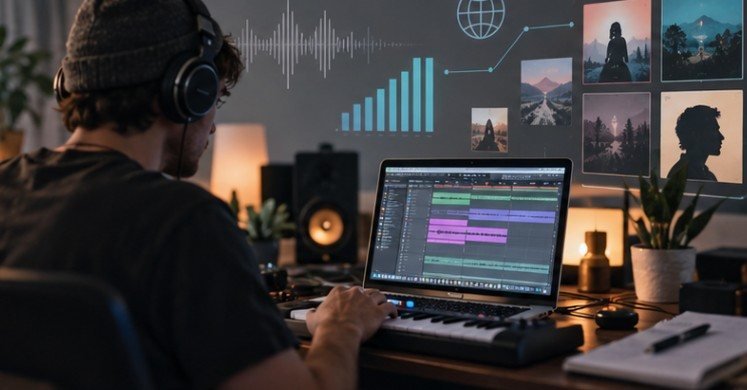
Independent artists routinely use distributors and specialist music companies to place recordings on streaming services. Independent labels also work with outside companies for manufacturing, promotion, distribution, rights administration and other services.
The Library of Congress’s label-ownership resource illustrates how complicated record-company ownership can become, with catalogs moving between independent companies and larger corporate owners over time. That makes the company behind a release more revealing than the music’s sonic style.
3. Who makes the major career decisions?
Creative control is another important indicator, although independence does not automatically guarantee unlimited freedom.
A small label may still set deadlines, negotiate contracts, select singles, approve budgets or influence promotion. Artists should therefore examine the actual agreement rather than assuming “independent label” automatically means complete control.
The process can vary significantly, which is why understanding how independent record labels sign artists is useful before treating every indie deal as identical.
Berklee College of Music has also documented hybrid approaches to artist development in which independent structures interact with larger music companies, demonstrating that the boundary between “indie” and “major” has never been perfectly clean.
Does Indie Mean Low-Budget or Lo-Fi?
Not necessarily. DIY recording helped shape indie culture because earlier independent musicians often had smaller budgets than major-label acts. That limitation encouraged inexpensive recording methods and unconventional production.
Modern technology has changed the equation. Artists can now record professional-quality music in relatively modest studios, distribute recordings digitally and communicate directly with listeners. Conversely, deliberately rough or lo-fi production can be an artistic choice rather than evidence of a tiny budget.
“Indie” therefore should not be treated as a synonym for amateur.
Independent labels can support commercially successful releases, and independent artists can build large audiences. A2IM’s membership itself spans hundreds of U.S. labels and a wide range of musical styles and career levels.
A Quick Test for Using the Word “Indie” Correctly
Before labeling an artist indie, identify what you actually mean.
If you mean business status, investigate label ownership, master ownership and distribution.
If you mean musical style, describe the sound more precisely: indie rock, indie pop, dream pop, indie folk, lo-fi or another relevant category.
If you mean culture, look for DIY practices, artist-run communities, local scenes and independent creative networks.
And if you are an artist evaluating label opportunities, research ownership and contracts rather than relying on the word “independent.” Lists of independent music labels accepting demo submissions can provide starting points, but every deal still needs individual scrutiny.
Frequently Asked Questions
1. What does indie mean in music today?
It can mean independently released music, a DIY artistic culture, or a loose musical aesthetic. The intended meaning depends on whether someone is discussing the music business, an artist’s approach, or the sound itself.
2. Is indie music the same as alternative music?
No. The terms overlap, particularly in rock, but alternative generally describes musical style while indie originally described independence from major-label structures.
3. Can a famous artist still be indie?
Yes. Audience size does not determine independence. An artist can become commercially successful while continuing to release music independently or through an independently owned label.
4. Does indie mean an artist has no record label?
No. Many indie artists sign with independent labels. Independence generally concerns operating outside major-label control rather than having no label relationship at all.
The Meaning Keeps Changing, but the Core Idea Survives
The most useful answer to what does indie mean in music is not a particular guitar sound or bedroom-recording technique. Indie began as a description of independence: musicians and labels finding ways to create and distribute music outside major corporate structures.
Its success eventually turned the word itself into an aesthetic, which is why a major-label artist can now “sound indie” and an independent rapper may not sound stereotypically indie at all.
Whenever the label becomes confusing, return to the basic questions: who owns the music, who releases it, and who controls the decisions? Those answers reveal far more than the playlist category ever will.
Leave a Reply