Blog

  • How Independent Musicians Make Money Without Touring

    How Independent Musicians Make Money Without Touring

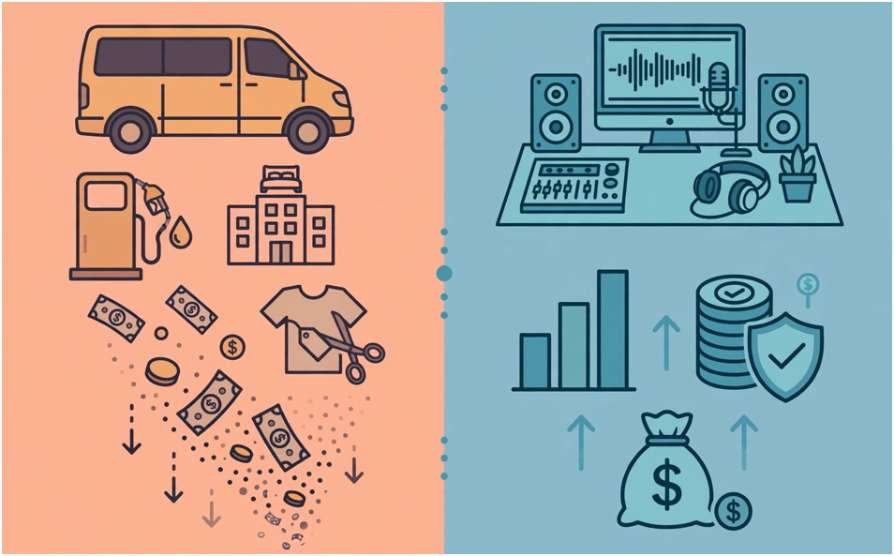
    I spent four years sleeping on floors, watching tour income disappear into fuel tanks and hotel bills. When I audited my year-end earnings, the truth hit hard: six weeks of road dates left me with barely $400 in net profit.

    That brutal reality forced me to rethink my business model. Learning how independent musicians make money without touring transformed my music from an expensive hobby into a sustainable, six-figure operation run entirely from my home workstation.

    You do not need an agent, a live bus, or millions of algorithmic streams to thrive. By establishing direct-to-fan channels, capturing hidden mechanical royalties, and pitching sync placements, you can build a stable music business from your desk.

    The Financial Reality: Why I Parked the Tour Van
    The Financial Reality: Why I Parked the Tour Van

    Most artists believe touring is the only legitimate rite of passage. In reality, touring for indie creators operates on razor-thin margins. Fuel costs, vehicle maintenance, venue merchandise cuts of 20%, and local promoter guarantees make breaking even difficult.

    Breaking Down the True Cost of Life on the Road

    When you tour, you exchange hours of active physical labor for one-time performance fees. If your van alternator breaks or a promoter under-promotes your Tuesday gig, your entire cash margin evaporates.

    By redirecting the months spent booking routing into intentional independent album production, I built assets that pay out continuously. Once I shifted from transient ticket sales to compounding digital catalog equity, my revenue stabilized.

    Unlocking Sync Licensing as a Predictable Revenue Engine

    Media companies, streaming platforms, and indie game studios need a steady stream of original music. Sync licensing pays both upfront placement fees and backend broadcast royalties every time a scene airs.

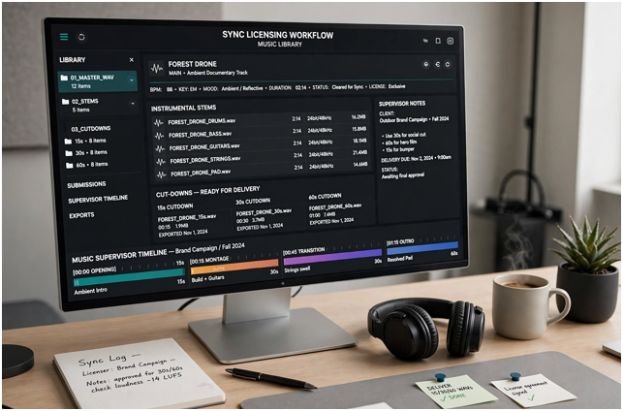
    Preparing One-Stop Metadata and Instrumental Stems

    To secure sync placements, you must operate like a professional music library. Music supervisors work under crushing deadlines. If they cannot license your track within two hours, they pick someone else.

    Every track in my catalog gets organized with clear, immediate deliverables:

    • Full Master and Instrumental WAVs: Always exported at 24-bit / 48 kHz.
    • Cut-Down Mixes: Dedicated 15, 30, and 60-second edits matching broadcast ad standards.
    • Clean ID3 Tagging: Embedding my name, IPI/CAE number, contact email, and explicit wording in the comments field: “100% Pre-Cleared One-Stop Master and Sync.”

    Securing two mid-tier TV placements per quarter consistently yields between $2,500 and $7,500 in upfront synchronization fees, completely bypassing the exhaustion of travel.

    Setting Up Full-Spectrum Royalty Collection
    Setting Up Full-Spectrum Royalty Collection

    Most independent songwriters leave substantial money behind because they assume their digital aggregator handles everything. Distributors deliver audio files to streaming outlets, but they do not collect publishing mechanicals or non-interactive digital broadcast performance money.

    Collecting Digital Mechanicals and Master Performance Royalties

    To ensure every micro-cent reaches your bank account, register your rights across these official collection agencies:

    1. Digital Interactive Mechanicals: Under the Music Modernization Act passed through the U.S. Copyright Office, interactive streaming services must pay separate mechanical royalties. You must affiliate with The MLC to claim these streaming and download mechanical payouts.
    2. Non-Interactive Digital Master Performance: When your master recording plays on Pandora, SiriusXM, or digital webcasts, digital performance royalties accrue. Register directly with SoundExchange as both the Featured Artist and Sound Recording Copyright Owner to receive both splits.
    3. Performing Rights Organizations (PROs): Register your works with ASCAP, BMI, or your local national entity to collect performance royalties from terrestrial radio, clubs, and television broadcasts.

    Claiming these registries turned hundreds of dollars in dormant streaming mechanicals into reliable quarterly deposits. If you lack initial capital to register entities or purchase gear, apply for music grant opportunities through non-profit arts foundations to fund your early business setup.

    Direct-to-Fan Monetization and Digital Sound Design
    Direct-to-Fan Monetization and Digital Sound Design

    Relying on Spotify’s fractions of a cent forces you to chase millions of passive listeners. Direct-to-fan commerce focuses on cultivating a smaller group of dedicated supporters.

    Recurring Memberships and Niche Sample Packs

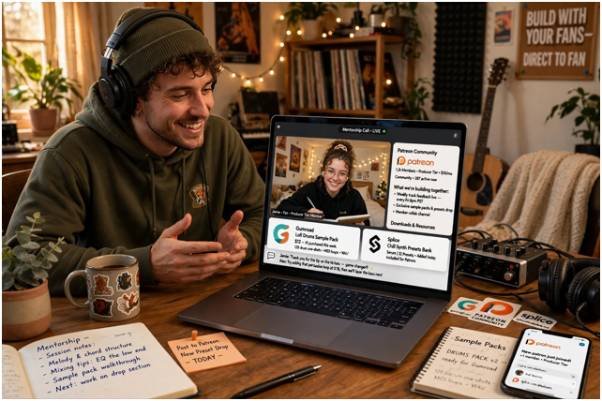
    I run a tiered membership community on Fourthwall and Patreon for 280 core listeners. Charging an average of $9 per month produces over $2,500 in predictable monthly gross income. Members receive monthly acoustic demos, early vinyl access, and a private track-feedback channel.

    Alongside subscriptions, monetize your studio work directly:

    Revenue Channel Typical Price Point Customer Profile
    Boutique Sample Packs $15 – $40 per pack Beatmakers and producers
    Virtual 1-on-1 Mentorship $75 – $150 per hour Aspiring songwriters
    High-Res Digital Discography $25 – $50 one-time Core audiophile superfans

    Selling sound design assets, preset patches, and custom drum kits on platforms like Gumroad or Splice provides pure passive yield from unused session files.

    The Catalog Yield Model: Real Numbers

    Here is an actual 30-day balance sheet from my 10-song studio catalog, demonstrating how passive streams scale without touring:

    • Sync Licensing (One micro-placement + library fees): $1,200
    • Direct Memberships (280 fans at $9/mo): $2,520
    • SoundExchange & The MLC Mechanicals: $340
    • Sample Pack & Digital Preset Sales: $510
    • Streaming Aggregator Payouts: $215
    • Total Monthly Income: $4,785

    Reaching that revenue target on the road requires selling hundreds of club tickets, paying touring musicians, and covering fuel costs. From the studio, it represents high-margin, scalable income.

    Frequently Asked Questions

    1. Can you make a living as a musician without playing live?

    Yes, thousands of producers and songwriters make full-time incomes through sync licensing, digital memberships, production libraries, and sound design.

    2. How much do independent artists make from sync licensing?

    Indie sync placements range from $500 for micro-budget web series to over $15,000 for major television episodes, national commercials, and video games.

    3. Do I need a music publishing administrator?

    A publishing administrator helps collect foreign mechanical royalties, though US songwriters can collect domestic digital mechanicals directly through The MLC for free.

    4. What is the most profitable digital product for musicians?

    Custom drum kits, genre-specific sample packs, and niche preset banks yield the highest profit margins because they carry zero manufacturing or shipping costs.

    Build Your Studio-First Music Career

    Touring is a personal choice, not a mandatory business model. When you stop measuring success by crowded club nights and begin treating your music catalog like intellectual property, everything shifts. Clean up your song metadata, register your mechanical rights, package your stems for sync placement, and start building direct connections with your core fans.
  • The Return of Storytelling in Modern Alternative Songwriting: Why It Matters

    The Return of Storytelling in Modern Alternative Songwriting: Why It Matters

    I have noticed a different kind of pull in alternative music lately. Some songs seem less interested in creating a quick mood and more interested in making me stay inside a moment. A lyric can begin with a place, a conversation, a family memory, or an ordinary object, then slowly reveal why that detail matters.

    I also find myself remembering these songs for their scenes rather than their hooks. A strong narrative gives a listener something to follow, picture, and interpret. That does not mean every alternative song needs a neat plot. It means the writing has enough detail and perspective to make the emotional experience feel lived rather than simply announced.

    Why Storytelling Feels Different in Alternative Music Now

    Storytelling in songwriting is not new, and it never completely disappeared. Research examining thousands of songs suggests that narrative techniques continue to evolve across genres. The current interest is better understood as renewed attention to narrative detail.

    That distinction matters. A song does not become a story simply because it contains several verses. Storytelling can happen through a single memory, an overheard exchange, a recurring character, or a carefully chosen setting. Alternative songwriting often values ambiguity over tidy resolutions.

    The result can feel more intimate than a direct statement of emotion. A lyric can show loneliness through an empty apartment, message, or familiar route.

    From Vague Mood to Specific Moments

    From Vague Mood to Specific Moments

    One reason narrative lyrics can stand out is specificity. General feelings are easy to recognize, but precise details make them personal. A street, weather pattern, cheap motel, family kitchen, or awkward sentence can turn an ordinary heartbreak into a particular experience.

    The setting becomes part of the emotional architecture. Geography, domestic details, local references, or dialogue can establish a world in only a few lines.

    Conversational writing works especially well here. Direct address can make lyrics feel like an exchange between people, creating a sense of closeness without requiring a grand vocal performance. The songwriter may sound like someone remembering, confessing, arguing, or trying to explain something that still feels unresolved. Berklee describes direct address as a technique that can create intimacy, tension, vulnerability, and emotional immediacy in lyrics.

    Why Authenticity Has Become More Valuable

    There is another reason storytelling feels significant now: listeners are surrounded by enormous amounts of generated and optimized content. Music can be discovered through playlists, short videos, recommendations, and automated feeds before a listener knows much about the person who made it.

    That environment can make a distinctive lyrical voice more valuable. A detailed story carries traces of perspective through choices about what to describe and leave out.

    For songwriters working with AI music tools, that distinction becomes even more relevant. Technology can assist with brainstorming, arrangement, or experimentation, but the writer’s responsibility for meaning remains important. How to keep lyrics authentic when using AI music tools becomes less about rejecting technology and more about protecting personal observation, unusual language, emotional specificity, and creative decisions that could not have come from a generic prompt alone.

    Authenticity does not require every lyric to be literally autobiographical. Fiction, character writing, and imagined situations can feel deeply human when they contain a coherent point of view. What matters is that the song feels intentionally written rather than assembled from familiar emotional shortcuts. Scholarship on popular songwriting similarly treats songwriting as capable of transforming lived experience through craft rather than simply reproducing biography.

    Alternative Songwriting Gives Small Stories Room

    Alternative music has long provided space for subjects that do not always fit neatly into mainstream songwriting. Stories about family tension, economic pressure, isolation, identity, grief, relationships, and place can become central rather than incidental.

    Modern narrative songwriting can preserve those experiences without turning them into lectures. A songwriter can document working life through images, suggest generational conflict through conversation, or explore loneliness through an ordinary routine.

    This is also where lyrical voice becomes important. Two writers can describe the same subject and produce completely different songs because their vocabulary, rhythm, references, humor, and emotional boundaries are different. How emerging songwriters develop their own lyrical voice is therefore closely connected to storytelling: writers discover their voice partly by learning which details only they would choose to tell.

    Why Listeners Still Follow a Story

    Why Listeners Still Follow a Story

    Digital listening has changed how music reaches people, but it has not removed the desire for narrative. Research into song lyrics has identified recurring narrative structures across large collections of music, showing that songs can create characters, settings, events, and emotional movement in ways that vary by genre. One large study analyzed 12,280 songs and found evidence of a recurring narrative arc involving setting, plot progression, and cognitive tension.

    Stories reward repeated listening. The first play establishes the situation. Later listens can reveal details or change earlier lines.

    That layered quality gives narrative songwriting staying power. A mood can disappear when the next track starts, while a memorable scene can stay for years. Strong story songs give listeners material to interpret.

    FAQs: The Return of Storytelling in Modern Alternative Songwriting: Why It Matters

    1. Why is storytelling becoming more noticeable in alternative songwriting?

    Storytelling offers a way to make songs feel specific and memorable. Rather than relying only on broad emotional language, writers can use characters, settings, dialogue, memories, and small details to create a fuller experience.

    2. Does a storytelling song need a beginning, middle, and end?

    No. A song can tell a story through a single scene, a memory, a conversation, or an unresolved moment. Fragmented narratives can work particularly well in alternative music because they leave space for interpretation.

    3. Can AI tools be used in narrative songwriting?

    Yes. AI tools can support brainstorming, experimentation, and production, but writers can still make the central creative decisions. Personal observations, unusual details, perspective, and intentional editing help keep the finished lyric distinctive.

    4. Why do specific details make lyrics feel more authentic?

    Specific details give listeners something concrete to picture. A particular place, object, phrase, or routine can communicate an emotion indirectly, allowing the audience to recognize something human without being told exactly what to feel.

    The Stories Worth Telling Are Often Small

    The renewed interest in storytelling is less about returning to an old formula and more about making room for attention, specificity, and perspective. Alternative writers can build powerful songs from ordinary experiences because emotional weight often sits inside a room, voice, mistake, journey, or something left unsaid. In a culture built around fast discovery, those details ask listeners to slow down.

    That may be why narrative songwriting continues to matter. A good story gives modern music technology and digital discovery something worth discovering again.

  • Best Direct to Fan Platforms for Independent Music Sales

    Best Direct to Fan Platforms for Independent Music Sales

    I spent years celebrating 50,000 monthly Spotify listeners while struggling to cover basic rehearsal room rent. A royalty check for $180 does not sustain an artistic career. When I shifted my release strategy toward the best direct to fan platforms for independent music sales, my business changed overnight: 62 dedicated supporters out-earned those 50,000 passive streams.

    Relying solely on streaming algorithms leaves you at the mercy of platform changes. Direct-to-fan (D2F) infrastructure allows you to capture listener data, control your retail pricing, and build a resilient income engine.

    The Economics of Direct-to-Fan vs. DSP Streaming

    The Economics of Direct-to-Fan vs. DSP Streaming

    Major streaming platforms pay an average of $0.003 to $0.005 per stream. Generating $1,000 requires roughly 250,000 plays. If a casual listener hears your song ten times across a year, they generate four cents of gross revenue for your project.

    Direct-to-fan commerce fundamentally shifts this equation. When a fan buys an album directly from you for $15, that single transaction equals the payout of 3,750 algorithmic streams. This structural leverage allows independent musicians make money without touring through high-margin downloads, physical merchandise bundles, and exclusive membership tiers.

    Breaking Down the True Per-Fan Transaction Value

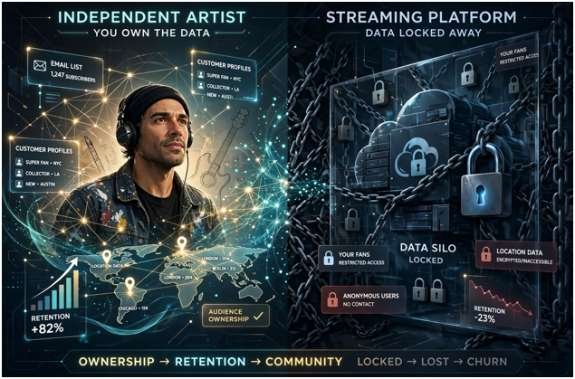
    The primary goal of direct sales is not just higher gross revenue—it is audience retention. When fans stream your record on a DSP, the platform owns their profile, listening habits, and contact information. When fans purchase a track directly through your store, you acquire their email address and purchase history.

    Securing explicit customer opt-in aligns with Federal Trade Commission standards for commercial communication and guarantees you can notify buyers about future vinyl pressings, gig tickets, or digital drops without paying ad networks to reach them.

    The Top Direct to Fan Platforms for Independent Music Sales

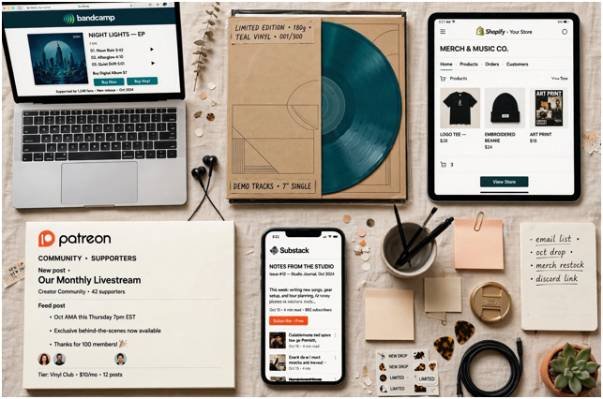
    I tested, audited, and sold music across every notable direct platform over the last five release cycles. Each service serves a distinct phase of your fan journey.

    Bandcamp: The Baseline for Catalogue Discovery and Physical Sales

    Bandcamp remains the benchmark for independent music sales. It functions as both a checkout system and an active discovery marketplace with millions of active accounts.

    • Platform Cut: 10% to 15% on digital sales and physical merch (plus payment processing).
    • Standout Feature: Bandcamp Fridays, where the platform waives its entire cut for 24 hours, sending roughly 93% of revenue straight to your bank account.
    • Audience Ownership: You receive customer emails for every purchase, complete with direct location data.

    Bandcamp makes buying friction almost zero because music fans already trust it. Check the official Bandcamp Artist Guide to make sure your track metadata and digital booklet assets match their distribution formats.

    EVEN: The Best Option for Pre-Streaming Windowing

    EVEN popularized the “sell-before-streaming” window. Instead of dumping your record onto streaming platforms simultaneously, you offer your core community the chance to hear the album 7 to 14 days early for a “pay-what-you-want” price.

    • Platform Cut: Flat 20% commission (this includes all credit card processing fees).
    • Standout Feature: Direct sales report automatically to Luminate for official Billboard and domestic chart tracking.
    • Audience Ownership: Full acquisition of fan email addresses and SMS numbers.

    I found EVEN works best when paired with an impending release date. If fans know they can hear the project ahead of the public for $5 or $20, conversion rates jump noticeably compared to post-release sales campaigns.

    Shopify with Single: Scaled Merch and DSP Integration

    When you reach higher order volumes, running a standalone store on Shopify using the Single Music plugin gives you complete brand autonomy.

    • Platform Cut: Base Shopify subscription ($39/month) plus standard Stripe processing; Single Music takes flat transactional fees or tiered subscription charges.
    • Standout Feature: Seamless product feeds that embed your merch directly onto your Spotify artist profile and YouTube channel.
    • Audience Ownership: 100% owned customer data and complete layout control.

    To make Shopify cost-effective compared to Bandcamp’s 15% cut, you generally need to clear at least $400 to $500 per month in sustained sales. Below that threshold, a flat monthly software subscription chips away at your margins.

    Substack and Patreon: Predictable Recurring Fan Subscriptions

    If you prefer consistent monthly income over one-off release spikes, membership communities solve the feast-or-famine release cycle.

    • Patreon: Charges an 8% to 12% cut and supports complex, multi-tiered reward hierarchies. It natively integrates with Discord to automate subscriber roles and private channels.
    • Substack: Operates on a 10% platform fee and pairs an audio player with a newsletter format. It allows you to deliver voice memos, unreleased acoustic demos, and project reflections directly to subscribers’ inboxes.

    Comparing the Top Direct-to-Fan Platforms

    Comparing the Top Direct-to-Fan Platforms

    Platform Best For Platform Fee Data Ownership Chart Reporting
    Bandcamp Search discovery & physical merch 10–15% cut Direct customer emails Yes
    EVEN Exclusive pre-streaming windowing 20% all-inclusive Email & phone numbers Yes (Luminate)
    Shopify + Single Scaled brands & DSP merchandise sync Monthly fee + card fees 100% owned Yes (Luminate)
    Patreon Tiered communities & private Discord servers 8–12% cut Subscriber list No
    Substack Direct inbox essays & gated audio tracks 10% cut 100% exportable email list No

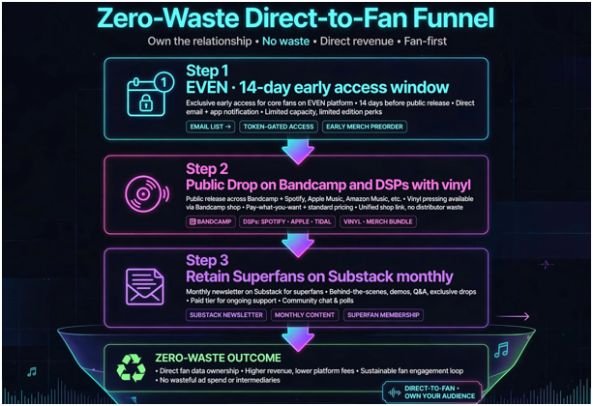
    How I Build a Zero-Waste Direct-to-Fan Funnel

    How I Build a Zero-Waste Direct-to-Fan Funnel

    When self releasing an album, putting all your eggs into a single checkout link leaves money on the table. My preferred system runs on a tiered release sequence:

                     ┌─────────────────────────────────────┐

                      │ 1. Launch on EVEN (14-day window)   │

                      │    Early access digital album sales │

                      └──────────────────┬──────────────────┘

                                         │

                      ┌──────────────────▼──────────────────┐

                      │ 2. Public Drop on Bandcamp & DSPs   │

                      │    Physical vinyl + basic streaming │

                      └──────────────────┬──────────────────┘

                                         │

                      ┌──────────────────▼──────────────────┐

                      │ 3. Retain Superfans on Substack     │

                      │    Monthly stems, demos & updates   │

                      └─────────────────────────────────────┘

    1. Window the Drop: Launch your album on EVEN 14 days before public release to monetize your most dedicated listeners.
    2. Open Wide Distribution: Release the project on streaming apps for discovery while hosting vinyl and apparel purchases on Bandcamp.
    3. Retain the Core: Funnel the buyers from steps 1 and 2 into a monthly Substack or Patreon tier featuring your unreleased demos and production stems.

    Frequently Asked Questions About Direct-to-Fan Music Sales

    1. What platform takes the lowest cut on digital music sales?

    Bandcamp takes 10% to 15% (waived entirely on Bandcamp Fridays), while owned setups like Bandzoogle charge zero commission on sales in exchange for a flat monthly subscription.

    2. Do direct-to-fan sales count toward Billboard and official charts?

    Yes, platforms like EVEN, Bandcamp, and Shopify (via Single Music) report qualifying domestic sales directly to Luminate.

    3. Can I sell music directly to fans without setting up a website?

    Yes, you can upload tracks directly to Bandcamp or EVEN and begin selling within minutes without maintaining custom web hosting.

    4. Should I pull my music off Spotify if I sell directly to fans?

    Keep your catalog on Spotify for top-of-funnel discovery, but use windowing strategies to ensure superfans pay for early access elsewhere first.

    Stop Renting Your Listeners

    Streaming services treat your recorded music as cheap utility content designed to keep listeners subscribed to their apps. If you want a sustainable music career, treat streaming as promotional billboard space and direct-to-fan platforms as your cash register.

    Pick one platform—open a Bandcamp page if you have physical merch, or run an early window on EVEN for your next drop—and start converting passive listeners into paying supporters today.

  • Why Does My Mix Sound Different in the Car? The Real Reason

    Why Does My Mix Sound Different in the Car? The Real Reason

    I can spend hours balancing a track until the vocal sits perfectly, the bass feels controlled, and the stereo image sounds wide and polished. Then I play the same song in my car, and suddenly everything shifts. The low end feels too heavy, the vocals lose clarity, or the highs become much sharper than they were in the studio.

    If you are wondering why your mix sounds different in the car, the issue is usually not that your car is “wrong.” It is revealing how well your mix translates outside the environment where you created it. Car cabins, speaker placement, road noise, factory audio processing, room acoustics, and stereo behavior can all expose problems that headphones or studio monitors may hide.

    That is exactly why the car test remains useful. Instead of treating it as a final judgment on your mix, I use it as another listening perspective that helps me identify low-end imbalance, masking, phase problems, harsh frequencies, and other translation issues before I finish the track.

    Why Does the Car Test Reveal Problems I Missed in My Studio?

    A studio and a vehicle handle sound very differently.

    In a properly positioned monitoring setup, speakers typically create a controlled stereo image around the listening position. Headphones isolate the left and right channels even more dramatically.

    Inside a car, speakers sit in doors, dashboards, pillars, or rear panels. They are rarely the same distance from your ears. Glass, plastic, upholstery, seats, and the compact cabin all affect reflections and frequency response.

    Many modern US vehicles also use factory DSP, EQ curves, bass enhancement, crossovers, loudness compensation, or other processing. As a result, the car is not a perfectly neutral reference system. Even if I am focused on creative tasks like making melodies without music theory, I still need to check whether those musical ideas translate clearly outside the studio.

    Add engine noise, tire noise, air conditioning, and road vibration, and your mix suddenly has to survive an entirely different noise floor.

    Why Does My Bass Sound Boomy or Weak in the Car?

    Why Does My Bass Sound Boomy or Weak in the Car?

    Low-end translation causes some of the biggest car-test surprises.

    The 60 Hz to 200 Hz region can quickly become muddy or boomy when kicks, bass guitars, synths, guitars, and reverbs overlap. A small vehicle cabin can also reinforce certain low frequencies, making excessive bass much easier to hear.

    Your studio can create the opposite problem. An untreated room may produce room modes, bass buildup, or frequency cancellations. If my listening position happens to cancel an important bass frequency, I may mistakenly boost it in the DAW. That extra energy becomes obvious elsewhere.

    Sub-bass can also create problems below roughly 60 Hz. Excessive energy at the very bottom may contribute little musically while consuming headroom or causing panels and speakers to struggle.

    I sometimes use a high-pass filter on tracks that do not need deep bass and carefully control unnecessary energy below roughly 20 to 30 Hz. However, I avoid blindly filtering the kick or bass. Every decision should serve the actual recording.

    Why Do My Vocals Disappear Through Car Speakers?

    A vocal that sounds clear through headphones can suddenly become buried in a car.

    The most common culprit is frequency masking. Guitars, synths, keyboards, snare drums, reverbs, and other instruments may compete with the vocal through the mids.

    The car’s road noise and speaker response can expose that competition more clearly.

    I do not automatically solve this by turning the vocal up. Sometimes reducing competing frequencies, shortening an overly dense reverb, or using subtle automation provides better separation.

    Compression can also help stabilize an inconsistent vocal performance. The aim is to keep the vocal intelligible without making it unnaturally loud.

    Why Does My Mix Sound Harsh and Piercing in the Car?

    Upper-midrange problems often become obvious around approximately 2 kHz to 5 kHz.

    Vocals, guitars, snare attack, synths, and cymbals are all important elements of music that can contribute significant energy in this range. Something that sounds exciting or crisp on studio monitors may become tiring when reproduced through a bright car system and reflected around glass surfaces.

    Road noise can make this worse indirectly. Drivers often increase playback volume to hear music over traffic and tire noise, making aggressive frequencies more noticeable.

    If commercial reference tracks remain comfortable while my own mix becomes painful, I inspect the upper mids, vocal sibilance, cymbals, distortion, and overall tonal balance rather than simply lowering the master volume.

    How Do Headphones Affect Stereo Width and Phase?

    How Do Headphones Affect Stereo Width and Phase?

    Headphones can create an unusually wide listening experience because each ear receives its own channel directly.

    A huge stereo guitar, delay, synth pad, or reverb may sound impressive on headphones but behave differently through speakers.

    Car speakers are also off-axis and positioned asymmetrically. Wide elements can lose impact, and phase-dependent effects may partially cancel.

    This is why I check my mix in mono regularly.

    If an important guitar, vocal layer, kick, or bass element becomes dramatically quieter when summed to mono, I investigate phase relationships and stereo processing.

    Mono compatibility does not mean your mix has to sound narrow. It simply helps make important elements survive less-than-perfect playback conditions.

    How Does Listening Too Loud Hurt Mix Translation?

    Monitoring volume can change the way I perceive frequency balance.

    Human hearing does not respond equally to every frequency at every volume, a concept commonly discussed through equal-loudness contours and historically associated with Fletcher-Munson curves.

    When I mix extremely loudly, the lows and highs can appear more impressive than they do at quieter levels. That can encourage decisions that do not translate well.

    Moderate monitoring around the commonly discussed 75 to 85 dB SPL range may be useful in appropriate studio situations, but I do not treat that as a rigid target for every room or every session. I also spend time listening quietly.

    Low-volume checks are especially useful for judging whether the vocal, kick, snare, and primary melodic elements remain clear.

    How Should I Use Reference Tracks for the Car Test?

    Professional reference tracks give me context.

    I import a commercially released song from a similar genre into my DAW and compare its tonal balance, bass level, vocal placement, brightness, stereo image, and overall dynamics with my mix.

    I also play the same reference song in the car.

    Level matching matters. A louder track can easily seem fuller and more exciting even when the tonal balance is not actually better.

    If a professionally released reference sounds controlled through the same vehicle while my bass becomes overwhelming, I have stronger evidence that my mix needs attention.

    How Can I Fix a Mix That Does Not Translate?

    How Can I Fix a Mix That Does Not Translate?

    When why does my mix sound different in the car becomes a recurring question during a project, I avoid making huge corrections based on one listening session.

    I first identify the specific problem. Is the bass too loud? Is the vocal disappearing? Are the cymbals harsh? Does the stereo image collapse?

    Then I compare the mix against a reference track and check the same problem through headphones, monitors, smaller speakers, and mono.

    Once I confirm the issue across more than one playback system, I make a small correction.

    Dynamic EQ can control frequencies that become excessive only at particular moments. Compression can tighten inconsistent dynamics. Careful high-pass filtering can remove unnecessary sub-frequency energy, while EQ can create space between competing instruments.

    For kick and bass conflicts, I pay attention to both frequency and timing rather than simply boosting one and cutting the other.

    Should I Trust My Car More Than My Studio Monitors?

    No single playback system should become the absolute authority.

    If a mix sounds balanced through monitors, headphones, earbuds, and multiple speakers but strange in one particular vehicle, the vehicle may simply have unusual factory processing or speaker tuning.

    The warning sign appears when the same issue follows the mix everywhere.

    If the bass feels excessive through the car, headphones, and home speakers, I probably have a real low-end problem. If the vocal repeatedly disappears outside my studio, my monitoring environment may have been misleading me.

    The pattern matters more than one test.

    Frequently Asked Questions (FAQs)

    1. Why does my mix sound good on headphones but bad in my car?

    Headphones remove room acoustics and deliver each channel directly to your ears. A car introduces cabin reflections, unusual speaker positioning, road noise, frequency-response differences, and potentially factory audio processing, which can expose translation problems.

    2. Why is the bass louder when I play my mix in the car?

    The enclosed cabin can reinforce certain low frequencies. Poor studio acoustics, excessive sub-bass, or an unbalanced kick-and-bass relationship may also contribute.

    3. Should I cut everything below 30 Hz?

    Not automatically. Removing unnecessary ultra-low energy can improve headroom, but aggressive filtering can also weaken instruments that rely on deep frequencies. Listen and make decisions based on the track.

    4. Should I always check my mix in mono?

    Mono checking is useful because it can reveal phase cancellation and excessive reliance on stereo effects. It should complement stereo monitoring rather than replace it.

    5. Is the car test reliable for mixing music?

    Yes, as a secondary reference. A familiar car can reveal problems because you already know how professionally mixed songs sound through its system. However, you should combine the car test with several other playback systems.

    Final Thoughts

    Whenever I hear a dramatic difference between my studio and the car, I resist the temptation to immediately redesign the mix.

    Solving why my mix sounds different in the car is really about improving translation. I compare reference tracks, check mono compatibility, monitor at sensible levels, evaluate bass carefully, control masking, inspect phase relationships, and confirm problems on more than one playback system.

    A great mix does not sound identical through every speaker. It preserves its essential balance everywhere. When the bass remains controlled, the vocal stays clear, the highs stay comfortable, and the song retains its impact from headphones to a US commuter’s car stereo, I know the mix is translating successfully.

  • How to Find Music Outside the Algorithm and Escape the Recommendation Loop

    How to Find Music Outside the Algorithm and Escape the Recommendation Loop

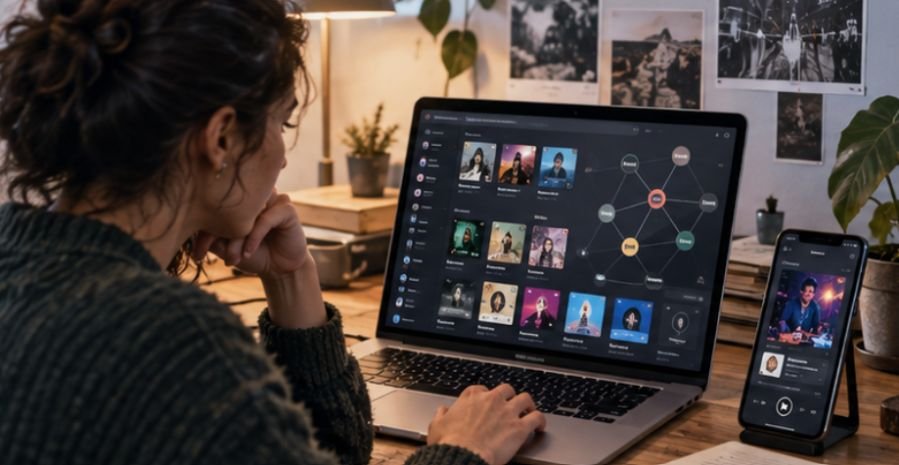
    Streaming platforms can place millions of songs one tap away while quietly making a listener’s musical world feel smaller. Recommendation systems are designed to predict what I am likely to enjoy based on previous behavior. That convenience is useful, but discovery becomes more interesting when I deliberately interrupt it.

    Learning how to find music outside the algorithm means replacing prediction with curiosity: listening to human DJs, tracing album credits, exploring archives, visiting record stores, attending small shows, and following scenes rather than playlists. The reward is not merely finding more music. It is discovering sounds I would never have known to request.

    Why Algorithmic Music Discovery Can Feel Repetitive

    Most recommendation engines have a difficult job. They must balance familiarity with novelty while trying to avoid suggesting music a listener immediately skips.

    Research presented at the Web Conference examined Spotify listening behavior and found that algorithmically driven listening was associated with lower consumption diversity, while listeners who became more musically diverse tended to increase organic, self-directed listening. The researchers did not conclude that recommendation algorithms are inherently harmful; rather, the study highlights the tension between immediate relevance and broader exploration.

    That explains a familiar experience: play enough dreamy indie rock, acoustic folk, or alternative R&B and recommendations may gradually become variations on what you already know. Algorithms are excellent assistants. They do not have to be your only record collector.

    Start With People Instead of Predictions

    One of the simplest ways to escape automated recommendations is to put another human being between you and the next song.

    Listen to Freeform and College Radio

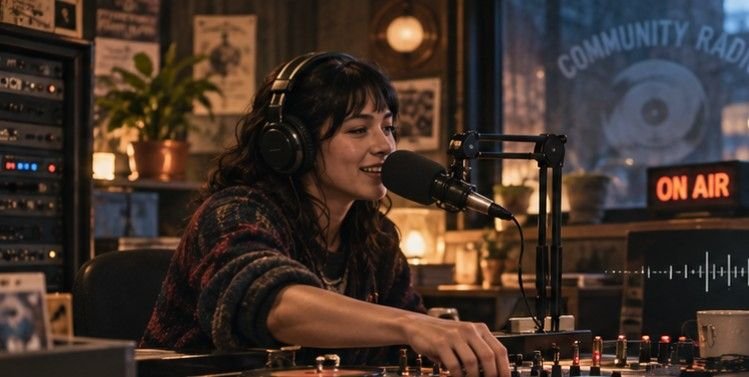
    College radio remains particularly useful because many stations allow DJs to build programs around personal knowledge rather than rigid commercial formats.

    UC Berkeley’s KALX, for example, describes its programming as freeform radio created by student and community volunteers. DJs are encouraged to move across genres specifically to broaden listeners’ musical experiences. That unpredictability is the point.

    Instead of typing “artists similar to…” into a streaming service, find a college station in another city and listen for 30 minutes without skipping. Write down anything that catches your attention.

    Community radio archives can take this even further. The American Archive of Public Broadcasting preserves programs covering folk, jazz, international music and other recordings that may rarely appear in personalized streaming feeds.

    Follow the People Behind a Record

    A favorite album is not one discovery. It is a map containing dozens of possible discoveries.

    Follow the People Behind a Record

    Open its credits and look beyond the headline artist. Search for its producer, engineer, drummer, featured vocalist, arranger or mastering engineer.

    Suppose an album has a distinctive guitar texture. Instead of asking a streaming app for similar songs, identify the guitarist and investigate their session credits. You may end up moving from indie rock into experimental jazz, ambient music or a regional scene that shares almost no obvious genre label with the original album.

    Use the same method with record labels. Independent labels often develop recognizable communities even when their artists sound different.

    Touring relationships provide another clue. Check which artists open shows for musicians you already enjoy. Small support acts are often being selected by artists, promoters or local scenes before recommendation systems have collected much listener data about them.

    Dig Through Music Archives Like a Researcher

    Music discovery becomes much more interesting when you stop treating every search as a hunt for something released this week. The Library of Congress holds millions of recorded sound items spanning more than a century, including commercial recordings, broadcasts, folk recordings and formats ranging from cylinders to CDs.

    Its collections can become a discovery engine based on history rather than popularity. Explore the Library of Congress recorded-sound collections. Search by a place, decade, instrument or tradition rather than an artist name. Try “Louisiana folk music,” “early electronic recordings,” “Appalachian ballads” or “Chicago jazz.”

    The Smithsonian offers another route. Folkways Records was created to document an unusually broad range of music, spoken-word material and cultural sound. Smithsonian Folkways recordings states that the original Folkways catalog included 2,168 titles and that its recordings remain available rather than being routinely deleted from circulation. Archives work especially well when your listening has become dominated by whatever is newest.

    Use Databases Differently From Streaming Apps

    Sites such as Rate Your Music, Album of the Year and music-library catalogs work best when you search with constraints. Do not simply open a “best albums ever” list.

    Use Databases Differently From Streaming Apps

    Choose something oddly specific:

    • country: Brazil
    • year: 1982
    • style: post-punk
    • format: EP
    • popularity: relatively obscure

    Or search one genre and move backward decade by decade.

    The Music Library Association has spent years documenting the challenges involved in music discovery because music can be organized through composers, performers, instrumentation, recordings, works and many other relationships. Its work is a useful reminder that genre tags alone represent only one path through music.

    Go Somewhere Algorithms Cannot Follow You

    Physical discovery introduces something digital recommendations struggle to reproduce: accidents.

    Go Somewhere Algorithms Cannot Follow You

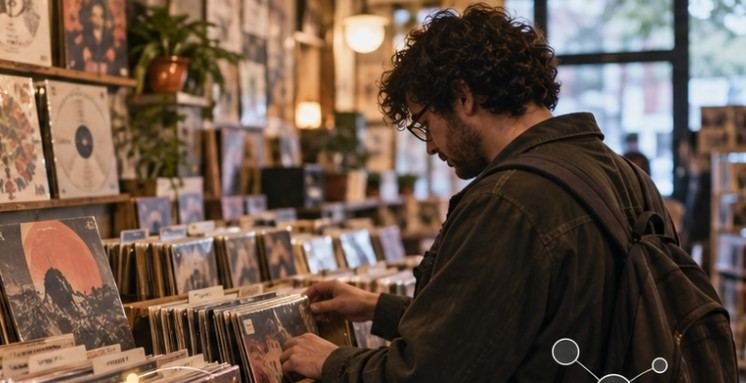
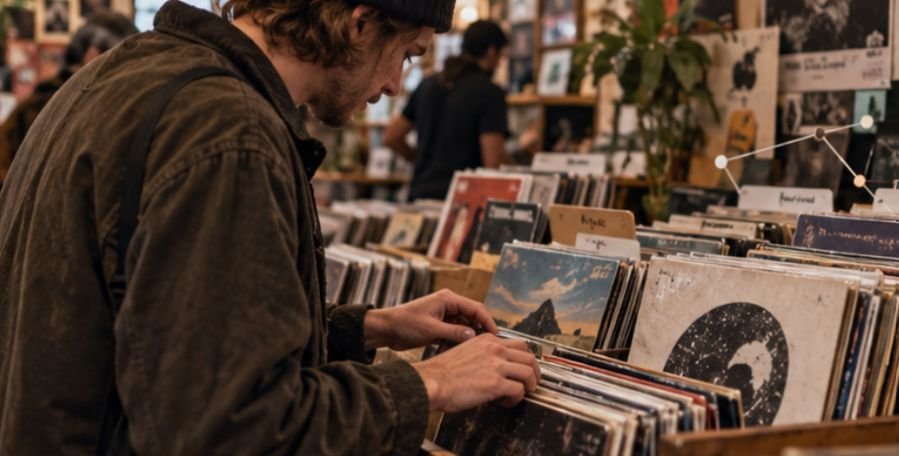
    Walk into an independent record store and choose a section you rarely visit. Instead of asking an employee for the most popular release, ask what they have been playing repeatedly that month.

    Then inspect the record itself. Read liner notes. Look at labels, recording locations and personnel. Notice who thanked whom. Follow those names later.

    Live music works similarly. Small clubs, house shows, community festivals, college venues and DIY spaces expose listeners to opening artists they did not select beforehand. A ticket purchased for one band may introduce three others. That lack of control is useful.

    Try the Three-Door Music Discovery Method

    If my recommendations begin feeling predictable, I use a simple rule: every discovery session must enter music through three different “doors.”

    Door What to Do What It Breaks
    Human Hear a DJ, friend, critic or record-store employee’s pick Personalization loop
    Historical Explore an archive, old chart, label catalog or past decade Recency bias
    Network Follow a producer, collaborator, label or opening act Genre similarity

    Spend roughly 15 minutes on each door.

    Do not immediately save everything. Listen long enough to decide whether something genuinely interests you.

    This matters because escaping recommendations does not mean replacing one giant playlist with another. The aim is to practice active discovery.

    Build a Personal Discovery Trail

    For anyone wondering how to find music outside the algorithm consistently, keep a small discovery log.bRecord the artist, track, how you found it and one thing that interested you. After 20 discoveries, review the list.

    If almost everything came from one source, change your method. If nearly every artist comes from the same country, decade or genre, deliberately explore elsewhere.

    The test is simple: could you have predicted most of your discoveries before you started? If yes, you are probably still traveling inside familiar territory.

    Frequently Asked Questions

    1. How do I discover music without Spotify recommendations?

    Try college and community radio, record-store recommendations, live shows, label catalogs, music archives, artist credits and independently curated music communities.

    2. Is algorithmic music discovery bad?

    No. Recommendation systems are convenient and can reveal excellent music. Problems arise mainly when automated recommendations become your only method of discovering artists.

    3. Where can I find obscure music online?

    Explore Bandcamp, independent-label catalogs, college-radio playlists, historical audio archives, specialized music databases and communities centered on specific genres or regional scenes.

    4. How often should I search for music outside recommendation algorithms?

    Even one deliberate discovery session each week can diversify your listening. Rotate between human-curated radio, archives, artist networks, physical records and local performances.

    Make Discovery Unpredictable Again

    The strange thing about unlimited access to music is that unlimited choice can still produce remarkably predictable listening.

    I think the best answer to how to find music outside the algorithm is not abandoning streaming technology. It is refusing to let prediction become the only doorway through which music reaches me. Follow a session musician. Hear a college DJ’s midnight selection. Pull an unfamiliar record from a bin. Search a 70-year-old archive.

    The next song worth loving may not resemble anything you already play—and that is precisely why you might never find it by asking a system to give you more of the same.

  • Writing Lyrics for Songs That Blend Multiple Genres: A Modern Approach

    Writing Lyrics for Songs That Blend Multiple Genres: A Modern Approach

    I’ve noticed that some of the most interesting songs today refuse to stay inside one genre. A track can begin with an acoustic ballad, move into a rap-like verse, and land on a pop chorus without feeling confused. What makes that shift work is often not the production alone. The lyrics give the song direction, so listeners can follow the emotional thread even when the sound changes.

    I’ve also found that writing across genres changes how I think about lyrics. A line that works over a loose guitar pattern may need different phrasing when the beat becomes tighter or more percussive. A strong central idea becomes the thread that holds everything together.

    Give the Lyrics One Clear Center

    Genre-bending songs can contain several musical personalities, but the lyric needs a reason for moving between them. Before worrying about rhyme schemes or style, identify what the song is really about.

    That central idea acts like an anchor. A country-leaning verse can tell a detailed story, while a hip-hop-influenced chorus can become sharper and more rhythmic, but both sections should reveal something about the same situation.

    Let Each Genre Change the Way You Write

    Let Each Genre Change the Way You Write

    Writing lyrics for songs that blend multiple genres does not mean forcing every genre’s vocabulary into every line. Instead, pay attention to what each style naturally asks from the words.

    A folk or country section may benefit from specific places, objects, memories, and conversational details. A rap-influenced section might create more space for internal rhyme, tighter syllable patterns, wordplay, and rhythmic repetition. Pop often rewards concise phrases that carry an immediate emotional message.

    These characteristics can coexist. A songwriter might build a verse around a detailed scene, then tighten the phrasing as the pre-chorus approaches. When the chorus arrives, fewer words can leave more room for repetition and melody. Read lines aloud over the intended rhythm and adjust syllables when they fight the groove.

    Use Contrast Without Losing the Listener

    A genre switch can create energy, but sudden change needs preparation. One useful technique is to gradually alter lyrical density before the musical shift.

    A relaxed verse might use longer lines and open-ended phrasing. The pre-chorus can shorten those lines or introduce a stronger rhyme pattern. By the chorus, the listener is prepared for more compressed delivery.

    Hooks are especially valuable here. A simple refrain can survive changes in instrumentation because its familiarity gives listeners something recognizable to hold onto.

    Build a Bridge Between the Genres

    The strongest genre blends usually share something beneath the surface, such as storytelling, vulnerability, rhythm, humor, or a particular vocal attitude. Finding that common ground makes the transition feel less like a collision.

    Think about the emotional temperature of each section. A sparse opening could establish vulnerability, while a heavier chorus turns that feeling into confidence or frustration.

    Personal material can make this process easier. the role of personal journals in modern songwriting can be especially useful when a songwriter needs specific details, memories, or observations that sound lived-in rather than borrowed from genre clichés. Those details can remain consistent while the musical language changes.

    Write for Today’s Wider Listening Habits

    Write for Todays Wider Listening Habits

    Listeners now encounter songs through playlists, recommendations, short videos, social posts, and discovery tools rather than only through traditional genre categories. Music recommendation research examines audio, metadata, and user behavior to organize discovery.

    That environment gives genre-fluid songwriting more room to travel. A pop listener may encounter country-pop, alternative hip-hop, and electronic music with rock vocals in the same session.

    For writers, this does not mean chasing every trend. Audiences may already be comfortable with combinations that once seemed unusual. how changing music discovery affects the way lyrics are written can therefore be understood through the need to make songs identifiable while leaving room for surprise.

    Let the Hook Survive the Change

    A strong hook does not need to explain every genre influence.Songwriters who are experimenting across genres may also benefit from learning how to make melodies without music theory, especially when developing a memorable vocal line for a changing arrangement.

    Keep the central phrase clear enough to work over different rhythmic settings, especially if the chorus changes dramatically from the verse.

    If every line contains a clever rhyme, unusual metaphor, or stylistic reference, the listener may struggle to identify the main idea. Give the hook breathing room. A short repeated phrase can connect an acoustic verse to a dense electronic section.

    When adapting a vocal line across different genres, knowing when should you use reverb on vocals can also help the voice sit naturally within changing arrangements.

    Recognizable moments still help. Familiarity provides stability while the production and lyrical delivery take risks.

    Examples of Genre Blending in Practice

    Lil Nas X’s “Old Town Road” demonstrates how contrasting musical and lyrical signals can coexist within one track. The song pairs country imagery with hip-hop language and production.

    The useful lesson is not to copy a particular artist. It is to notice how a lyric can remain recognizable when its musical setting changes.

    That balance keeps experimentation connected to the song emotionally.

    Frequently Asked Questions 

    1. How do I start a multi-genre song?

    Start with one clear emotional idea or story. Choose the genres afterward and decide what each contributes to mood, rhythm, and delivery.

    2. Should every section use different lyrical styles?

    No. Variation can create contrast, but a consistent voice helps the song feel unified. Change cadence or structure when it supports the musical shift.

    3. How can I avoid making genre changes sound forced?

    Create a bridge through a repeated phrase, shared emotion, related imagery, or gradual changes in lyrical rhythm.

    4. Can personal experiences work across different genres?

    Absolutely. Specific memories and observations can provide a stable narrative core. The genre can then influence how those experiences are phrased and delivered.

    Why the Best Genre Blends Still Feel Like One Song

    Writing across genres is less about proving how many styles can fit into a track and more about understanding what each style can add. The most convincing blends give every section a purpose. One genre may bring intimacy, another may add rhythmic energy, and another may open the song into a larger emotional space. When those choices serve the same story, the changes feel natural instead of ornamental.

    The strongest result is a song that can surprise listeners without losing them.

    The importance of stage presence for emerging artists also becomes clear when a songwriter needs to carry the same emotional identity from the recording into a live performance.

    Genre can shape the sound, but the lyric gives that movement meaning. Keep the emotional center clear, let the language breathe, and allow different influences to become part of one recognizable voice.

  • Turn Your Laptop Into a Studio: How to Start Music Production With Just a Laptop

    Turn Your Laptop Into a Studio: How to Start Music Production With Just a Laptop

    A blank DAW project can feel overwhelming at first, especially when every music production setup online seems packed with expensive gear. The reality is much simpler. You can make your first beat, build melodies, arrange a full track, and start learning the fundamentals without owning a studio full of equipment.

    If you are trying to learn how to start music production with just a laptop, the most important thing is knowing how to use the tools already available to you. A DAW, stock virtual instruments, built-in effects, samples, and headphones can give you everything you need to begin creating music from home.

    I find this approach especially useful for beginners because it removes the pressure to buy gear before developing actual production skills. Instead of worrying about what equipment comes next, you can focus on making music, finishing songs, and improving one project at a time.

    What Do You Actually Need to Produce Music on a Laptop?

    Your beginner music production setup can stay extremely simple. You need a laptop capable of running your chosen DAW, music production software, and a way to hear your project.

    You do not initially need studio monitors, an audio interface, a MIDI controller, or a microphone if you plan to work entirely “in the box.” This means your drums, synthesizers, bass, samples, effects, MIDI, and arrangement all exist inside the computer.

    Even regular wired headphones can work while you learn. Upgrade only when your current equipment creates a genuine limitation.

    Which DAW Should a Beginner Choose?

    A DAW, or digital audio workstation, is essentially your virtual recording studio. Most major DAWs can record, arrange, edit MIDI, run virtual instruments, process effects, mix tracks, and export finished music. The better choice is usually the software that fits your computer and feels intuitive to you.

    GarageBand for Mac Beginners

    GarageBand is one of the easiest places to start if you already own a Mac. It offers virtual instruments, loops, effects, drums, and recording tools without requiring an additional software purchase.

    FL Studio for Beat Making

    FL Studio is widely used for electronic music, trap, hip-hop, and beat production. Its pattern-based workflow makes creating drums, melodies, and loops approachable for beginners.

    Ableton Live for Electronic Production

    Ableton Live works well for electronic music, sampling, looping, arrangement, and live performance. Ableton currently offers a free Live Suite trial before you decide whether a paid edition makes sense for you.

    Cakewalk Sonar for Windows

    Cakewalk Sonar for Windows

    Older tutorials often recommend Cakewalk by BandLab. That version has been replaced by Cakewalk Sonar. A free Sonar tier now provides the core DAW functionality, while additional features are available through BandLab Membership.

    REAPER for a Flexible Setup

    REAPER supports Windows, macOS, and Linux and includes MIDI recording, editing, mixing, mastering, and multitrack audio tools. It currently offers a fully functional 60-day evaluation, with a discounted license available for qualifying individual users.

    I would choose one DAW and stay with it long enough to learn its workflow rather than constantly switching between programs.

    How Can You Make Music Without a MIDI Keyboard?

    One of the biggest misconceptions about laptop music production is that you need a physical keyboard to compose.

    You do not.

    If you want to explore creating music without traditional instruments altogether, you can also learn how to make music without any instruments using software-based tools, MIDI, samples, and virtual instruments.

    Use the Piano Roll

    The piano roll is a grid inside your DAW where you can draw MIDI notes with your mouse or trackpad. You control the pitch, timing, duration, and velocity of individual notes.

    That means you can program bass lines, melodies, chords, and drum patterns without physically playing an instrument.

    Turn Your Laptop Keyboard Into an Instrument

    Many DAWs also allow your computer’s QWERTY keyboard to trigger musical notes. It will not feel exactly like a piano, but it is enough for experimenting with melodies and rhythms.

    A MIDI controller becomes useful later if physically playing notes improves your workflow. It is not a requirement for starting.

    Should Beginners Buy Plugins and Virtual Instruments?

    I recommend using your DAW’s stock tools first.

    Most modern music production software includes synthesizers, drum samplers, EQ, compression, reverb, delay, distortion, and other essential effects. These tools can teach you the fundamentals without sending you into an endless cycle of downloading plugins.

    If you cannot yet explain why you need another compressor, synthesizer, or EQ, you probably do not need to buy one.

    Mastering a small collection of stock plugins usually develops better production habits than owning hundreds of tools you barely understand.

    Where Can Beginners Find Samples for Music Production?

    Where Can Beginners Find Samples for Music Production

    Samples can make laptop-only production much easier because you do not have to record every sound yourself.

    Royalty-free sample libraries can provide kicks, snares, percussion, bass sounds, effects, and instrument loops. Platforms such as Ghosthack offer free sample packs, while producer communities can help you discover additional sounds.

    Always check the licensing terms before commercially releasing music made with downloaded samples. “Free download” does not automatically mean unrestricted commercial use.

    How Do You Build Your First Beat?

    Once your DAW is installed, open a blank project instead of spending another week watching setup videos.

    Choose a tempo in BPM and create a simple four-bar drum pattern. Start with a kick, snare, and hi-hat. Add a basic bass rhythm underneath it, then create a small melody or chord progression with a stock virtual instrument.

    Do not worry about making the loop complex. Your first objective is understanding how rhythm, bass, and melody work together.

    Once the loop sounds reasonable, resist the temptation to add fifteen more sounds.

    How Do You Turn a Short Loop Into a Complete Song?

    Many new producers can create eight good bars but struggle to make a full track.

    The solution is arrangement.

    Duplicate your core musical idea along the DAW timeline and create variation. Start with fewer instruments, introduce additional elements gradually, build toward a fuller section, remove parts during a breakdown, and bring the central idea back before ending the track.

    Your first finished song does not need a sophisticated structure. A short intro, main section, variation, and ending can teach you more than dozens of unfinished loops.

    Do You Need an Audio Interface?

    Not if you are producing entirely with MIDI, samples, virtual instruments, and headphones.

    An audio interface becomes important when you want to connect an XLR microphone, guitar, studio monitors, or other external audio equipment.

    If you are still deciding whether you need one, you can learn more about whether you can produce music without an audio interface before investing in additional hardware.

    Until then, your laptop’s built-in audio hardware can be enough to learn production.

    Can You Mix Music on Laptop Speakers?

    You can begin on laptop speakers, but they have limitations. Small built-in speakers often struggle to reproduce deep bass and may not reveal subtle balance problems.

    For that reason, headphones are one of the more useful early upgrades when your current listening setup becomes limiting. Popular monitoring-oriented options include models such as the Audio-Technica ATH-M50x and Sennheiser HD 280 Pro, although you do not need either specific model to begin.

    I also recommend checking an exported mix on several systems. Listen through earbuds, headphones, laptop speakers, a phone, and your car stereo if available. If the balance survives several playback environments, you are learning an important mixing skill.

    How Should a Beginner Learn Music Production Faster?

    How Should a Beginner Learn Music Production Faster

    Tutorials work best when they solve a problem you currently have.

    If you are starting from the beginning, learning music production from scratch at home can give you a structured way to build your DAW, composition, arrangement, and mixing skills step by step.

    Instead of watching random hours-long production videos, search for specific lessons such as “how to make a beat in FL Studio” or “how to arrange a song in Ableton Live.” Beginner-focused channels such as In The Mix can also help you understand DAW workflows, EQ, compression, mixing, and related production concepts.

    Most importantly, apply what you learn immediately.

    Watching someone create twenty songs will not teach you as much as struggling through your own first five.

    Frequently Asked Questions 

    1. Can I learn how to start music production with just a laptop without knowing music theory?

    Yes. You can create beats and songs using MIDI, piano rolls, samples, loops, and virtual instruments before learning advanced music theory. Learning scales, chords, rhythm, and song structure gradually will make composing easier.

    2. Can I make professional-quality music on a laptop?

    Yes. Modern laptops can run professional DAWs, plugins, synthesizers, samples, and mixing tools. Your production decisions, arrangement, sound selection, and mixing skills matter more than owning a large studio.

    3. Do beginners need studio monitors?

    No. Headphones can be enough while you learn production and basic mixing. Studio monitors become more useful when you have an appropriate listening space and need a more dedicated mixing environment.

    4. What music production skills should I learn first?

    I would focus first on rhythm, MIDI editing, sound selection, basic chords and melodies, arrangement, volume balancing, EQ, compression, reverb, and automation. Advanced mixing and mastering can come later.

    Start Making Music Before Building a Studio

    When I look at beginner music production, the biggest obstacle is rarely equipment. It is waiting for the ideal setup.

    Your laptop already gives you access to a DAW, piano roll, virtual instruments, synthesizers, effects, samples, automation, and mixing tools. That is enough to create your first complete track.

    Start with a simple beat. Add bass and melody. Turn the loop into an arrangement. Balance the tracks, apply a few basic effects, and export the result.

    Your early songs may not sound like commercial releases, and that is completely normal. Each finished project teaches you what to improve next.

    Build your skills first. Your studio can grow when your music actually gives you a reason to 

  • Crowdfunding Strategies for Independent Album Production

    Crowdfunding Strategies for Independent Album Production

    I raised $38,400 to record, press, and tour my third independent record. That success did not happen because I had a massive TikTok following. It worked because I treated the album launch like an equity-free venture fund. 

    Mastering real crowdfunding strategies for independent album production separates musicians who bring their master recordings to life from those who get left with half-finished demos.

    If you step into a campaign expecting fans to stumble upon your page organically, your project will fail. You need calculated financial margins, targeted outreach, and an airtight pre-launch runway.

    The Financial Blueprint: Budgeting Beyond the Studio

    The Financial Blueprint: Budgeting Beyond the Studio

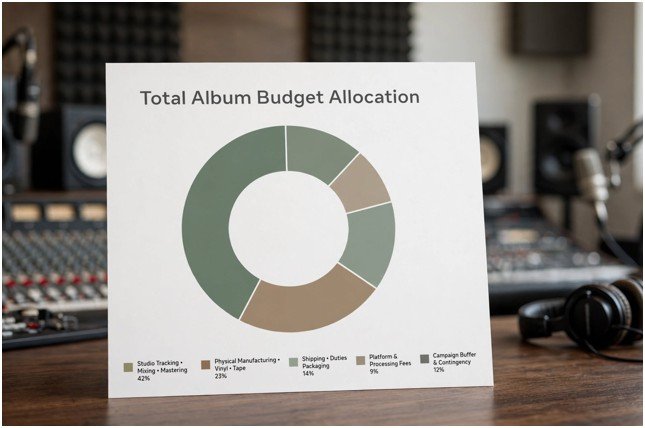
    Most musicians budget solely for tracking, mixing, and mastering. They forget the administrative reality of delivering physical media. When I set up my financial breakdown, studio time consumed less than half the total capital requirement.

    Total Album Budget Allocation

    ├── Studio Tracking, Mixing & Mastering : 42%

    ├── Physical Manufacturing (Vinyl, Tape) : 23%

    ├── Shipping, Duties & Packaging        : 14%

    ├── Platform & Processing Fees (8-10%)  :  9%

    └── Campaign Buffer & Contingency       : 12%

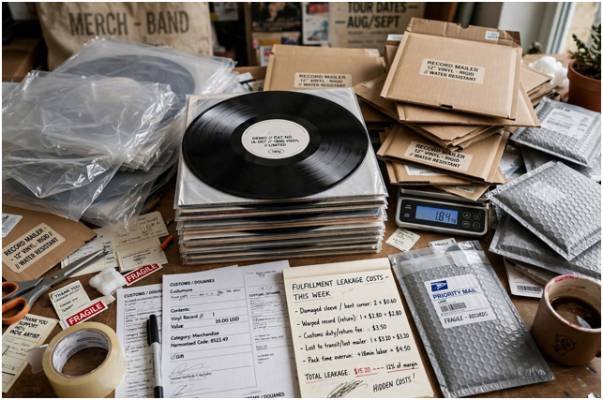
    Account for Hidden Physical Fulfillment Leakage

    Account for Hidden Physical Fulfillment Leakage

    Vinyl production remains a centerpiece for music backers. According to data tracked by the Recording Industry Association of America (RIAA), physical media revenue continues to be driven by passionate collectors willing to pay premium prices.

    However, pressing plants demand minimum order runs, test-pressing fees, and freight charges that catch independent creators off guard. Factor in 180-gram record mailers, poly sleeves, bubble mailers, and international customs declarations. Packaging materials alone can erode 15% of your net reward revenue if you do not calculate shipping charges by weight tier before launching.

    Layering Alternative Capital and Grants

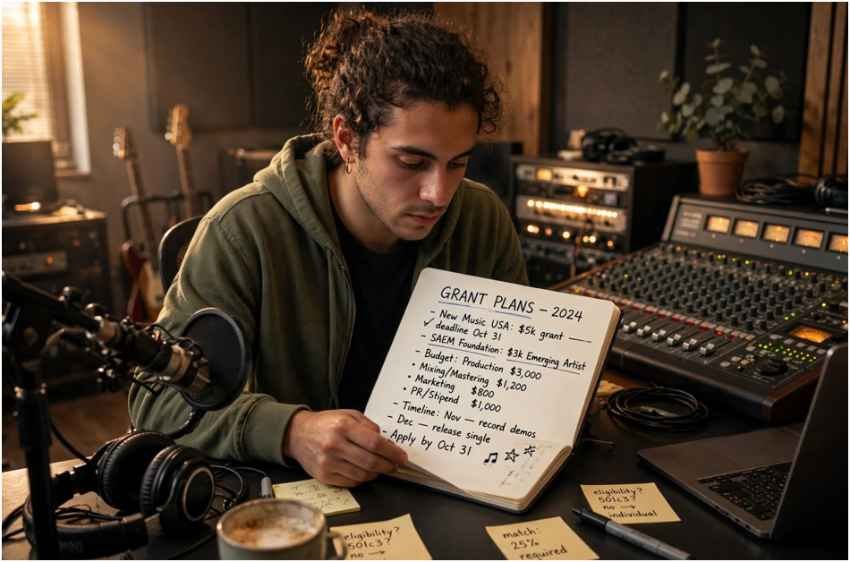
    Do not force a single campaign to shoulder every production expense. Before asking your audience for backing, research competitive music grant opportunities for independent artists to cover early pre-production expenses. Grants offset baseline engineering fees, which lowers your public crowdfunding threshold. A lower public target lets your campaign hit 100% funding faster, triggering organic algorithm boosts across discovery feeds.

    The Pre-Launch Playbook: The 35 Percent Secret

    The Pre-Launch Playbook: The 35 Percent Secret

    The first 48 hours determine campaign survival. Platforms favor momentum. When an algorithm detects rapid early pledges, it surfaces the project on curated discovery feeds and newsletter digests.

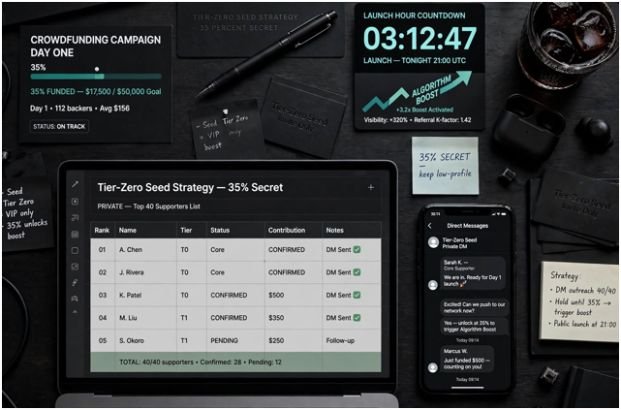
    The Tier-Zero Seed Strategy

    Never launch a public campaign sitting at zero dollars. I employ what I call the Tier-Zero Seed approach:

    1. Build a private spreadsheet of your top 40 supporters, family, and recurring listeners four weeks out.
    2. Personally call, message, or meet each contact individually.
    3. Secure committed pledge amounts in writing before the public page goes live.
    4. Send direct private links during your launch hour so those pledges register instantly.

    Securing 30% to 35% of your funding goal on day one sends an undeniable signal of legitimacy to casual backers who visit later. For broader baseline parameters, review the Kickstarter Creator Handbook to align your timeline with established creator best practices.

    Choosing the Right Campaign Engine

    Pick your platform based on backer behavior rather than superficial feature lists:

    Platform Model Best For Risk Profile
    Kickstarter All-or-Nothing Defined album production runs with fixed release deadlines Zero financial downside if underfunded; high motivation factor
    Indiegogo Flexible Funding Projects with modular scope where partial funding still works Must fulfill perks even if you hit only 40% of the financial target
    Bandcamp Campaigns Direct-to-Press Vinyl runs aimed exclusively at existing core band listeners Low fulfillment overhead; relies entirely on existing platform fans

    If your production depends on an expensive session orchestra or specialist mixing engineer, choose all-or-nothing. Delivering an album with incomplete funding leaves artists heavily out of pocket.

    Reward Tier Design That Actually Converts

    Reward Tier Design That Actually Converts

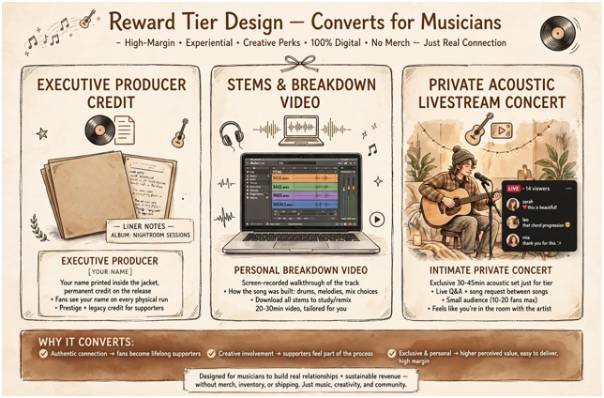
    T-shirts and stickers carry miserable profit margins. After factoring in manufacturing and postage, an independent creator often clears under $6 on a $30 swag tier. Instead, build tiers that balance tangible goods with high-margin creative experiences.

    Experiential Value Over Low-Margin Merchandise

    Backers fund your record because they value your creative voice. Independent distribution analysis from Bandcamp Daily shows that dedicated fans routinely invest in exclusive, process-driven artifacts over standardized generic apparel:

    • Executive Producer Credit ($300–$500): Include their name directly on the vinyl jacket liner notes and digital credits. Margins: 100%.
    • Stems & Stems Breakdown Video ($40–$60): Share the raw session multi-tracks alongside a 20-minute screen walkthrough breaking down your arrangement. Margins: 100%.
    • Private Acoustic Listening Stream ($75): Host an unlisted livestream concert playing the unreleased album front-to-back with live stories behind each song. Margins: 98%.

    Protecting Your Master and Release Rights

    Never pledge copyright ownership or publishing participation as a backer perk. Always review what rights do independent artists own under distribution deals before negotiating exclusive pre-release licenses with backers or outside sponsors.

    Register your compositions early, and ensure every co-writer and producer signs split sheets before launching your campaign. Collect neighboring rights royalties worldwide through organizations like Sound Exchange so your mechanical and master income remains intact when physical and digital backers stream your project post-campaign.

    Executing the 30-Day Campaign Window

    Run your campaign for no more than 30 days. Longer windows do not yield more capital; they dilute urgency. Expect your backing velocity to resemble a distinct bathtub curve:

    Pledges

      │  \                                   /  Final 48-Hour Surge

      │   \                                 /

      │    \_______________________________/

      │            The Mid-Campaign Lull

      └────────────────────────────────────── Time (30 Days)

    During the mid-campaign lull (days 10 through 22), stop repeating the exact same “pledge now” link across social media. Pivot entirely to storytelling:

    • Reveal isolated vocal tracks or guitar solo outtakes.
    • Share the raw conceptual art sketches that did not make the front cover.
    • Introduce an achievable Stretch Goal, such as pressing on colored heavyweight wax or adding a bonus b-side track, once you reach 100%.

    FAQs About Album Crowdfunding

    1. What is the ideal funding goal for an independent album production?

    Calculate your exact studio and manufacturing costs, add 20% for taxes and shipping, and treat that final figure as your minimum viable baseline.

    2. How long should an album crowdfunding campaign run?

    Keep your campaign between 28 and 30 days to maximize early urgency and capitalize on final-hours alerts.

    3. Should I use flexible or fixed funding for my album?

    Choose fixed, all-or-nothing funding if your album requires a non-negotiable minimum capital injection to finish tracking, mixing, and pressing.

    4. When should I ship physical backer rewards after the campaign ends?

    Promise fulfillment dates 6 to 8 months after funding concludes to allow realistic buffer time for pressing plant delays.

    Pack Up the Gear: Your Next Move

    Stop treating album crowdfunding like a digital tip jar. It is an organized creative pre-order engine that validates your music before you spend thousands of dollars in the studio. Sit down today, audit your actual production numbers, and build your Tier-Zero list of 40 early believers. The funding follows the framework.

  • Music Grant Opportunities for Independent Artists: My Insider Playbook

    Music Grant Opportunities for Independent Artists: My Insider Playbook

    I spent years draining my savings account to finish 4-track EPs before I ever sat on a grant evaluation panel. When you spend your own rent money on studio time, every dollar feels like a compromise. Securing institutional music grant opportunities for independent artists completely changed my production trajectory. 

    It allowed me to hire world-class session players, book proper tracking facilities, and pay myself for creative labor without giving away ownership.

    Securing institutional money requires understanding how selection committees evaluate risk. Grant panels read hundreds of proposals every cycle. They do not fund vague aspirations; they fund structured execution plans.
    The Grant Funding Shift Independent Artists Must Understand

    The Grant Funding Shift Independent Artists Must Understand

    Public funding and private endowments do not function like venture capital or major label advances. They do not demand recoupment, interest, or backend streaming equity. Reviewers look for cultural significance, artistic integrity, and community impact.

    When I evaluate submissions, I grade against a specific ratio: 50% artistic merit, 30% project feasibility, and 20% career impact. If your track sounds remarkable but your budget numbers look arbitrary, your proposal gets disqualified immediately.

    Tier 1: Major National Music Grants in the United States

    Major National Music Grants in the United States

    Large national grants offer substantial capital designed to elevate your long-term creative trajectory.

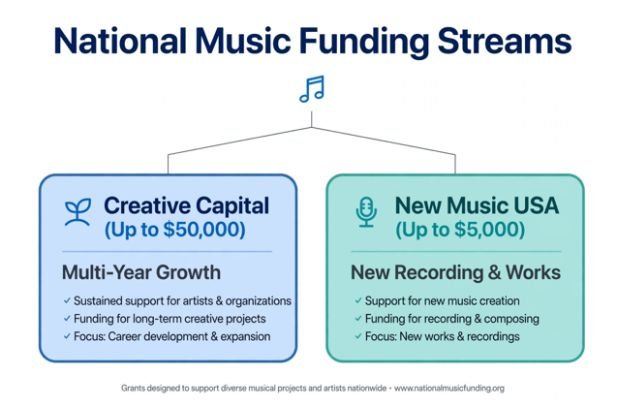
                        ┌──────────────────────────────────┐

                         │ National Music Funding Streams   │

                         └────────────────┬─────────────────┘

                                          │

                ┌─────────────────────────┴─────────────────────────┐

                ▼                                                   ▼

    ┌───────────────────────┐                           ┌───────────────────────┐

    │ Creative Capital      │                           │ New Music USA         │

    │ (Up to $50,000)       │                           │ (Up to $5,000)        │

    │ Multi-Year Growth     │                           │ New Recording & Works │

    └───────────────────────┘                           └───────────────────────┘

    Creative Capital Award: High-Impact Project Grants

    The Creative Capital Award remains one of the most prestigious funding sources for individual creators in the country. It provides project grants of up to $50,000. Beyond funding, awardees receive multi-year advisory sessions, financial consults, and legal counsel.

    To qualify, you must have at least five years of professional practice, and the project cannot be purely promotional. In my experience, proposals that challenge conventional genre lines or explore urgent social narratives fare best here.

    New Music USA Creator Fund: Composition and Recording Support

    The New Music USA Creator Fund distributes project grants averaging $3,000 to $5,000. This program focuses on original music composition across all styles, including jazz, electronic, folk, and classical avant-garde.

    I frequently recommend this fund to artists embarking on their first professionally tracked studio recording. The application demands high-fidelity audio samples and confirmed collaborator letters. Make sure your collaborators sign off on their quoted rates before submission.

    Tier 2: Rolling Emergency and Micro-Funding Streams

    Tier 2: Rolling Emergency and Micro-Funding Streams

    Long-term project cycles often require six to eight months of deliberation. When unforeseen opportunities or sudden expenses strike, turn to rapid-response funds.

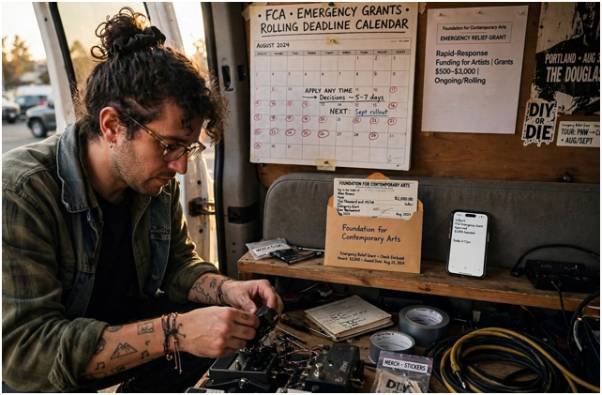
    Foundation for Contemporary Arts (FCA) Emergency Relief

    The Foundation for Contemporary Arts offers immediate micro-grants between $500 and $3,000. These funds operate on a rolling, year-round deadline.

    Eligible expenses include sudden travel costs for unexpected performance invites or urgent gear replacements right before scheduled tour dates. Their board reviews applications on a monthly cycle, making this an essential safety net for working musicians.

    State Arts Agencies and Regional Fellowships

    Do not overlook public funds distributed through the National Endowment for the Arts regional affiliates. State arts councils often distribute grants ranging from $1,000 to $15,000 for local recording and presentation. Competition at the state level is significantly lower than national open calls, making your acceptance probability substantially higher.

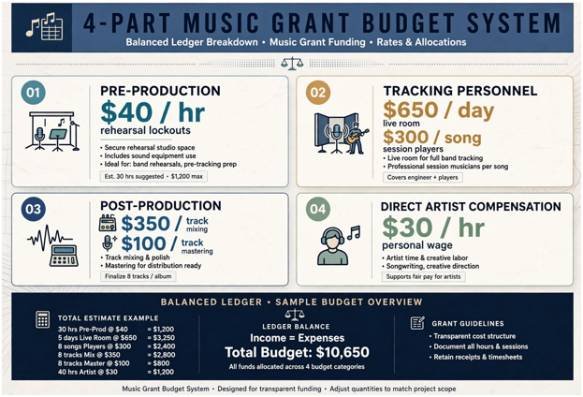
    How I Build a Grant-Winning Budget (The 4-Part System)

    How I Build a Grant-Winning Budget (The 4-Part System)

    Reviewers look for balanced ledgers where every cost corresponds to an identifiable milestone. During my last grant submission, I structured our production costs across four transparent tiers:

    • Pre-Production: Rehearsal lockouts and arrangement fees ($40/hr).
    • Tracking Personnel: Commercial live room bookings ($650/day) and session rhythm section rates ($300/song).
    • Post-Production: Dedicated multitrack mixing ($350/track) and stem mastering ($100/track).
    • Direct Artist Compensation: A calculated personal wage ($30/hr across 60 production hours).

    Never list generic lumps like “Studio: $4,000.” Panelists know industry standard day rates. Calculating expenses with formula units proves your project is ready for immediate deployment.

    Legal and Commercial Rights You Must Protect Before Applying

    Receiving public grant money should never jeopardize your intellectual property. Most government agencies and nonprofit foundations place no claim on your sound recordings or underlying publishing copyrights.

    However, issues frequently arise if you sign distribution contracts simultaneously. Understanding what rights do independent artists own under distribution deals ensures you do not inadvertently license grant-funded masters under restrictive exclusive terms.

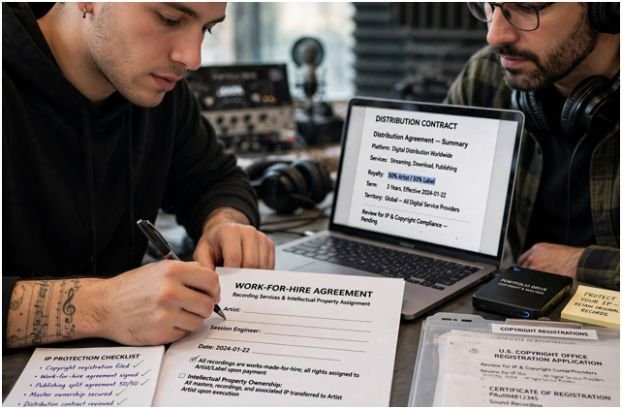
    Similarly, if you use grant funds to track an album before shopping it to independent music labels accepting demo submissions, ensure all session engineers sign work-for-hire agreements. Keep these documents organized in a portfolio drive alongside your original grant narrative.

    Frequently Asked Questions About Music Grants

    1. Do I have to repay music grants if my album doesn’t chart?

    No, grants are non-repayable awards, provided you fulfill the agreed project milestones and expenditure reports.

    2. Can I pay myself an artist fee with grant money?

    Yes, most modern panels require primary artists to allocate fair wages for their compositional and performance labor.

    3. Are music grants considered taxable income in the United States?

    Yes, the IRS classifies non-fellowship project grants as taxable gross income, reported on Form 1099-MISC or 1099-NEC.

    4. Can an unsigned solo artist apply without an established 501(c)(3)?

    Yes, many creators apply directly as individuals or partner with a fiscal sponsor to process corporate foundation checks.

    Your Grant Submission Reality Check

    Stop viewing grant proposals as corporate homework. A strong application is simply an itemized blueprint that proves your artistic vision is ready for real-world execution. Select two programs with deadlines four months out, prepare your audio work samples, and build an honest, transparent production budget.

  • How to Find New Music Without Spotify and Escape the Algorithm

    How to Find New Music Without Spotify and Escape the Algorithm

    Some of the most interesting music never reaches a personalized recommendation feed. It may be playing on a college radio station at midnight, sitting deep inside an independent label catalog, appearing on a DJ’s tracklist, or getting passed around a tiny online community before wider audiences notice it.

    That is why learning how to find new music without Spotify can actually expand your taste rather than limit it. Instead of waiting for software to predict what you will enjoy, you deliberately move between human curators, local scenes, music databases, radio archives, labels, and listeners whose tastes are different from your own.

    The goal is not to avoid technology. It is to stop allowing one recommendation system to define the boundaries of your listening.

    Why Music Discovery Feels Narrower Than It Should

    Recommendation algorithms are extremely useful when convenience matters. Their weakness is that personalization tends to begin with information they already have about you.

    If you repeatedly listen to psychedelic rock, indie folk, or Southern hip-hop, a platform becomes increasingly good at serving adjacent music. That can be satisfying, but genuine discovery often happens when something interrupts those expectations.

    This is where human-curated radio remains surprisingly powerful.

    Seattle’s nonprofit KEXP, for example, continues to operate around DJ-led discovery, live sessions, specialty shows, and emerging artists. Its current programming includes hand-selected new music rather than relying solely on personalized recommendations.

    The difference is important. A DJ can intentionally place two unrelated records together because the contrast is interesting. An algorithm usually has stronger incentives to minimize that kind of unpredictability.

    Start With Human-Curated Radio

    Internet radio is one of the easiest places to begin because someone else has already done the digging.

    Instead of searching for “new indie music,” find a DJ or station whose judgment you trust. Listen to the program regularly and note anything that catches your attention.

    KEXP is particularly useful for alternative, independent, international, electronic, rock, hip-hop, and experimental music. Stations such as NTS Radio and Los Angeles-based Dublab offer another route into specialist scenes, while freeform radio can move from jazz to punk to obscure electronic music without worrying about maintaining a personalized profile.

    These listening habits can also lead you toward emerging artist meaning, especially when radio exposure introduces musicians who are developing their audiences without yet having widespread mainstream recognition.

    Don’t Ignore College Radio

    Don't Ignore College Radio

    American college stations remain excellent sources for music that has not yet reached mainstream rotation.

    KZSU at Stanford University streams programming online and describes itself as a non-commercial station run by volunteers from Stanford and the surrounding community. Its schedule ranges across established genres, experimental programming, and unfamiliar artists.

    UC Berkeley’s KALX programming archive provides another useful example. Its freeform playlists routinely mix older recordings with newly added releases rather than separating music into tightly controlled recommendation categories.

    The trick is to save the DJ or program name, not merely the song. A good curator can become a renewable source of discoveries.

    Dig Through Bandcamp Like a Record Store

    Bandcamp works best when you treat it less like a streaming app and more like a digital record shop.

    Start with a genre you already enjoy, then move sideways into related tags. Instead of searching broadly for “electronic,” try regional scenes, subgenres, record labels, or combinations such as ambient techno, experimental hip-hop, Appalachian folk, desert rock, or Chicago jazz.

    When you find one strong release, inspect its label and the other artists connected to it.

    That simple habit is one of the fastest ways to uncover music because independent labels often develop recognizable tastes. One artist can lead to five labelmates, which can lead to another label, another city, and an entirely different scene.

    Use Genre Maps, but Understand Their Limits

    Every Noise at Once became famous for turning thousands of genre classifications into a giant interactive musical map. It remains useful when you want to understand relationships between styles or discover strange micro-genres far beyond standard categories.

    There is one important limitation.

    The main map reflects data collected through November 2023 and is now largely a historical snapshot rather than a continuously updated representation of emerging music. Some API-dependent features have also experienced interruptions.

    So use it as a map of possibilities, not as your primary source for this week’s releases. A productive method is to identify three unfamiliar genres there, then search those genre names on Bandcamp, radio archives, YouTube, music forums, or record-label catalogs.

    Let Music Databases Take You Deeper

    Let Music Databases Take You Deeper

    Community databases such as Rate Your Music work differently from recommendation feeds because discovery can begin with charts, genres, release years, listener-created lists, ratings, and extremely specific combinations of filters.

    Instead of asking, “What sounds like this artist?” try questions such as:

    “What were listeners rating highly in underground jazz in 2025?”

    “What shoegaze albums came from South America?”

    “What records combine post-punk and electronic music?”

    That shift from similarity-based listening to question-based research produces much stranger results.

    Historical archives can take the idea even further.

    The Library of Congress Recorded Sound Research Center holds roughly 3.5 million recordings spanning more than a century, including folk, jazz, classical, popular music, musical theater, radio broadcasts, and other material.

    Its collections will not replace a new-release feed, but they are exceptionally useful for tracing where contemporary sounds came from.

    Explore Music by Culture Instead of Popularity

    Sometimes the best way to find unfamiliar music is to stop searching by genre entirely.

    Search by region, language, instrument, tradition, community, or historical period. For listeners who want to take that regional approach further, how to find local bands near you can provide a practical framework for discovering artists through local scenes, venues, community events, and the people already connected to them.

    The Smithsonian Folkways collection is particularly valuable for this approach. Smithsonian Folkways exists to document and preserve culturally diverse music and sound, and its catalog reaches far beyond the categories typically emphasized by commercial streaming services.

    Its curated playlists also provide selections built around artists, regions, histories, and themes rather than your previous listening behavior.

    That makes cultural exploration one of the strongest answers to how to find new music without Spotify when you feel trapped inside familiar genres.

    Follow DJs Through Their Tracklists

    If you enjoy electronic music, dance music, festival sets, or club culture, DJ tracklists can function like discovery maps.

    Sites such as 1001Tracklists allow listeners to identify tracks appearing in DJ sets. Rather than searching for artists individually, start with a DJ whose taste you enjoy and investigate the unfamiliar records inside a recent set.

    Then follow the producers, labels, remixers, and featured vocalists attached to those tracks.

    This method works because DJs frequently expose listeners to records before those tracks become widely discussed outside their scenes.

    Use People as Recommendation Engines

    Use People as Recommendation Engines

    Reddit communities, Discord servers, music forums, record-store employees, local promoters, friends, critics, and musicians provide something software struggles to replicate: context.

    How to discover bands before they get famous often starts with these human connections, because local recommendations, conversations around emerging artists, and community knowledge can reveal musicians long before they become prominent in mainstream recommendation feeds.

    Don’t simply ask, “Recommend me music.”

    Give people clues.

    Try: “I like the atmosphere of this album but want something less polished,” or, “I want slow, guitar-heavy records that aren’t metal.”

    Specific questions usually produce more interesting recommendations because humans can interpret qualities that are difficult to reduce to genre labels.

    Try the 30-Minute Music Discovery Routine

    A repeatable routine prevents music discovery from becoming endless browsing.

    Time Action Goal
    0–5 minutes Pick one radio show, DJ, genre, or label Establish a starting point
    5–12 minutes Save three unfamiliar artists Create leads
    12–20 minutes Explore their labels, collaborators, or scenes Move beyond the original source
    20–25 minutes Check a database or community discussion Add context
    25–30 minutes Listen to one full track from five artists Decide what deserves deeper listening

    Do this once or twice a week and maintain a simple “listen later” list.

    The important rule is to avoid evaluating every discovery after 15 seconds. Unfamiliar music often requires more patience precisely because it does not resemble what your existing listening history has trained you to expect.

    What Doesn’t Work as Well

    Replacing Spotify with another highly personalized service may change the interface without changing your discovery habits.

    Likewise, jumping randomly among thousands of releases quickly creates decision fatigue. Pure chart browsing has another limitation: popularity still influences what rises to the surface.

    A stronger system combines several sources. Let a human curator introduce the artist, a database explain the genre, a label reveal related musicians, and a community provide context. That mixture creates discovery rather than endless recommendation consumption.

    Frequently Asked Questions

    1. How can I discover independent artists without Spotify?

    Use Bandcamp tags, independent labels, college radio, nonprofit stations, local venue calendars, music forums, and DJ playlists. Following labels and curators is usually more productive than repeatedly searching individual artists.

    2. What is the easiest way to find unfamiliar genres?

    Explore genre maps, university radio schedules, specialist DJ programs, music databases, and cultural archives. Choose one unfamiliar style and follow its artists, labels, regional scenes, and influences.

    3. Is college radio still useful for finding new music?

    Yes. Stations such as KZSU and KALX still broadcast volunteer- or DJ-curated programming that can include new, experimental, local, and less commercially visible music.

    4. How to find new music without Spotify if I don’t know where to start?

    Choose one favorite artist, identify their label or influences, then explore one radio program and one community recommendation connected to them. Save five unfamiliar artists and listen without using personalized recommendations.

    Make Discovery Deliberate Again

    The biggest advantage of leaving a recommendation feed occasionally is not that algorithms are bad. It is that surprise becomes your responsibility again.

    Spend half an hour following a college DJ, dig through an independent label’s catalog, explore a Smithsonian collection, or investigate a genre you cannot even pronounce yet. Some sessions will produce nothing memorable. Others will uncover an artist you follow for years.

    That unpredictability is the point. Great music discovery should occasionally confuse you before it impresses you. The next record you love may already exist somewhere outside your usual feed—you simply need to change where you look.